Jaguar confirms C-X75 hybrid hypercar for limited production
Jaguar will build 250 examples of the C-X75, a carbon-fibre hybrid supercar developed with Williams F1, targeting over 200mph and emissions below 99g/km.
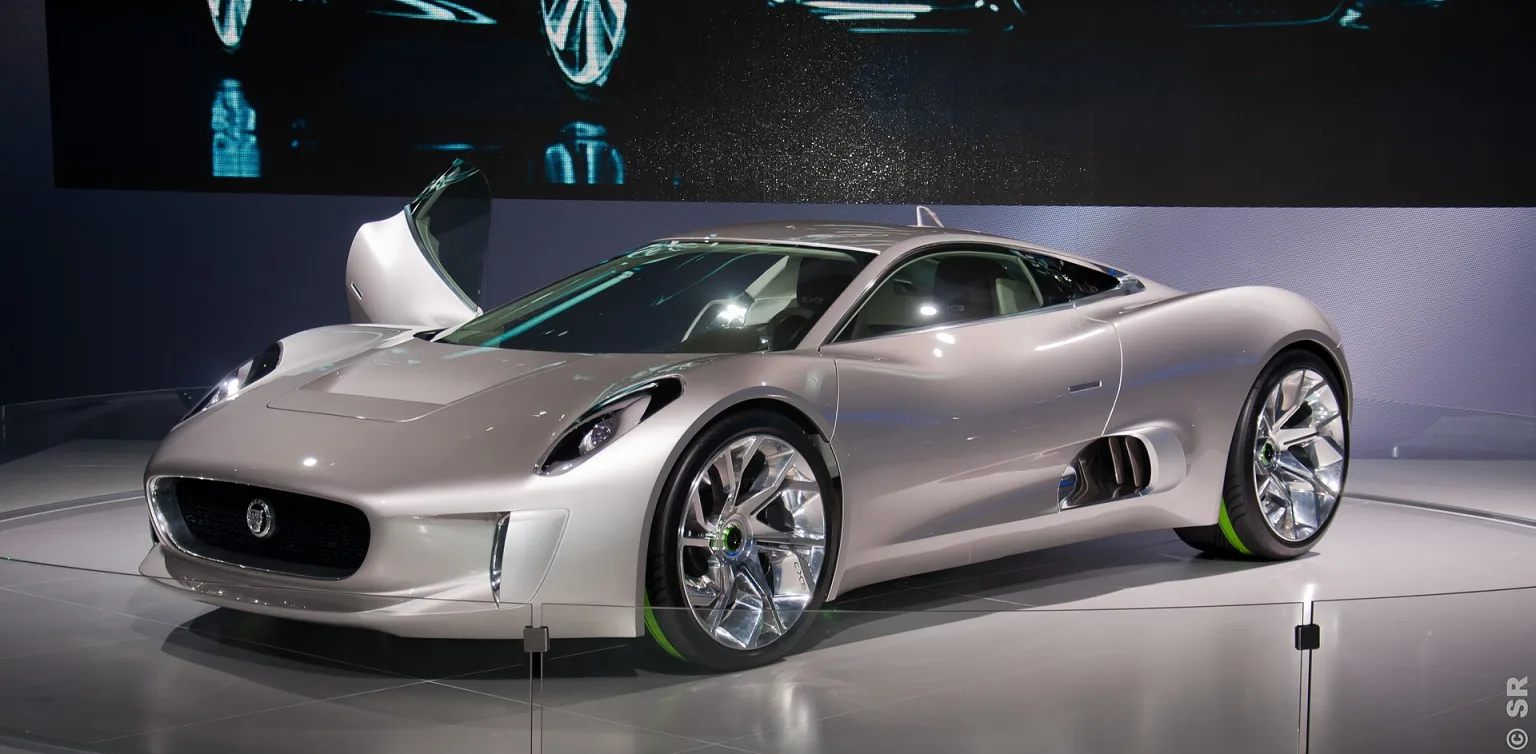
Jaguar has announced it will put the C-X75 hybrid hypercar into limited production, with 250 units planned and prices starting from £700,000. The car will be developed in partnership with Williams F1 and built in the UK, with the first deliveries targeted within the timescale of a conventional model programme.
The C-X75 will combine a highly boosted, small-capacity petrol engine with two electric motors, one at each axle, delivering four-wheel drive and performance to match the fastest cars on sale. Jaguar claims a 0-60mph time of under three seconds, 0-100mph in less than six, and a top speed above 200mph. The car’s all-electric range is expected to exceed 50km, and CO2 emissions are targeted below 99g/km, making it one of the cleanest hypercars announced to date.
Technical partnership with Williams F1
Williams F1 will provide expertise in aerodynamics, carbon composite manufacturing and hybrid technology. The C-X75’s chassis will be a lightweight carbon-fibre structure, with direct technology transfer from motorsport. Jaguar says the car will remain true to the concept that debuted at the 2010 Paris motor show, while being homologated for road use.
Jaguar’s original concept featured micro-turbine technology, but the production car will use a compact, twin-charged petrol engine and electric motors to meet both performance and emissions targets. Tata, Jaguar’s parent company, has invested in Bladon Jets to continue developing micro-turbine technology for potential future use, but for the C-X75, the focus is on a more conventional but advanced hybrid system.
Performance and emissions targets
| Specification | Jaguar C-X75 (target) |
|---|---|
| 0-60mph | <3.0 seconds |
| 0-100mph | <6.0 seconds |
| Top speed | >200mph |
| All-electric range | >50km |
| CO2 emissions | <99g/km |
| Production volume | 250 units |
| Starting price | £700,000 |
Jaguar expects the C-X75 to deliver performance on a par with the fastest production cars, while offering emissions comparable to a hybrid hatchback. The company says the car’s compact engine allows for a low centre of gravity and optimal weight distribution, preserving the dramatic proportions of the concept.
Position in Jaguar’s history and market
The C-X75 will be Jaguar’s most advanced model to date, serving as a technology flagship and halo car for the brand. Its limited production run and high price put it in direct competition with other hybrid hypercars announced by rivals, including those from McLaren and Ferrari. Jaguar intends the C-X75 to showcase its engineering and design capabilities, as well as its commitment to low-emissions performance.
The car’s development marks the first collaboration between Jaguar Land Rover and Williams F1, bringing together British expertise in road and race engineering. Production will be exclusive, with only 250 examples planned, and each car will be tailored to its buyer.
Jaguar says customers can expect new standards in sales and after-sales service with the C-X75 programme. The project is also expected to influence future Jaguar models, as technologies developed for the hypercar filter down to the wider range.
What comes next
Jaguar has not confirmed exact production dates, but the company intends to bring the C-X75 to market within a conventional model timeframe. With Williams F1’s involvement and a focus on both performance and emissions, the C-X75 is intended to set a new benchmark for hybrid supercars from a British manufacturer.
For updates on the fate of the C-X75 project, see our later coverage:Jaguar cancels £1m Williams hybrid supercar project