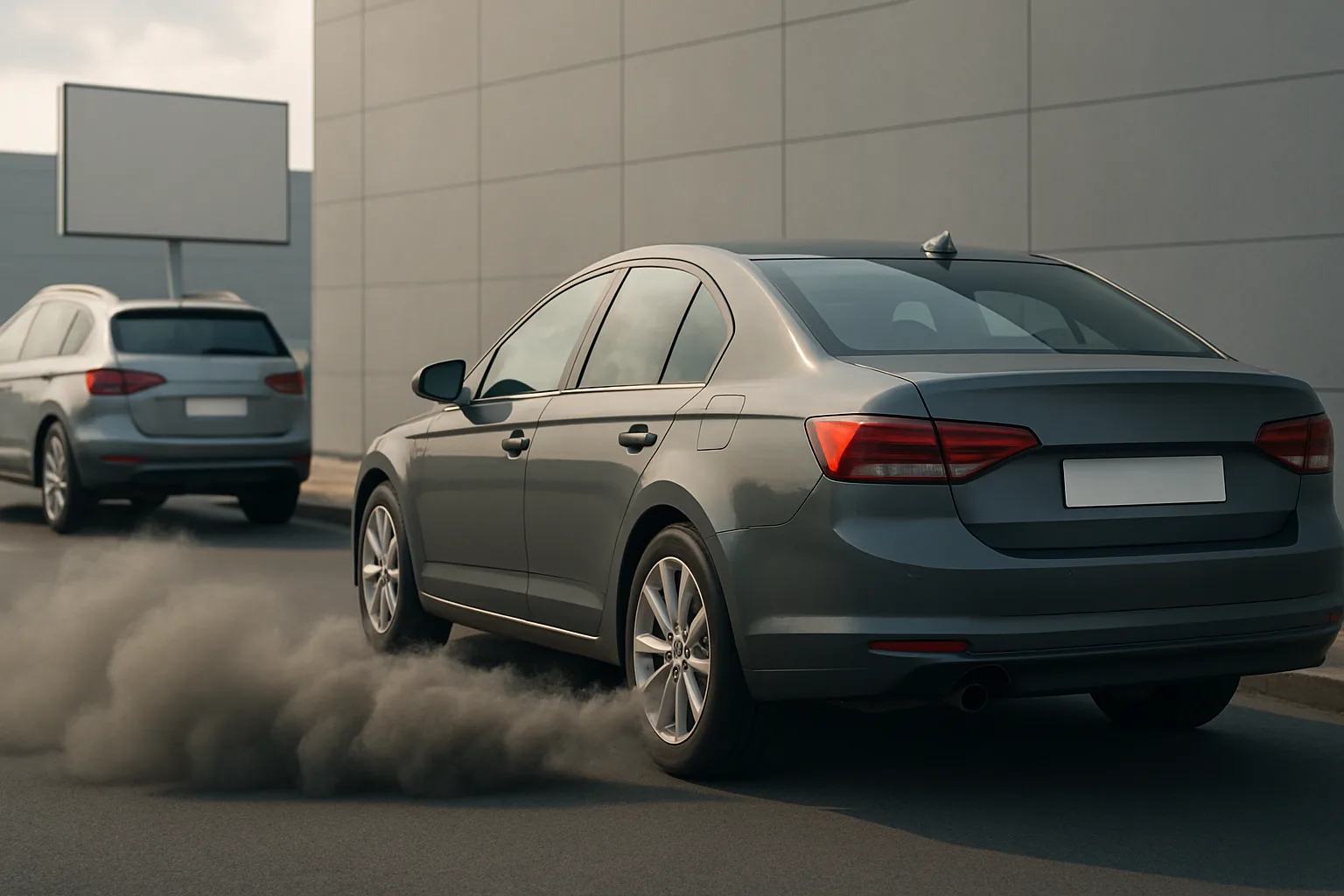
Germany submits final report on Honeywell car refrigerant to EU
Berlin’s investigation into Honeywell’s HFO-1234yf refrigerant, disputed by Daimler over flammability concerns, has been sent to Brussels for scientific review and possible regulatory action.

Germany has delivered its final report on the safety of Honeywell’s HFO-1234yf car air-conditioning refrigerant to the European Commission, escalating a dispute over the chemical’s use in new vehicles. The move follows Daimler’s decision to block the refrigerant from its Mercedes-Benz models, citing concerns about flammability and potential fire risk.
The German federal motor transport authority (KBA) completed its investigation after Daimler refused to adopt HFO-1234yf, a refrigerant developed by Honeywell and DuPont to comply with the EU’s Mobile Air Conditioning (MAC) Directive. The directive, in force since January 2013, requires new models to use refrigerants with a much lower global warming potential than the outgoing R134a. While HFO-1234yf meets the environmental requirement, Daimler argued the chemical was flammable enough to present a material safety risk in the event of a collision or leak.
What happens next for the refrigerant dispute?
With the German report now in Brussels, the European Commission’s Joint Research Centre (JRC) is expected to review the findings in the coming weeks. The JRC will assess whether HFO-1234yf’s flammability constitutes a sufficient risk to justify Daimler’s refusal to use it, despite the EU-wide phase-out of older refrigerants. If the JRC finds the chemical hazardous, it could force a rethink of the MAC Directive’s implementation. If not, Germany may face infringement proceedings for allowing Daimler to ignore EU law.
The stakes are high for Honeywell and DuPont, which hold an effective monopoly on HFO-1234yf supply in Europe until 2030. Billions in future revenue could be at risk if the refrigerant is restricted or banned. For Daimler, a negative ruling would mean switching to HFO-1234yf across its range or facing penalties for non-compliance. Other manufacturers have already adopted the new refrigerant to meet EU rules.
Industry and regulatory implications
The dispute highlights the tension between environmental regulation and product safety. While HFO-1234yf is far less damaging to the climate than R134a, Daimler’s safety objections have drawn support from some regulators and criticism from others for undermining EU harmonisation. Should the JRC back Daimler’s concerns, other manufacturers may face pressure to reconsider their own use of the refrigerant. If not, the Commission is likely to press Germany to enforce the MAC Directive uniformly.
The outcome will affect not only refrigerant suppliers but also carmakers, suppliers of air-conditioning systems, and the regulatory environment for future climate-related automotive technologies. The European Commission’s decision is expected to set a precedent for how safety and environmental goals are balanced in EU vehicle regulation.