Helsinki targets private car ownership with integrated mobility plan
Finland's capital is developing a unified, app-based transport network aiming to make private car ownership unnecessary for most city residents by 2025.
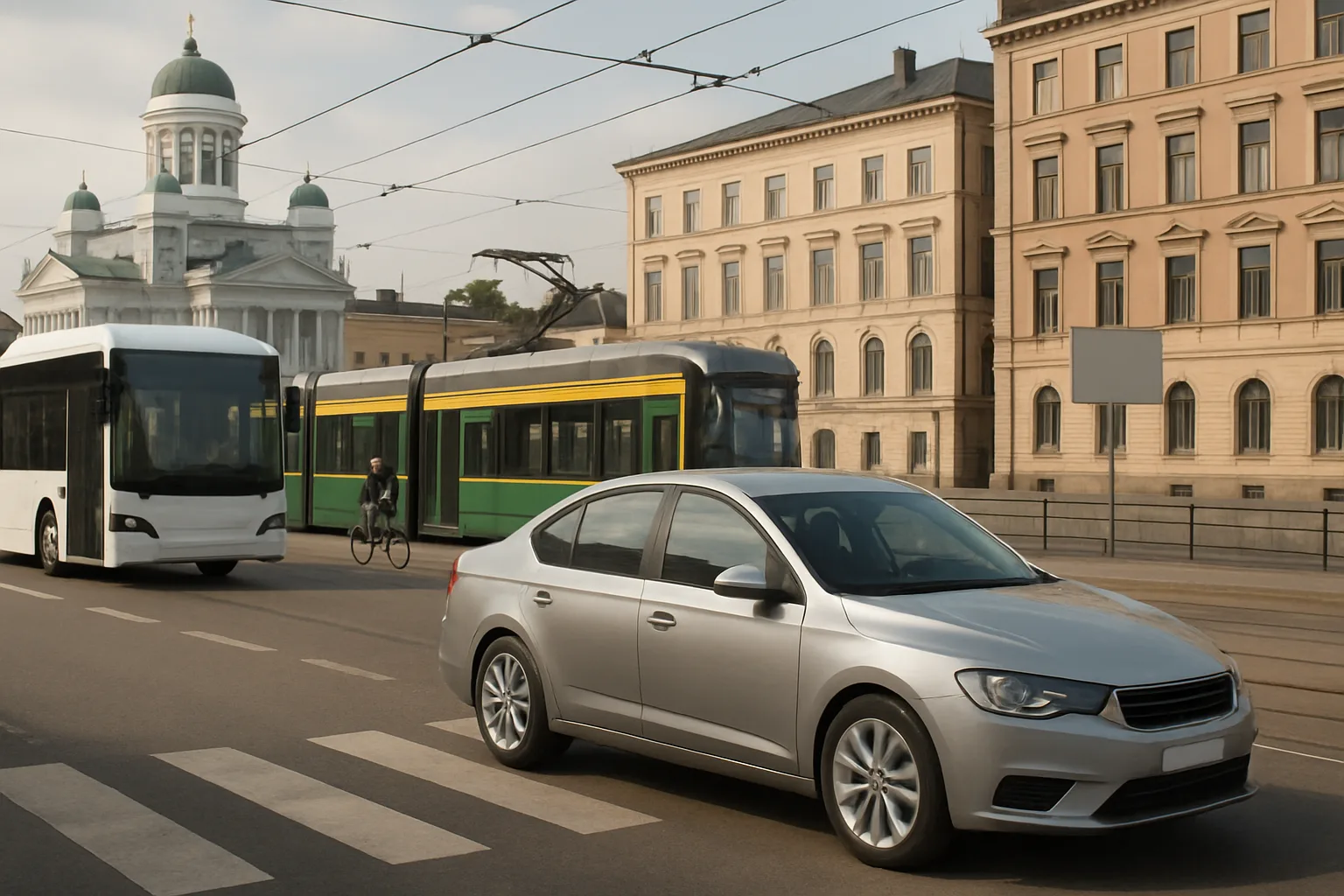
Helsinki city officials have set out plans to make private car ownership largely redundant by 2025, aiming to replace the need for a personal vehicle with a comprehensive, app-based mobility service that integrates public transport, shared vehicles and real-time journey planning.
The city’s vision centres on a single digital platform where residents can book and pay for all forms of urban transport, buses, trams, shared bikes, taxis, car-sharing and even ferries, directly from their smartphones. The goal is to make these services so efficient and affordable that owning a car becomes an unattractive option for most journeys within Helsinki.
Rather than simply expanding bus or tram lines, Helsinki is focusing on what it calls “Mobility as a Service”. This is intended to offer flexible, on-demand transport tailored to individual needs. Users could subscribe to mobility packages, similar to mobile phone contracts, and switch between providers offering better deals or services. Real-time data will underpin the system, with the city and private companies working together to collect and share travel information, helping route planners react to traffic, weather and service changes instantly.
Kutsuplus points to the future
A key early step was the Kutsuplus minibus service, launched as a pilot in 2013. Riders could book a minibus via smartphone, specifying pick-up and drop-off points. The system then aggregated requests and calculated the most efficient route for the fleet. Kutsuplus cost more than a bus but less than a taxi, and attracted more than 13,000 registered users. The technology behind it, developed by Finnish start-up Ajelo, is designed to scale up to much larger fleets.
Authorities believe that by opening up mobility data and encouraging private-sector innovation, a competitive market for new services will emerge. Transport engineer Sonja Heikkilä, whose master’s thesis helped shape the plan, described a future where route planners proactively suggest journeys and alert users to disruptions, integrating services that may not even exist yet.
What the shift means for car owners and the city
About 40% of Helsinki’s 600,000 residents currently own a car. The city’s plan does not ban private vehicles, but aims to make them unnecessary for daily urban travel. Many Finns still require cars for travel to rural areas or summer cottages, but the city expects that for most urban journeys, the integrated mobility service will offer a more convenient and cost-effective alternative.
The plan’s success will depend on price, coverage and ease of use. Planners acknowledge that the model must serve all residents, not just those comfortable with smartphones. Extending the system to lower-density suburbs like Espoo and Vantaa will also pose challenges. Still, with congestion on Helsinki’s arterial roads and growing environmental concerns, the city sees little alternative to rethinking urban mobility at this scale.
- Kutsuplus minibus trial: on-demand, app-based shared rides
- Unified payment platform: single app for all modes of transport
- Mobility packages: subscription services from multiple providers
- Traffic Lab: real-time data collection for route optimisation
If Helsinki’s experiment succeeds, it could provide a template for other European cities seeking to reduce congestion and emissions without simply restricting car use or building costly new infrastructure. The city’s approach is to make private car ownership not illegal, but unnecessary.