Saab and ZF agree chassis deal for next-generation 9-3
ZF will build a new plant near Saab's Trollhättan factory to supply rear axles and chassis components for the modular platform underpinning the 9-3 successor.
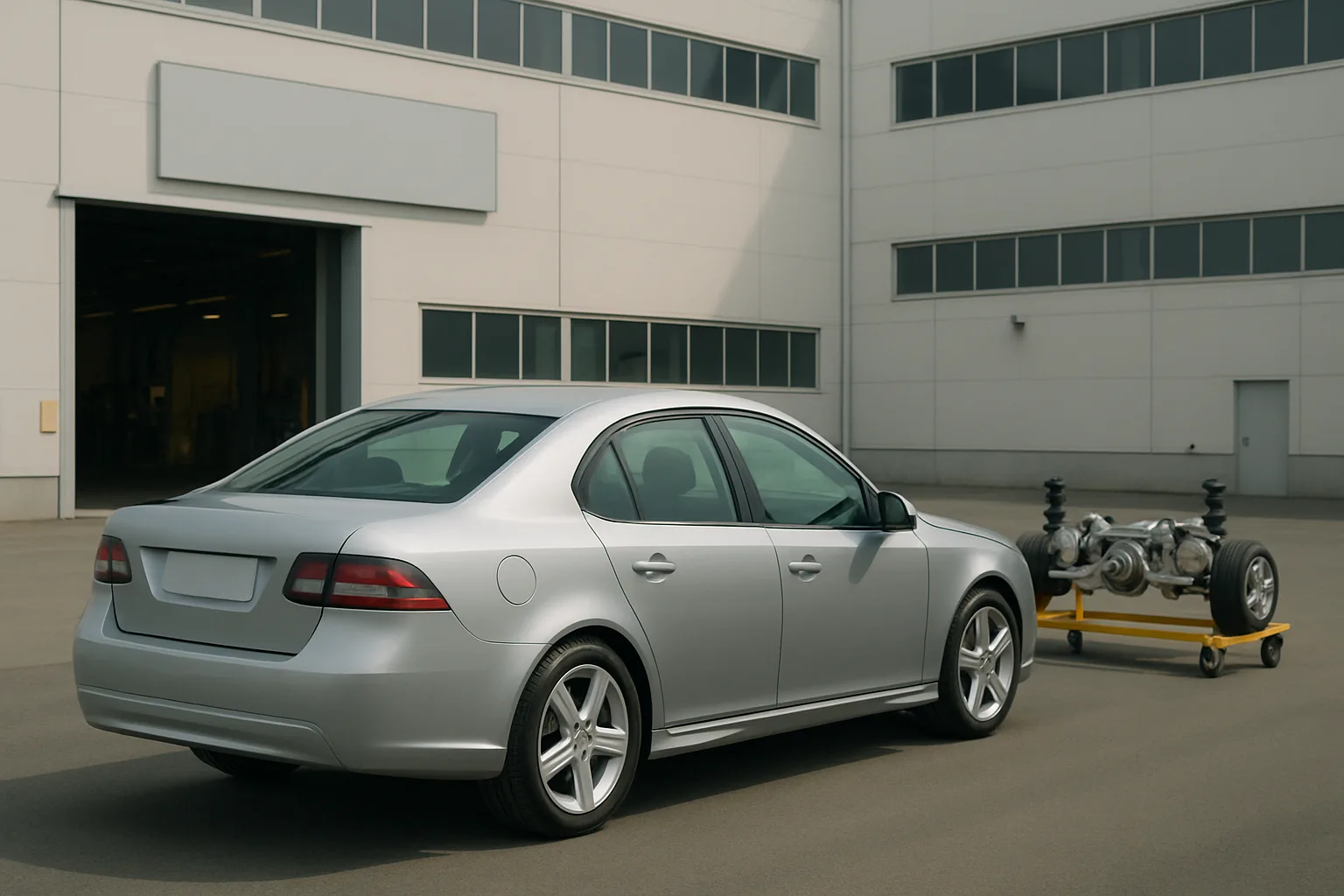
Saab has finalised an agreement with ZF to supply rear axles and chassis components for its next-generation 9-3, with the German supplier opening a new plant just three kilometres from Saab’s Trollhättan factory. Production is set to support the launch of the new 9-3, expected in the second half of 2012.
ZF’s new facility, established in a former panel factory in Halvorstorp, will employ around 50 people. The plant will assemble front sub-frames and complete rear axle units for the new 9-3 and future models built on Saab’s modular vehicle architecture. Saab’s own press shop will produce the large metal components, which ZF will weld and fit with chassis mountings before sending them to the main assembly line.
Local production to streamline supply chain
This is the first time Saab has had a chassis supplier set up such close to its main plant. The arrangement is expected to reduce transportation costs and inventory levels, as well as improve quality assurance through tighter integration. ZF’s use of just-in-time manufacturing methods is intended to minimise stock holdings and capital tied up in parts.
Saab’s vice president for vehicle product development, Mats Fägerhag, described the proximity to ZF as a major step for Saab’s engineering capacity and a win-win for both companies. The deal also gives ZF a foothold in Sweden, with the potential to supply other local manufacturers in the future.
Modular platform and future models
The next Saab 9-3 is being developed on a modular platform designed to support a range of vehicle sizes and types. ZF’s role as chassis supplier is expected to extend to these future models. The Phoenix concept, unveiled at Geneva earlier in March 2011, previewed the flexibility of this new architecture, although the production model will be less radical in appearance.
The partnership with ZF follows Saab’s earlier agreement with BMW to source turbocharged 1.6-litre petrol engines for the new 9-3. Both moves are part of Saab’s strategy to combine external engineering expertise with its own design and manufacturing strengths as it rebuilds under Spyker ownership.
Impact for jobs and Swedish suppliers
The new ZF plant is expected to create 50 jobs in the Trollhättan area, a boost for local employment after a period of uncertainty for Saab’s workforce. The close integration of supplier and manufacturer also gives Swedish suppliers a stronger role in the next phase of Saab’s production.
For more on Saab’s recent models, see2011 Saab 9 4X Earns IIHS Top Safety Pick