Hong Kong-Zhuhai-Macau Bridge Opens as World’s Longest Sea Crossing
The 55km Hong Kong-Zhuhai-Macau Bridge links three major cities, reshaping transport and trade across China’s Pearl River Delta after its 2018 inauguration.
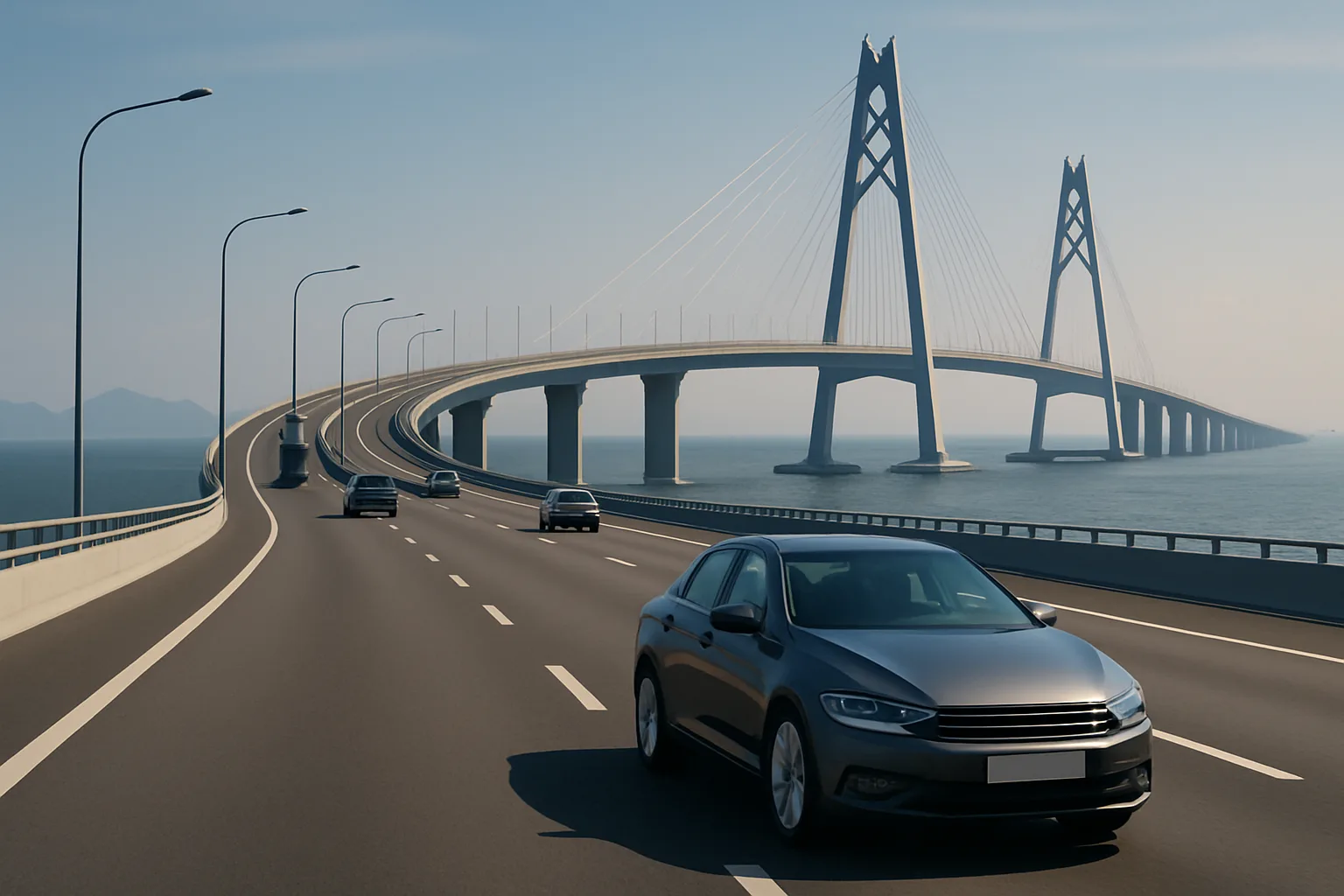
The Jiaozhou Bay Bridge, which opened in 2011, was once the world’s longest bridge over water. Spanning approximately 42 kilometres (26 miles), it connects the city of Qingdao with the suburb of Huangdao across Jiaozhou Bay in eastern China. Before being surpassed by the Hong Kong-Zhuhai-Macau Bridge in 2018, it was regarded as a symbol of China’s rapid infrastructure development and engineering prowess.
Overview of the Jiaozhou Bay Bridge
Engineering and Construction
The Jiaozhou Bay Bridge was designed to accommodate the growing transport needs of the region, reducing the travel distance between Qingdao and Huangdao by more than 30 kilometres. The bridge rests on more than 5,000 concrete pillars and was constructed using around 450,000 tonnes of steel. Built to withstand earthquakes, typhoons, and the harsh marine environment of the bay, construction began in 2007 and was completed in just four years, demonstrating the speed and scale at which Chinese infrastructure projects can proceed.
The bridge carries a six-lane expressway and was designed to handle up to 30,000 vehicles per day. Its structure includes a main span of 260 metres, with cable-stayed sections to allow for ship passage. The total cost of the project was about 10 billion yuan (roughly US$1.5 billion at the time).
Impact on Regional Development
By cutting travel time between Qingdao and Huangdao from over 40 minutes to just 20 minutes, the Jiaozhou Bay Bridge has improved access for commuters, tourists, and freight. It has also contributed to the integration of the Qingdao metropolitan area, supporting the city’s role as a major port and industrial centre. The bridge is part of a broader trend of large-scale infrastructure investment in China aimed at boosting connectivity and economic growth.
The Rise of the Hong Kong-Zhuhai-Macau Bridge
In October 2018, the Hong Kong-Zhuhai-Macau Bridge opened to traffic, overtaking the Jiaozhou Bay Bridge as the world’s longest sea bridge. This new crossing stretches 55 kilometres (34 miles) across the Pearl River Delta, linking Hong Kong, Macau, and Zhuhai. The project includes three cable-stayed bridges, a 6.7km undersea tunnel, and two artificial islands. The bridge was engineered to withstand extreme weather and seismic activity, with a design life of 120 years. More than 400,000 tonnes of steel were used in its construction, and the total cost was estimated at 126.9 billion yuan (about US$18.3 billion).
The Hong Kong-Zhuhai-Macau Bridge has dramatically reduced travel times between the three cities, cutting journeys that once took several hours to about 45 minutes. It is expected to drive further economic integration in the Greater Bay Area, a region with a population exceeding 66 million and a combined GDP of around US$1.3 trillion. The bridge’s undersea tunnel was constructed to preserve busy shipping lanes, reflecting the complexity of the engineering involved.
Comparing Major Sea Bridges in China
| Bridge | Length | Year Opened | Location |
|---|---|---|---|
| Hong Kong-Zhuhai-Macau Bridge | 55km | 2018 | Hong Kong/Zhuhai/Macau |
| Jiaozhou Bay Bridge | 42km | 2011 | Qingdao/Huangdao |
| Hangzhou Bay Bridge | 36km | 2008 | Shanghai/Ningbo |
While the Jiaozhou Bay Bridge was a milestone in bridge engineering, it was quickly overtaken by even more ambitious projects. The Hangzhou Bay Bridge, opened in 2008, measures 36 kilometres and links Shanghai with Ningbo. Each of these bridges has played a role in transforming regional connectivity and development in China.
Controversies and Challenges
Large-scale bridge projects in China have not been without controversy. The construction of the Hong Kong-Zhuhai-Macau Bridge, for example, faced criticism over its high cost, environmental impact, and allegations of corruption. There were also disputes about safety standards and the effect on local wildlife, such as the endangered Chinese white dolphin. Despite these challenges, the bridges remain significant examples of China’s infrastructure ambitions and technical achievements.
Legacy and Future Projects
The Jiaozhou Bay Bridge, though no longer the world’s longest, continues to serve as a vital link in Shandong Province. Its construction paved the way for even larger and more complex projects. Together with the Hong Kong-Zhuhai-Macau Bridge and Hangzhou Bay Bridge, it shows how China has become a leader in large-scale bridge engineering. As technology advances and demand for connectivity grows, even more ambitious projects are likely to emerge in the future.
- Jiaozhou Bay Bridge: 42km (2011)
- Hong Kong-Zhuhai-Macau Bridge: 55km (2018)
- Hangzhou Bay Bridge: 36km (2008)
For further information on record-breaking roads and bridges, see World Record Highways: A Journey Through Extremes.