Tesla Model S P85D Faces Dodge Challenger SRT Hellcat in Drag Race
A filmed drag race puts Tesla's dual-motor electric saloon against Dodge's supercharged V8 Hellcat, comparing instant torque with old-school muscle in a straight-line sprint.
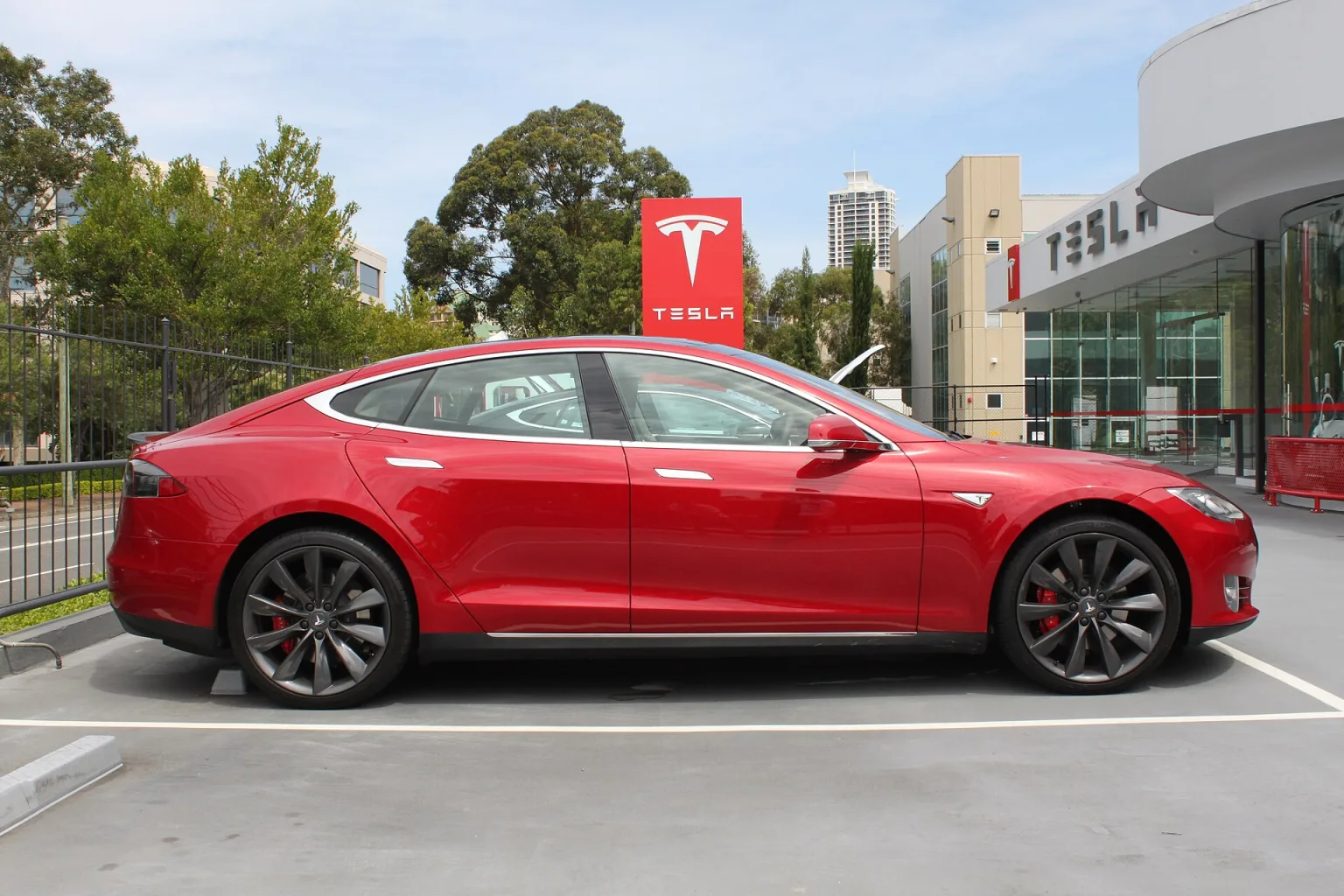
A head-to-head drag race between the Tesla Model S P85D and the Dodge Challenger SRT Hellcat has highlighted the different approaches to straight-line speed, with the all-electric Tesla challenging one of the most powerful American muscle cars ever built.

The Tesla Model S P85D, introduced in late 2014 and shown in Europe at the 2015 Geneva Motor Show, delivers a combined 691hp from its dual electric motors, 470hp at the rear and 221hp at the front. Instant torque from the electric drivetrain means it can reach 100km/h in just 3.3 seconds, with a top speed limited to 250km/h.
By contrast, the Dodge Challenger SRT Hellcat relies on a 6.2-litre supercharged V8 producing 707hp and 880Nm of torque. Dodge claims a 0–100km/h time of less than four seconds and a top speed of 320km/h. The Hellcat has become a benchmark for American muscle, offering more power than any previous production Dodge.

Performance differences on the strip
In the filmed drag race, the Tesla’s all-wheel drive and immediate torque delivery gave it a strong launch off the line. The Hellcat, with its rear-wheel drive layout and manual gearbox, had to manage wheelspin before putting its power down. On a prepped surface, the Dodge’s raw output and higher top speed could come into play over longer distances, but in a typical quarter-mile scenario, the Tesla’s traction and response proved decisive in the opening seconds.
While the Hellcat’s top speed is higher, real-world drag races are often decided by initial acceleration and traction. Here, the Tesla’s electric drivetrain and all-wheel drive system gave it the edge off the mark, despite the Dodge’s greater peak power. The result demonstrates how electric vehicles are changing expectations for performance, even against traditional V8 muscle cars.
What it means for performance car buyers
This comparison shows that straight-line speed is no longer the sole preserve of large-capacity petrol engines. Buyers considering a performance saloon now face a choice between the visceral sound and feel of a supercharged V8 and the silent, instant thrust of an electric drivetrain. Used prices for the Tesla Model S have also shown resilience in the US market, as covered in US Used Tesla Model S Prices Surpass New Car List. For those interested in the Challenger’s durability, a recent incident involving a Hellcat is covered in Dodge Challenger SRT Hellcat collides with classic Chevrolet at US car meet.