BMW ActiveE debuts at Geneva with 1 Series-based EV
BMW revealed the ActiveE electric prototype at the 2011 Geneva Motor Show, previewing its approach to electric mobility with a 1 Series Coupé platform and a 168hp electric motor.
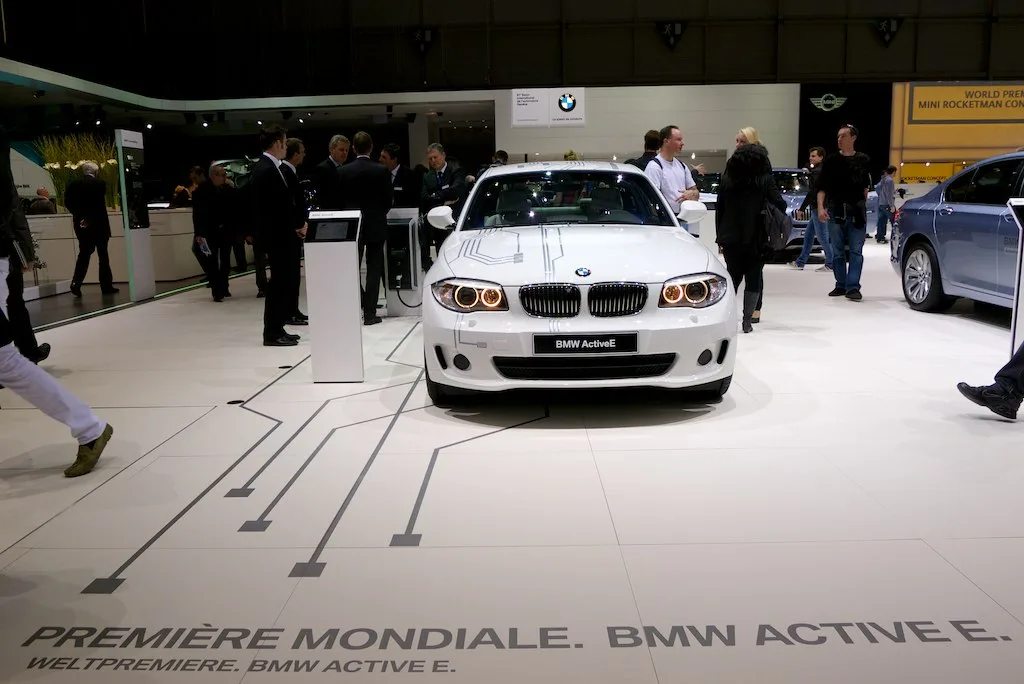
BMW introduced the ActiveE at the 2011 Geneva Motor Show, marking its second electric prototype after the earlier Mini E. Built on the 1 Series Coupé platform, the ActiveE is designed as a fully electric four-seater, aiming to combine everyday practicality with zero local emissions.
The ActiveE uses a rear-mounted electric synchronous motor rated at 168hp and 250Nm of torque. BMW claims the car accelerates from zero to 60mph in nine seconds, with top speed electronically capped at 90mph. The drivetrain replaces the conventional engine and transmission with three lithium-ion battery modules, developed in partnership with SB LiMotive, occupying the spaces traditionally used for the engine block, transmission tunnel and fuel tank.
BMW engineers have packaged the batteries to preserve the interior space of the standard 1 Series Coupé. The ActiveE offers four full seats and a 200-litre luggage compartment, maintaining the head, leg and shoulder room of its petrol and diesel siblings. The battery modules are housed in steel-plate enclosures with integrated liquid cooling, designed both for crash protection and to keep the cells at an optimal temperature for range and durability.
Field trials and future development
BMW planned to build more than 1,000 ActiveE units for field testing in the US, Europe and China starting in 2011. The test fleet was intended to provide data on real-world electric vehicle use, feeding into the development of BMW’s future production EVs. Insights from the ActiveE programme were set to inform the Megacity Vehicle project, later officially named the BMW i3, which was scheduled for launch in 2013.
The ActiveE’s arrival at Geneva signalled BMW’s commitment to electric mobility, following the earlier Mini E trials. Unlike the two-seat Mini E, the ActiveE was designed to be more practical, with a usable rear seat and boot. The project allowed BMW to test electric drive technology and customer acceptance ahead of its dedicated i sub-brand launches.
Where the ActiveE fits in BMW’s electric plans
The ActiveE’s development was a key step between the Mini E and BMW’s planned production electric cars. By using the 1 Series Coupé as a base, BMW could evaluate electric powertrain integration in a familiar chassis, while gathering feedback from a wider pool of users than the earlier two-seater Mini E allowed. The lessons learned from the ActiveE’s global field trials would shape the engineering and user experience of the BMW i3 and other future EVs.
- Mini E: BMW’s first electric field trial, two seats, limited practicality
- ActiveE: Four seats, 1 Series-based, improved packaging, global trials
- BMW i3: Purpose-built production EV, informed by Mini E and ActiveE data