Toyota i-Road and FV2 concepts revealed at Tokyo Motor Show
Toyota used the 2013 Tokyo Motor Show to unveil the i-Road three-wheeler and FV2 concept, highlighting urban mobility and driver interaction technologies.
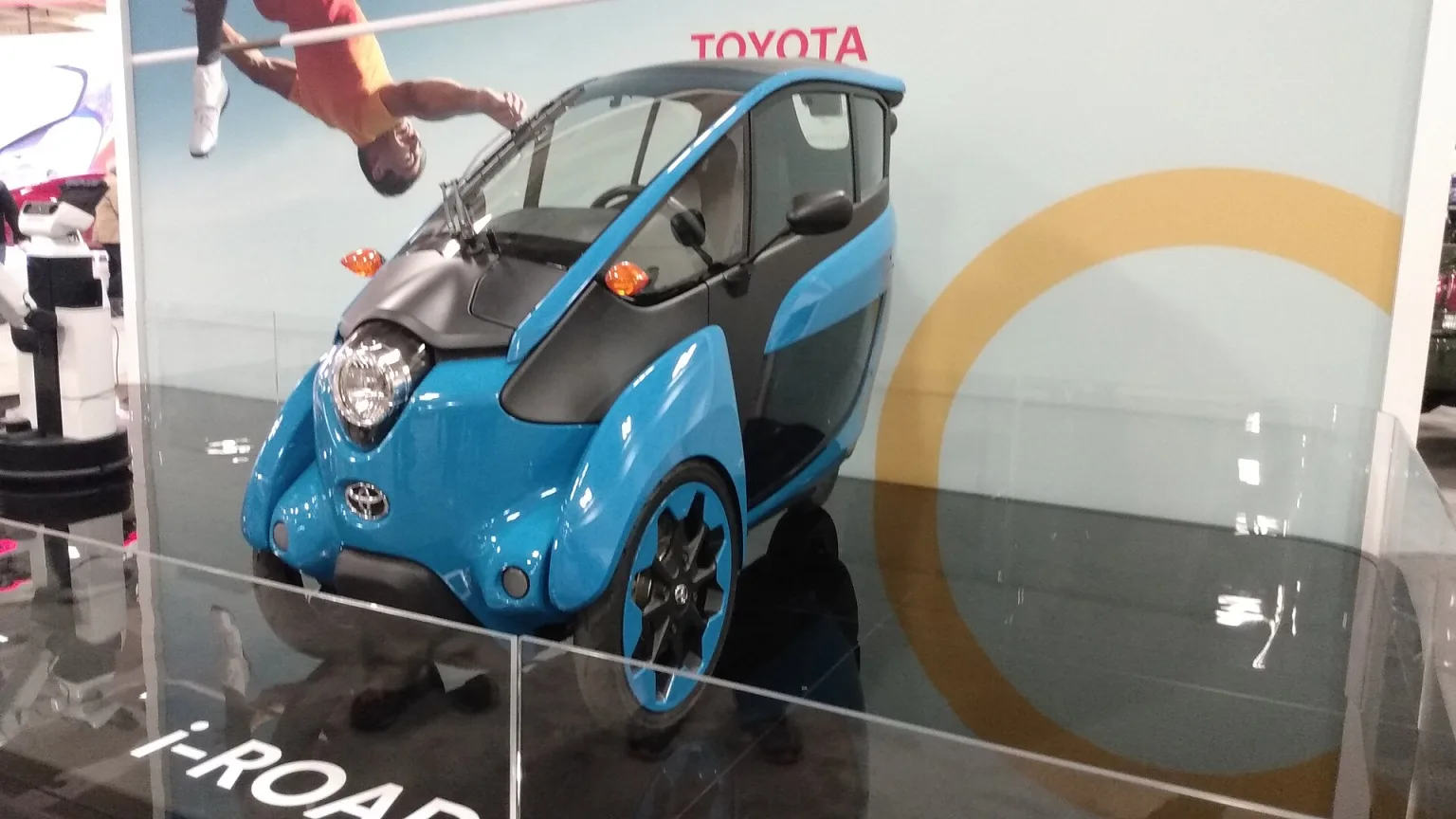
Toyota introduced two contrasting concept vehicles at the 2013 Tokyo Motor Show: the compact, electric i-Road and the driver-focused FV2. Both concepts illustrate Toyota’s thinking on urban mobility and the future of driver-vehicle interaction.
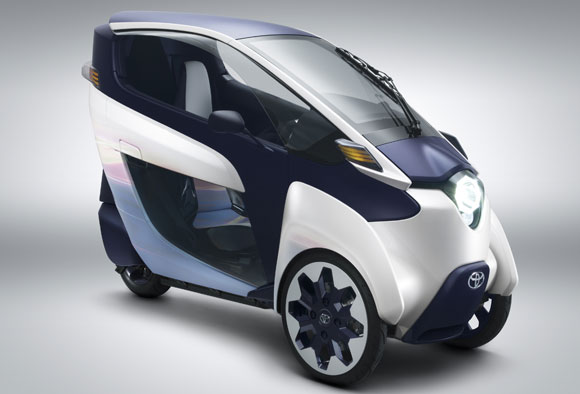
Toyota i-Road: lightweight electric mobility
The i-Road stands out among city car concepts for its three-wheel layout and compact proportions. At under 300 kg, the i-Road is lighter than most quadricycles. It measures 2,350 mm long and 1,445 mm high, with a wheelbase of 1,700 mm. The two tandem seats and narrow footprint are intended to make it suitable for dense urban environments, where parking and manoeuvrability are at a premium.
Power comes from a pair of 2 kW electric motors mounted in the front wheels, drawing energy from a lithium-ion battery. Toyota quotes a top speed of 45 km/h and a driving range of about 48 km, with a full recharge from a standard outlet taking three hours. The i-Road’s most novel feature is its Active Lean system, which automatically adjusts the body angle in corners to maintain stability, aiming to combine the agility of a motorcycle with the reassurance of a car.
Toyota FV2: rethinking driver interaction
Alongside the i-Road, Toyota showed the FV2, a concept that explores a more intuitive relationship between driver and vehicle. The FV2 does away with a steering wheel, instead responding to the driver’s body movements for direction and speed. Toyota describes the FV2 as part of its “Fun to Drive” philosophy, though the company did not release technical details about its powertrain or controls at the show.
The FV2 is a two-seater, measuring 3,000 mm long and 1,600 mm wide. Its height varies: 990 mm in sleep mode and up to 1,780 mm in driving mode, with a wheelbase of 2,360 mm. The concept focuses on connectivity and interaction, suggesting future vehicles could adapt to a driver’s mood or habits, though Toyota’s display was more about vision than production intent.
- i-Road: electric city commuter with leaning technology
- FV2: gesture-controlled concept exploring driver-vehicle connection
Positioning among other Tokyo concepts
Both the i-Road and FV2 reflect a trend among Japanese manufacturers at the 2013 Tokyo Motor Show to experiment with new forms of mobility and user experience. While the i-Road is closer to a production-ready solution for urban congestion, the FV2 offers a glimpse of what connected, interactive vehicles might look like in the longer term. For more on Tokyo show concepts, see theMazda Takeri ConceptandToyota JPN Taxiconcepts.