Life-size Lego F1 cars take to Miami circuit after 22,000 hours of building
Ten fully driveable Lego Formula One cars, each built from 400,000 bricks, led the drivers’ parade at the 2025 Miami Grand Prix after an eight-month build.
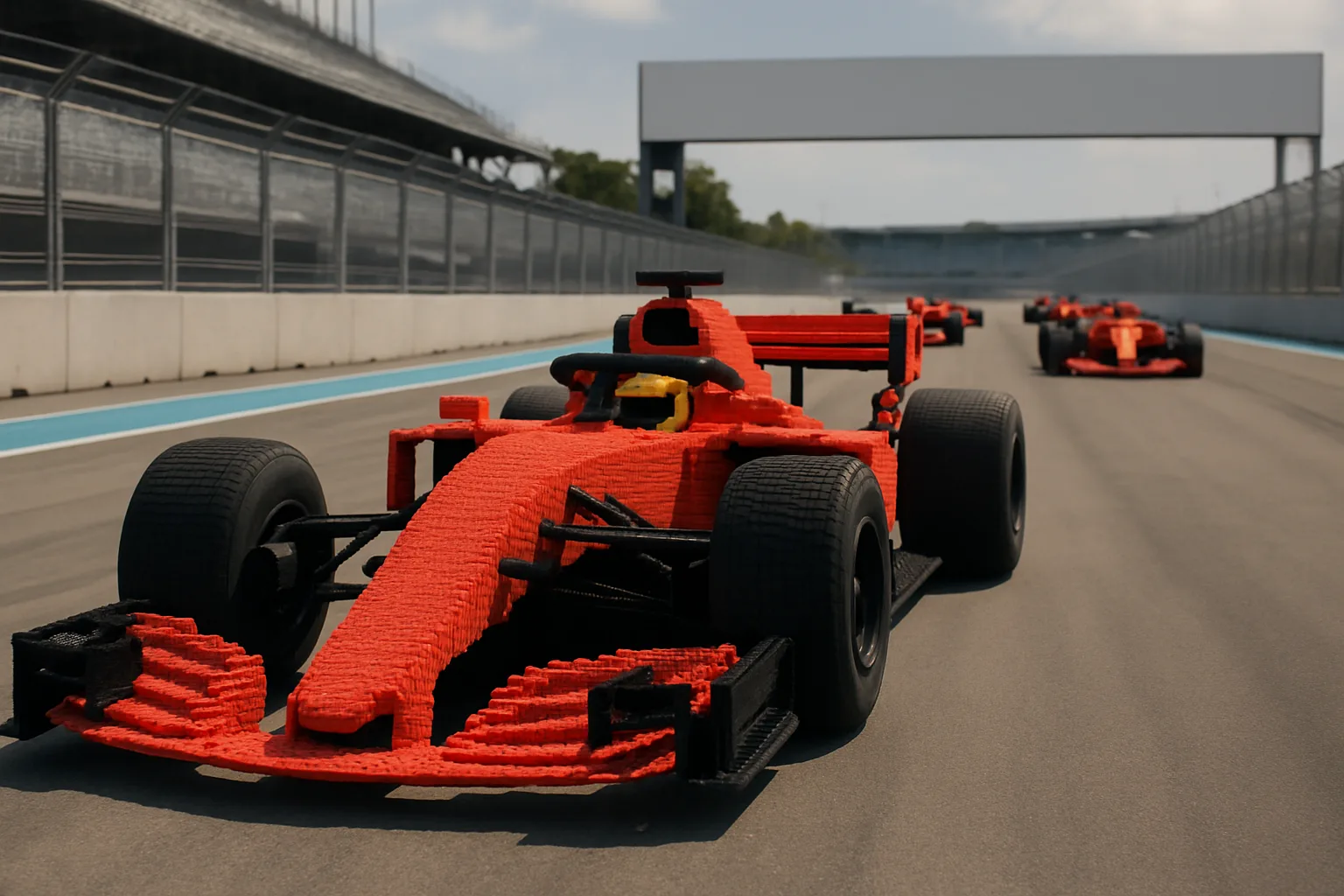
Ten full-size, driveable Lego Formula One cars took centre stage at the 2025 Miami Grand Prix, leading the drivers’ parade in a display that required more than 22,000 hours of work from a 26-strong team of designers, engineers and builders. Each car, representing one of the ten F1 teams, was constructed from around 400,000 Lego bricks and weighed close to 1,000kg.
The project, a collaboration between Formula 1 and the Lego Group, drew on the Speed Champions range as its inspiration. The cars were built to near 1:1 scale with their real-world F1 counterparts, with the only non-Lego elements being the electric powertrain, steel frame, wheel rims, Pirelli tyres and a steering wheel for comfort. Even the branding and livery detailing were recreated from bricks rather than stickers, matching the look of the current F1 grid.
Each car is powered by an 8kW electric motor, giving a top speed of 20km/h. The two-seater layout allowed drivers to wave to fans from the Miami International Autodrome, replacing the usual truck parade with a slow lap in these unique vehicles. The only constraint on the build was the tight timeframe: eight months to design and assemble all ten cars, a schedule that would normally be allocated to a single project of this scale.
How the Lego F1 cars were engineered
The engineering challenge was to create a Lego structure robust enough to support two adults, while integrating a steel frame and electric running gear. The team’s approach was to design the Lego exterior first, then fit the mechanicals inside. This brick-first philosophy meant the front wheel steering required a new solution, as the space inside the nose was limited by the Lego bodywork and frame.
All ten cars were constructed at Lego’s Kladno factory in the Czech Republic, which specialises in large-scale display models. The process involved gluing and bolting the bricks to a steel chassis for safety and durability, with real F1 tyres supplied by the teams and Pirelli. The steering wheel was a hybrid: functional for driving, but decorated with Lego for authenticity.
A new kind of grid for Miami
The Lego F1 cars made their debut in the Miami Grand Prix drivers’ parade, with each team’s drivers taking a lap in their own brick-built machine. Fans saw the cars in action, moving under their own power around the circuit. The parade was a highlight of the event, promoting the multi-year partnership between Formula 1 and the Lego Group and celebrating the Speed Champions range.
- Ten cars: one for each F1 team
- Based on Speed Champions Lego sets
- Two-seater design for parade use
- Authentic livery built from bricks
While the cars’ speed was limited, the spectacle of a full F1 grid recreated in Lego and driven around a Grand Prix circuit was a first for the sport. The build also sets a new benchmark for large-scale Lego engineering, with the team handling more cars and a tighter deadline than any previous project. For those interested in other large-scale Lego builds, see our coverage of the Lego Porsche 911 GT3 RS speed build at /video-weekend-not-over-yet-watch-the-lego-porsche-911-gt3-rs-being-speed-built and the full-size Lego Batmobile at /chevrolet-has-a-real-size-lego-batmobile-on-display-at-naias.
What the project means for Lego and F1
The Miami parade cars mark the most ambitious collaboration yet between F1 and Lego. For the Lego Group, the project demonstrates the potential of large-scale, functional builds beyond static display models. For Formula 1, it offered a new way to engage fans and promote team brands, with each car’s livery and sponsor logos faithfully recreated in brick form. The spectacle also provided a showcase for Lego’s Kladno factory and its expertise in engineering complex, driveable models.