Hyundai Pickup Confirmed for Production, But Not Before 2020
Hyundai's long-anticipated pickup, based on the Santa Cruz concept, has been approved for production but won't reach showrooms before 2020, with a Kia version still under discussion.
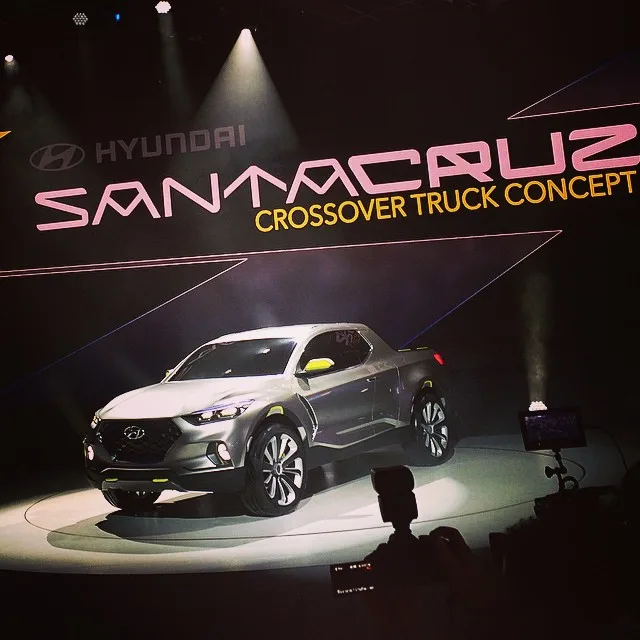
Hyundai has confirmed it is moving ahead with a production pickup truck, but the model will not reach the market before 2020. The vehicle, which draws inspiration from the Santa Cruz concept first shown at the 2015 Detroit auto show, is now in the advanced stages of development, according to Hyundai Group chief design officer Luc Donckerwolke.
Donckerwolke stated that Hyundai has progressed from design sketches and clay models to working with metal, but declined to reveal how much the final vehicle will resemble the original concept. The design has been updated to reflect Hyundai’s new approach, which aims for greater distinction between models rather than the previous family-resemblance strategy. SangYup Lee, head of Hyundai’s Global Design Center, said the production Santa Cruz will be “a lot more distinctive” and have “a lot more character” than the concept, though the core crossover-pickup format remains.
The Santa Cruz concept was originally planned for a 2018 or 2019 launch, but shifting priorities within Hyundai delayed the project. A sales downturn and the departure of former CEO Dave Zuchowski, who had championed the pickup, pushed it down the product list. As a result, the earliest the vehicle will now arrive is 2020, and Hyundai has not confirmed a specific launch date.
Santa Cruz: From Concept to Production
The Santa Cruz concept featured a compact, unibody design with a large cab, suicide rear doors, and a short bed that extended for greater load capacity. It was shown with a 2.0-litre turbodiesel engine, but sources now expect the production version to use a four-cylinder petrol engine for the US market, where diesels are less popular in this segment. The pickup is set to share its platform with the next-generation Hyundai Tucson, which is also due for a redesign.
The new design, now finalised, is described as more progressive and visually distinct from both the original concept and Hyundai’s current SUV range. While the basic layout remains, the company has moved away from a uniform design language across its range. Hyundai has not revealed any production images or detailed specifications for the pickup at this stage.
Kia Pickup Still Unconfirmed
A Kia-branded pickup sharing the same platform is under consideration, but Hyundai has not confirmed whether it will proceed. If approved, a Kia version would arrive after the Hyundai, with its own differentiated design. No further details have been released about the potential Kia model.
Market Position and Competition
The Hyundai pickup will enter a mid-size truck market dominated by the Toyota Tacoma and Honda Ridgeline, with the Ford Ranger and Chevrolet Colorado also competing for buyers. By the time Hyundai’s model launches, Volkswagen may also have entered the segment, though nothing has been confirmed. Hyundai aims to attract buyers looking for a more lifestyle-oriented, car-based pickup, rather than a traditional body-on-frame workhorse.
- Hyundai pickup confirmed for production, not before 2020.
- Design finalised, based on updated Santa Cruz concept.
- Expected to use Tucson platform and petrol engines.
- Kia version possible, but no green light yet.