Porsche 919 Hybrid unveiled at Geneva, marks Le Mans return
Porsche revealed the 919 Hybrid at the 2014 Geneva Motor Show, confirming technical details of its LMP1 contender ahead of its first Le Mans entry since 1998.
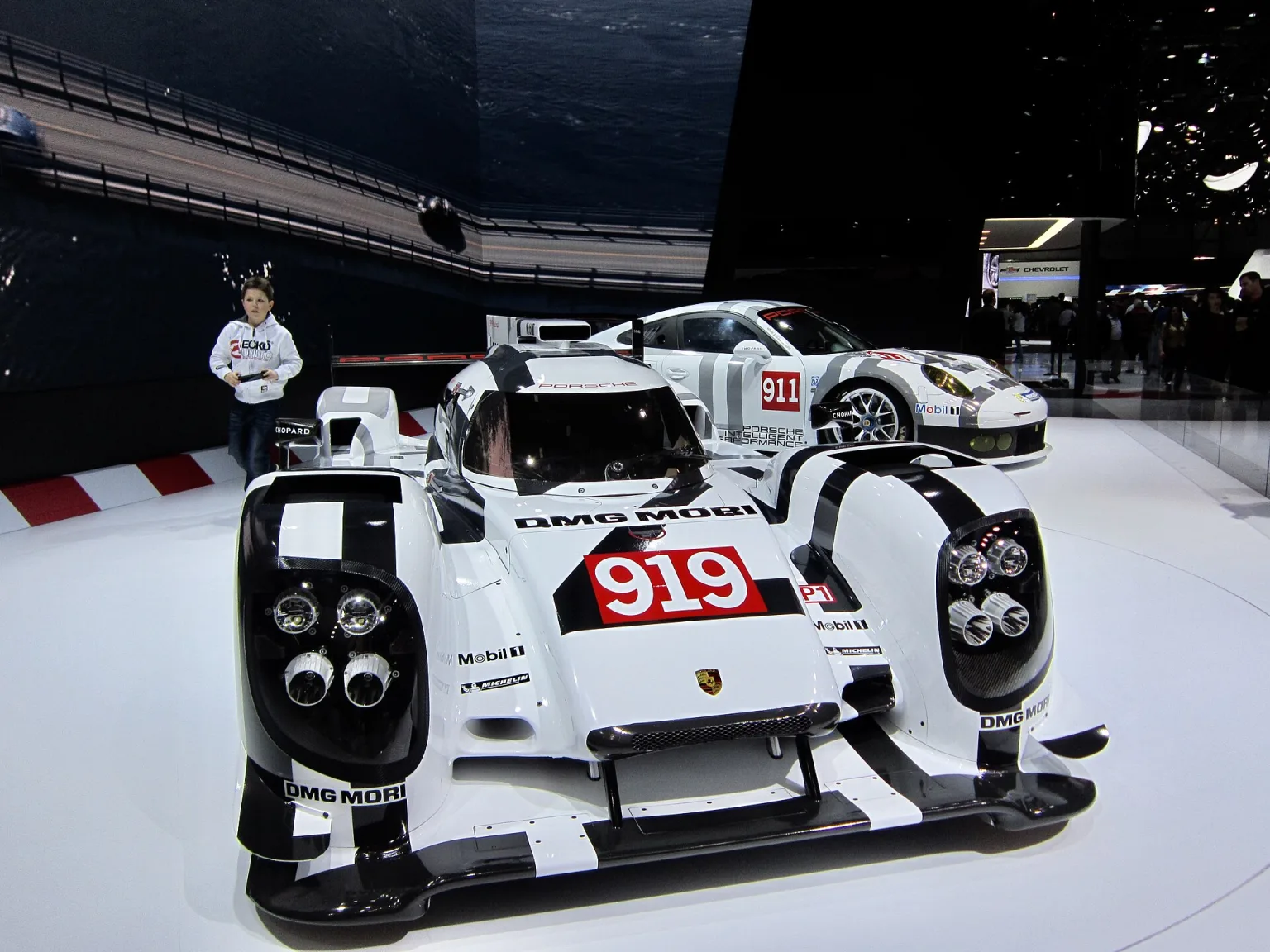
Porsche officially unveiled the 919 Hybrid at the 2014 Geneva Motor Show, confirming its long-awaited return to top-level endurance racing. The new prototype will compete in the FIA World Endurance Championship, including the 24 Hours of Le Mans, in June 2014. This marks a significant moment for the brand, as it is the first time since 1998 that Porsche has entered a works team at Le Mans. The unveiling at Geneva placed the spotlight firmly on Porsche’s ambitions in motorsport and its renewed commitment to hybrid technology.
Porsche 919 Hybrid Debuts at Geneva Motor Show
Technical Highlights of the 919 Hybrid
The 919 Hybrid is built to comply with the LMP1 regulations, which focus on efficiency and advanced hybrid technology. Central to its design is a newly developed 2.0-litre single-turbo V4 petrol engine, mounted at the rear and capable of revving up to 9,000rpm. This compact engine works with a front-axle-mounted electric motor, which is powered by a lithium-ion battery pack. The combined system allows the car to operate with temporary all-wheel drive when the hybrid system is engaged, providing additional traction and acceleration when required.
The hybrid system is a key area of innovation. Two energy recovery systems are fitted: one captures thermal energy from the exhaust, while the other recovers kinetic energy during braking. This recovered energy is stored in the battery and can be used by the front-axle electric motor. The result is a boost in acceleration and improved efficiency, both critical under the strict fuel and energy usage limits imposed by LMP1 rules.
Development and Testing
Porsche’s engineering team put the 919 Hybrid through more than 2,000 hours of wind tunnel testing. This extensive aerodynamic development was aimed at maximising performance while staying within the dimensions and minimum weight required by LMP1 regulations. The use of a V4 engine in a top-level Porsche race car represents a major shift in technical philosophy for the brand, which has traditionally favoured flat-six or V6 engines in its competition cars. The 919 Hybrid’s powertrain and aerodynamics were designed from the outset to meet the challenge of the World Endurance Championship’s efficiency-focused rules.
Driver Line-up and Le Mans Ambitions
For its return to Le Mans, Porsche assembled a strong six-driver squad. The line-up includes experienced endurance racers and former Formula 1 driver Mark Webber, alongside Timo Bernhard, Neel Jani, Romain Dumas, Brendon Hartley, and Marc Lieb. These drivers bring a mix of speed, experience, and familiarity with both hybrid systems and the demands of 24-hour racing. Porsche’s last overall victory at Le Mans came in 1998, and the 919 Hybrid’s entry raised expectations for a competitive showing against established rivals like Audi and Toyota.
- Mark Webber
- Timo Bernhard
- Neel Jani
- Romain Dumas
- Brendon Hartley
- Marc Lieb
Significance for Porsche and Future Technology
The 919 Hybrid is more than just a race car. Porsche positions it as a technology test bed, with the hybrid and energy recovery systems developed for racing expected to influence future road cars. The project signals Porsche’s renewed focus on top-level motorsport and its commitment to developing efficient powertrains. The lessons learned from the 919 Hybrid’s development and racing programme are intended to shape the next generation of Porsche’s hybrid and electric vehicles for the road.
The Geneva launch was an important moment, not only for motorsport fans but also for those interested in the future direction of Porsche’s engineering. The company’s return to Le Mans with a hybrid prototype demonstrates its belief in the relevance of endurance racing as a proving ground for new technologies. The 919 Hybrid’s combination of a compact turbocharged engine, advanced hybrid system, and energy recovery technology is designed to meet the demands of both competition and future mobility.
Looking Ahead
The 2014 season represented a new chapter for Porsche in endurance racing. The 919 Hybrid’s debut at Geneva was the culmination of years of development and signalled the brand’s ambitions for both racing success and technological advancement. As the car prepared for its first competitive outings, attention turned to how it would perform against established rivals and what impact its innovations would have on the broader automotive industry.
For more on Geneva debuts from 2014, see our coverage of the Porsche Macan.