Ford launches 2015 Everest SUV at Bangkok Motor Show
Ford has unveiled the 2015 Everest, a body-on-frame SUV with advanced off-road technology and a choice of diesel engines, at the Bangkok Motor Show.
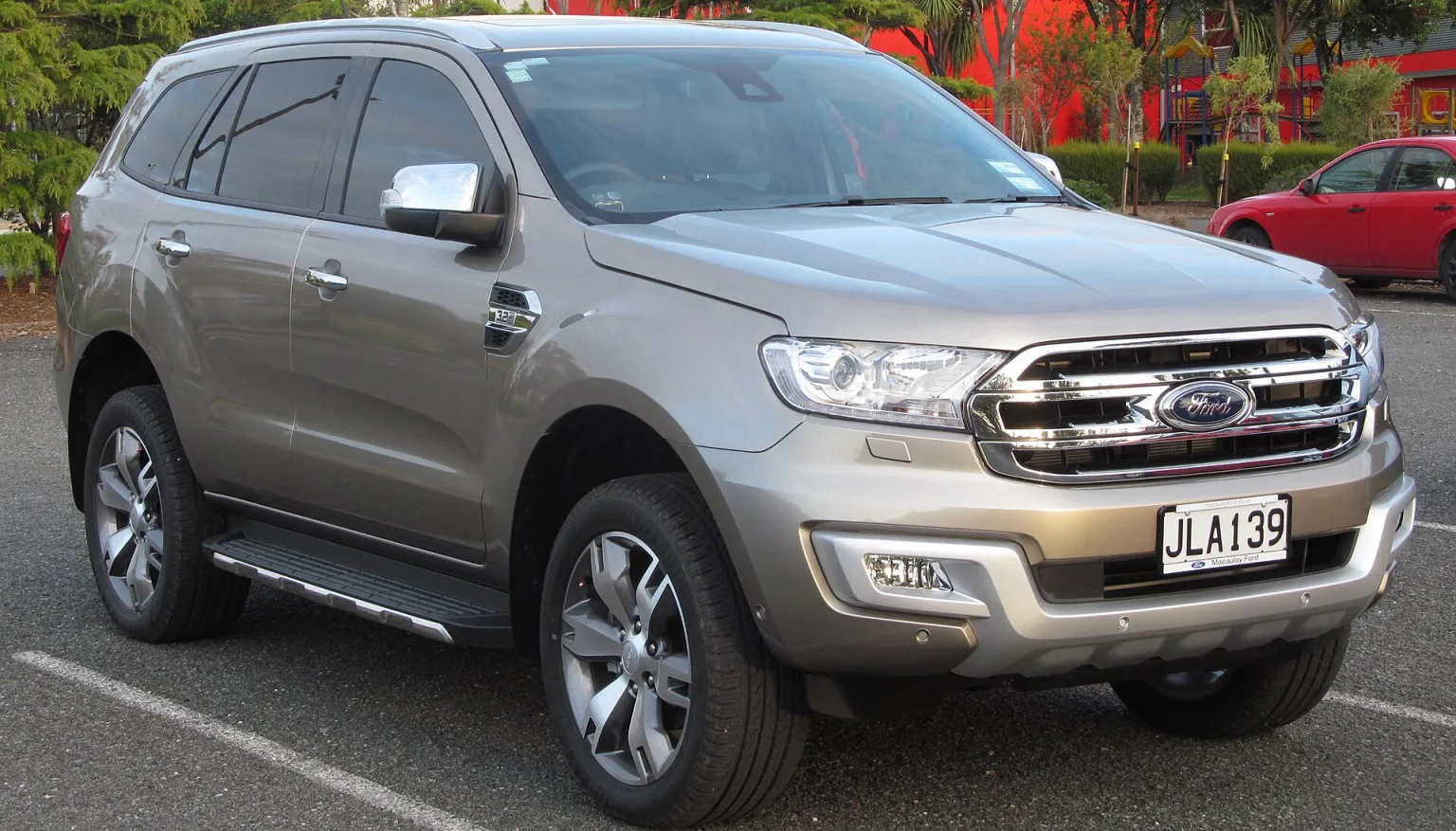
Ford introduced the 2015 Everest at the Bangkok Motor Show, confirming the new SUV’s arrival for Asia-Pacific markets. Built on a body-on-frame platform and sharing underpinnings with the Ranger pickup, the Everest targets buyers after a rugged, full-size seven-seater with genuine off-road capability.
Chassis and off-road technology
The Everest’s chassis uses coil springs at both axles and a Watt’s linkage at the rear, aiming to balance off-road articulation with improved on-road comfort. Ford’s terrain management system offers four selectable modes: normal, snow/gravel/grass, sand, and rock. The system adjusts throttle mapping, transmission behaviour, and traction control to suit the chosen surface. A low-range four-wheel drive transfer case and locking rear differential are available for more demanding conditions.
- Normal mode: everyday driving conditions
- Snow/Gravel/Grass mode: slippery or loose surfaces
- Sand mode: soft, deep surfaces
- Rock mode: low-speed, technical terrain
Engines and drivetrain
Ford offers two Duratorq diesel engines for the Everest. The 3.2-litre five-cylinder turbo diesel produces 147 kW and 470 Nm of torque. The 2.2-litre four-cylinder turbo diesel delivers 118 kW and 385 Nm. Both engines can be paired with either a six-speed manual or six-speed automatic gearbox, depending on market. The Everest is available in rear-wheel drive or with a selectable four-wheel drive system.
Interior and features
Inside, the Everest seats seven and features a power-operated third row that folds flat into the floor. Noise-cancelling technology is fitted to reduce cabin noise, and the SUV comes with Ford’s SYNC2 infotainment system, a 10-speaker audio setup with subwoofer, and a panoramic sunroof. Other convenience features include a power tailgate and semi-automatic parking assistance.
Safety and driver assistance
Standard and available safety features include electronic stability control, roll stability control, curve control, blind spot monitoring, and cross traffic alert. The Everest also offers semi-automatic parking and a suite of airbags. These systems aim to improve safety both on and off the road, reflecting Ford’s emphasis on active driver aids in its latest models.
Design and market positioning
The Everest’s exterior design borrows heavily from the facelifted Ranger, with a similar front grille, bi-xenon headlights, and LED daytime running lights. The SUV’s proportions and ground clearance underline its off-road credentials. Ford positions the Everest above the EcoSport and Kuga in its regional SUV range, targeting families and adventure buyers who need more space and capability than a crossover can offer.
Ford has not confirmed pricing or specific launch dates, but the Everest is expected to reach showrooms in key Asia-Pacific markets later in 2015. The model will compete with rivals such as the Toyota Fortuner and Mitsubishi Pajero Sport, both of which also use pickup-derived platforms.