Honda NSX test mule destroyed by fire during Nürburgring testing
A prototype of the upcoming Honda NSX was gutted by fire on the Nürburgring Nordschleife, with both occupants escaping unharmed and development now under scrutiny.
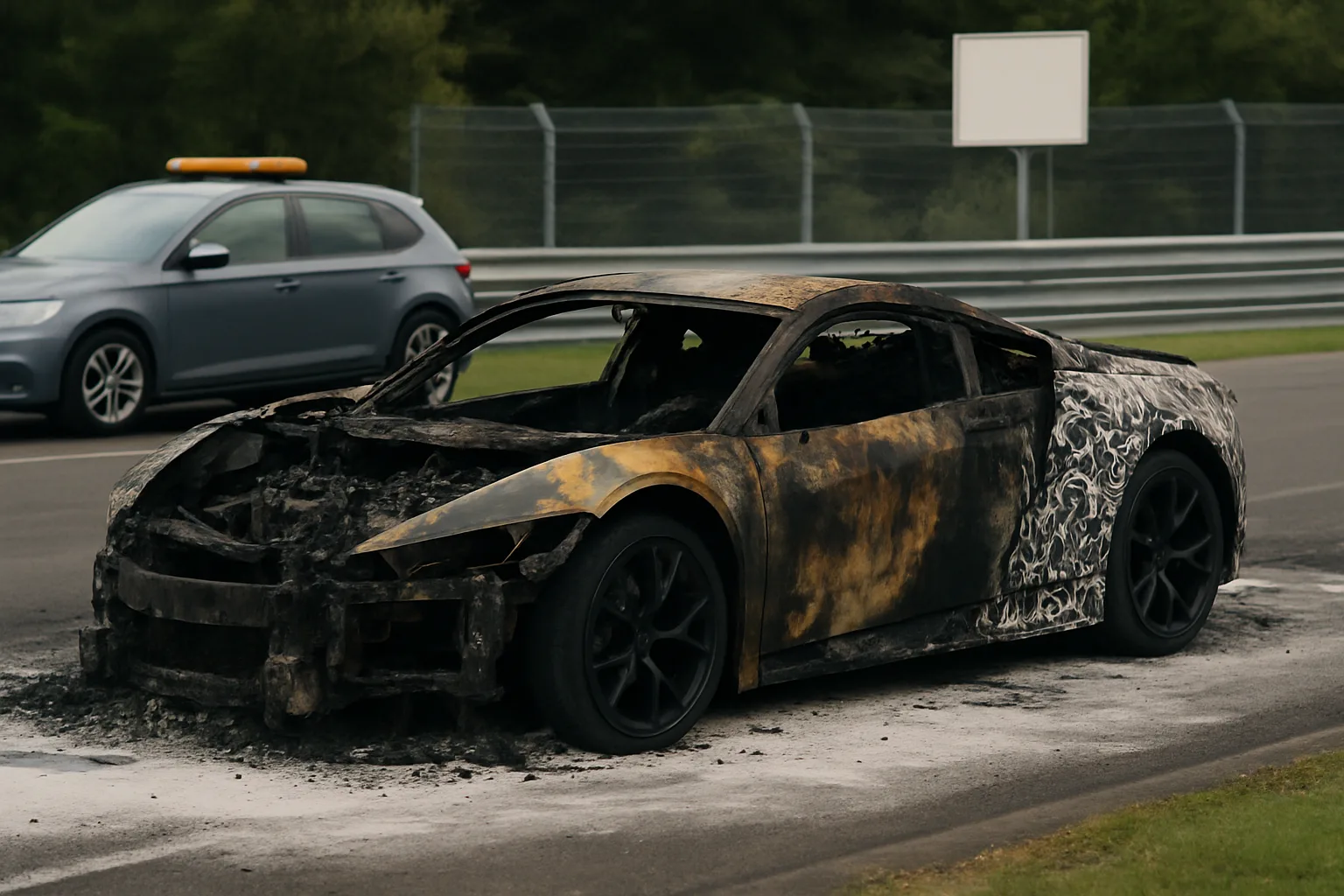
A Honda NSX test mule was destroyed by fire while undergoing high-speed testing at the Nürburgring Nordschleife. The incident occurred in late July 2014, as Honda engineers continued development of the next-generation hybrid supercar ahead of its anticipated launch. The Nürburgring, often used by manufacturers for final validation of performance cars, provided a challenging environment for the prototype’s endurance and reliability tests.
2015 Honda NSX Test Mule Catches Fire at the Nürburgring
Details of the Fire Incident
Eyewitness photographs showed the NSX engulfed in flames at the side of the track, with fire damage concentrated at the rear. The occupants, reported to be Honda test drivers or engineers, exited the vehicle safely before the fire took hold. Emergency services attended the scene, but the prototype was left a burnt-out shell. The fire appeared to originate from the rear of the car, suggesting a possible mechanical or electrical failure, although Honda did not release an official cause at the time.
Development Setback for Honda’s Supercar
The destroyed test mule formed part of Honda’s final development programme for the new NSX, which was targeting rivals such as the Ferrari 458 Italia and McLaren 650S. The production car was expected to feature a mid-mounted V6 engine paired with a hybrid system, delivering a combined output close to 600bhp. The NSX was being developed to compete directly with established supercars, and the Nürburgring test was intended to push the car’s performance and durability to the limit.
The fire comes at a critical stage, as manufacturers often push prototypes to their limits on the Nürburgring to validate performance and reliability. Incidents like this, while unfortunate, are not uncommon during prototype testing, especially with complex hybrid systems and new powertrain layouts under extreme loads. The loss of a prototype at this stage is a setback for Honda, as each test mule represents a substantial investment in both development time and resources.
Potential Causes and Technical Challenges
Although the exact cause of the fire was not confirmed by Honda at the time, the severity of the blaze and its apparent origin at the rear suggest a possible issue related to the powertrain or hybrid system. The NSX’s advanced layout, with its mid-mounted engine and electric motors, introduced new challenges in cooling and thermal management. High-performance hybrid vehicles are subject to significant stresses during track testing, and any weakness in the system can be exposed under such demanding conditions.
Such incidents prompt manufacturers to conduct thorough investigations, examining all aspects of the design, from fuel delivery to battery placement and wiring. Findings from these investigations often lead to improvements in production models, enhancing safety and reliability for future owners.
Impact on the NSX Project and Buyers
The incident is likely to prompt a full investigation by Honda’s engineering team, with particular attention to the hybrid system and thermal management under track conditions. Buyers and dealers awaiting the new NSX may have concerns about reliability, but such issues are part of the development process for high-performance vehicles. Despite the setback, the NSX’s debut remained on schedule for early 2015, with Honda expected to address any technical findings from the Nürburgring incident before final production.
For further background on the NSX prototype’s development and earlier sightings, Honda had previously tested heavily camouflaged versions of the car at the Nürburgring. These tests are an essential part of the process, allowing engineers to fine-tune performance and address any issues before the car reaches customers.
2015 Honda NSX: Key Specifications and Rivals
| Engine | Mid-mounted 3.7-litre V6 |
|---|---|
| Hybrid System | Electric motors integrated with the V6 |
| Power Output | Approximately 600bhp (combined) |
| Layout | All-wheel drive |
| Direct Competitors | Ferrari 458 Italia, McLaren 650S, Lamborghini Huracán |
- Mid-engined layout with V6 hybrid powertrain
- Target output of around 600bhp
- Direct competitors: Ferrari 458 Italia, McLaren 650S, Lamborghini Huracán