2016 Audi Q7 shows new look in near-undisguised spy shots
Audi’s second-generation Q7 has been caught with minimal camouflage, revealing major changes to its styling and hinting at a lighter, more efficient SUV ahead of its official debut.
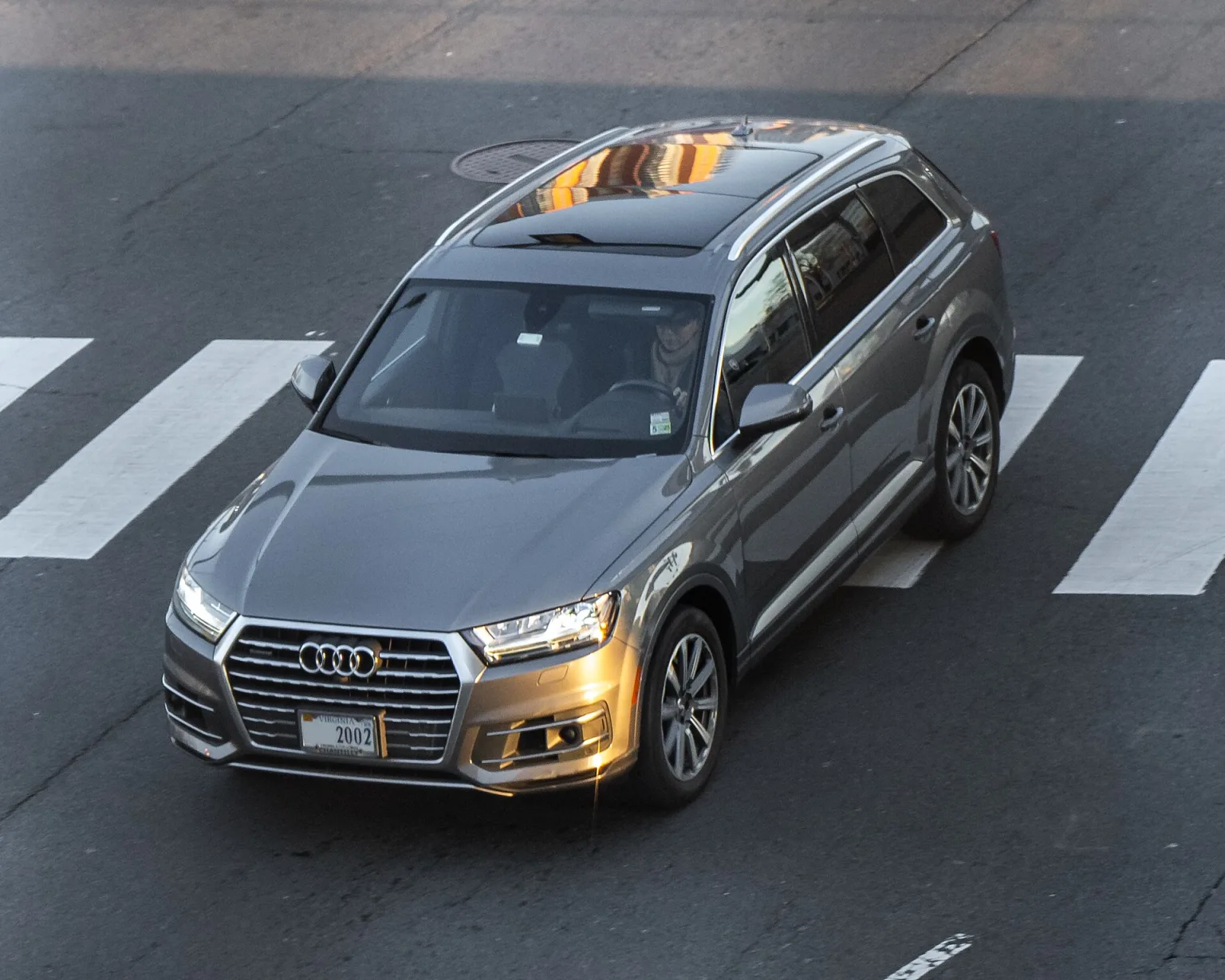
Audi’s next-generation Q7 has been photographed with only light camouflage, giving the clearest look yet at the brand’s upcoming flagship SUV before its official unveiling in 2015. The near-production prototype, spotted with minimal disguise over the grille and lighting, confirms a substantial shift in Audi’s SUV design language.
The new Q7’s front end is dominated by a broader, more angular grille and reshaped headlights, both partially masked but clearly different from the outgoing model. The bodywork appears sharper and less rounded, with pronounced wheel arches and a lower, more upright stance. This aligns with Audi’s move towards a more assertive SUV identity, distancing the Q7 from its softer predecessor.
Although the Q7 remains a large seven-seater, the new model is built on the Volkswagen Group’s MLB Evo platform. This architecture is engineered for weight savings and improved efficiency, and will also underpin the upcoming Bentley SUV. The switch is expected to cut kerb weight significantly, addressing one of the main criticisms of the current Q7’s bulk and fuel consumption.
Engines and efficiency upgrades
While Audi has not released official engine details, the Q7 is widely expected to share its powertrains with the A7 and A8 ranges. This would bring a selection of 3.0-litre V6 TDI diesels, likely spanning outputs from around 218hp to 320hp, as well as a 4.0-litre twin-turbo V8 for higher-spec versions. Audi is also developing a Q7 e-tron plug-in hybrid, targeting buyers seeking lower emissions and running costs in the premium SUV segment.
- 3.0-litre V6 TDI diesels (approx. 218hp–320hp)
- 4.0-litre twin-turbo V8 (output TBC)
- Q7 e-tron plug-in hybrid under development
The new platform and revised engine line-up should deliver improved fuel economy and lower CO2 emissions, responding to tougher European regulations and growing competition from BMW and Mercedes-Benz. The Q7’s lighter construction is also expected to improve handling and ride comfort, although final specifications will be confirmed at launch.
Styling and market positioning
Audi’s decision to reveal the Q7 in near-final form before its official debut suggests confidence in the new design direction. The sharper lines and more upright proportions bring the Q7 closer to rivals like the BMW X5 and Mercedes GLE, both of which have moved towards a more assertive look in recent years. The Q7’s size and expected seven-seat layout keep it at the top of Audi’s SUV range, above the Q5 and Q3.
An official unveiling is expected in 2015, potentially at the Geneva or Frankfurt motor show. Until then, the near-undisguised prototype provides the best indication yet of Audi’s plans for its largest SUV. For a look at previous spy photography and renderings, seeNext Gen Audi Q7 Spied on the Road.