Next-generation MINI Countryman spotted testing ahead of 2018 debut
Spy shots reveal MINI is already road-testing the next Countryman, with a test mule caught at a filling station despite a recent facelift for the current model.
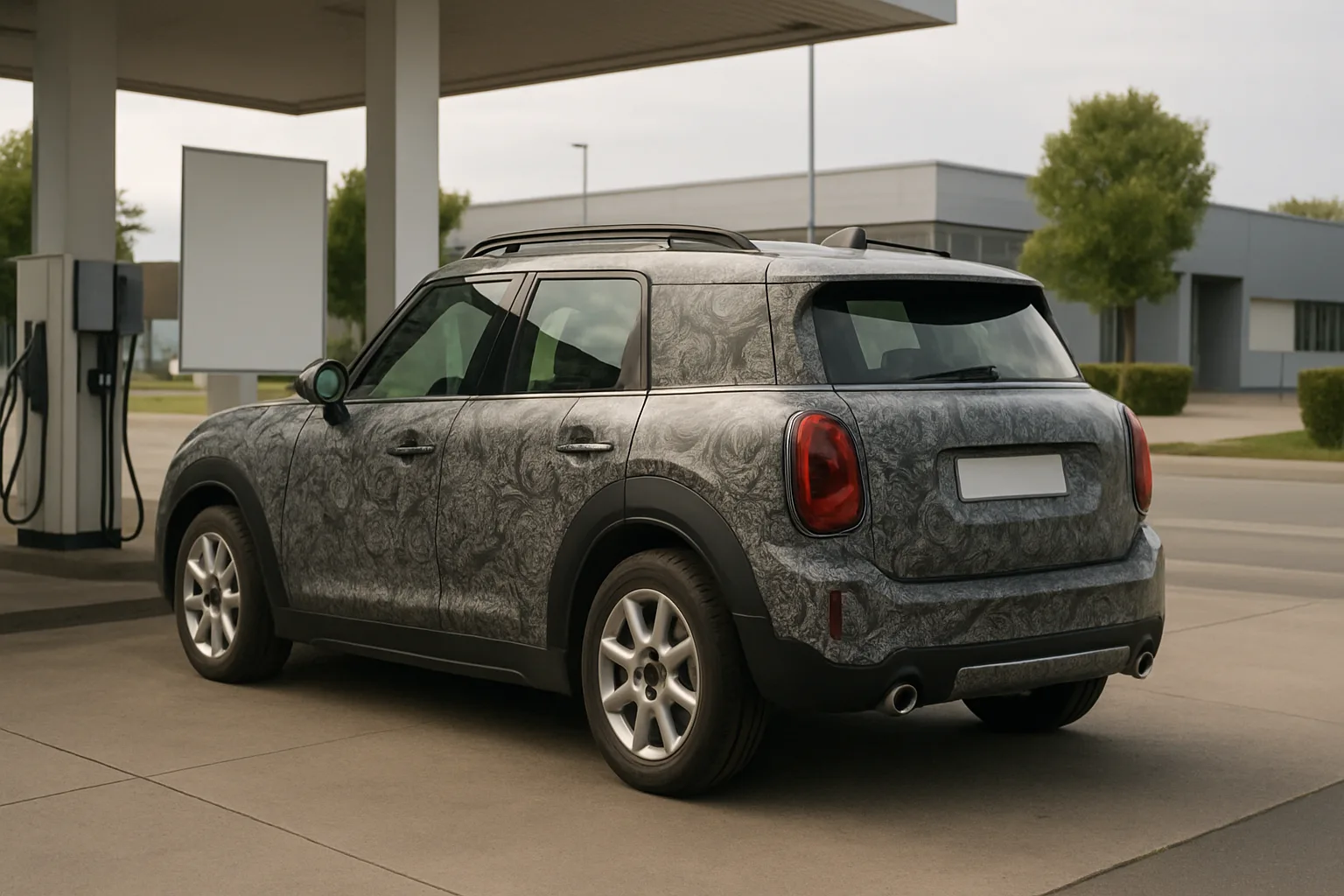
MINI is pressing ahead with development of the next-generation Countryman, with a prototype caught refuelling during winter testing. The sighting comes soon after the current model’s facelift, indicating BMW’s British marque is keen to keep its crossover fresh in a crowded segment.
The test car’s heavy cladding disguises much of the bodywork, but key MINI design elements are still apparent. The circular headlights, chrome-edged grille and wraparound windscreen are all present, making it instantly recognisable despite the camouflage. The prototype’s proportions suggest a larger footprint than the current Countryman, likely reflecting both the new platform and growing demand for more interior space in the compact SUV segment.
Platform and technical changes
The new Countryman will move to the UKL1 platform, already underpinning the latest BMW X1. This switch brings front-wheel drive as standard, with all-wheel drive expected as an option. The platform change should also allow more efficient packaging, improved cabin space and access to BMW’s latest engine range. MINI is expected to offer a mix of three- and four-cylinder turbocharged petrol and diesel units, with further downsizing likely. A John Cooper Works performance variant is also anticipated.
Despite the shared architecture, MINI’s design team will ensure the Countryman remains distinct from its BMW sibling. No evidence from the test mule suggests a departure from MINI’s established look. The brand’s approach mirrors its strategy with the five-door hatch, which sits below the Countryman in the range. The new Countryman is expected to remain the largest MINI, targeting buyers seeking a compact SUV with the marque’s trademark character.
Variants and market position
MINI is likely to continue with a familiar line-up of Countryman variants, including Cooper, Cooper S, Cooper SD and John Cooper Works. The engine range will be updated alongside the platform shift, with a focus on efficiency and emissions. MINI’s three-cylinder turbocharged petrol is tipped to play a greater role, while the diesel line-up is expected to remain for European markets. No official word yet on hybrid or plug-in options, but the UKL1 platform is compatible with electrified powertrains.
- MINI Countryman Cooper (petrol, 3-cylinder turbo)
- MINI Countryman Cooper S (petrol, 4-cylinder turbo)
- MINI Countryman Cooper SD (diesel, 4-cylinder turbo)
- MINI Countryman John Cooper Works (performance petrol)
The current Countryman received its facelift in 2015, but MINI’s decision to accelerate development of the next generation reflects the pace of change in the compact SUV sector. With rivals such as the BMW X1 and Audi Q2 also moving to new platforms and drivetrains, MINI’s move is aimed at retaining competitiveness and expanding its appeal beyond the traditional hatchback market.
For more on the outgoing Countryman and its recent updates, see our coverage of the 2015 facelift at the New York show: /2014-new-york-auto-show-live-2015-mini-countryman.