Bugatti Galibier Concept Unveiled as Four-Door Super Saloon
Bugatti revealed the 16C Galibier concept in September 2009, previewing a luxury four-door with an 8.0-litre W16 engine and carbon-aluminium construction.
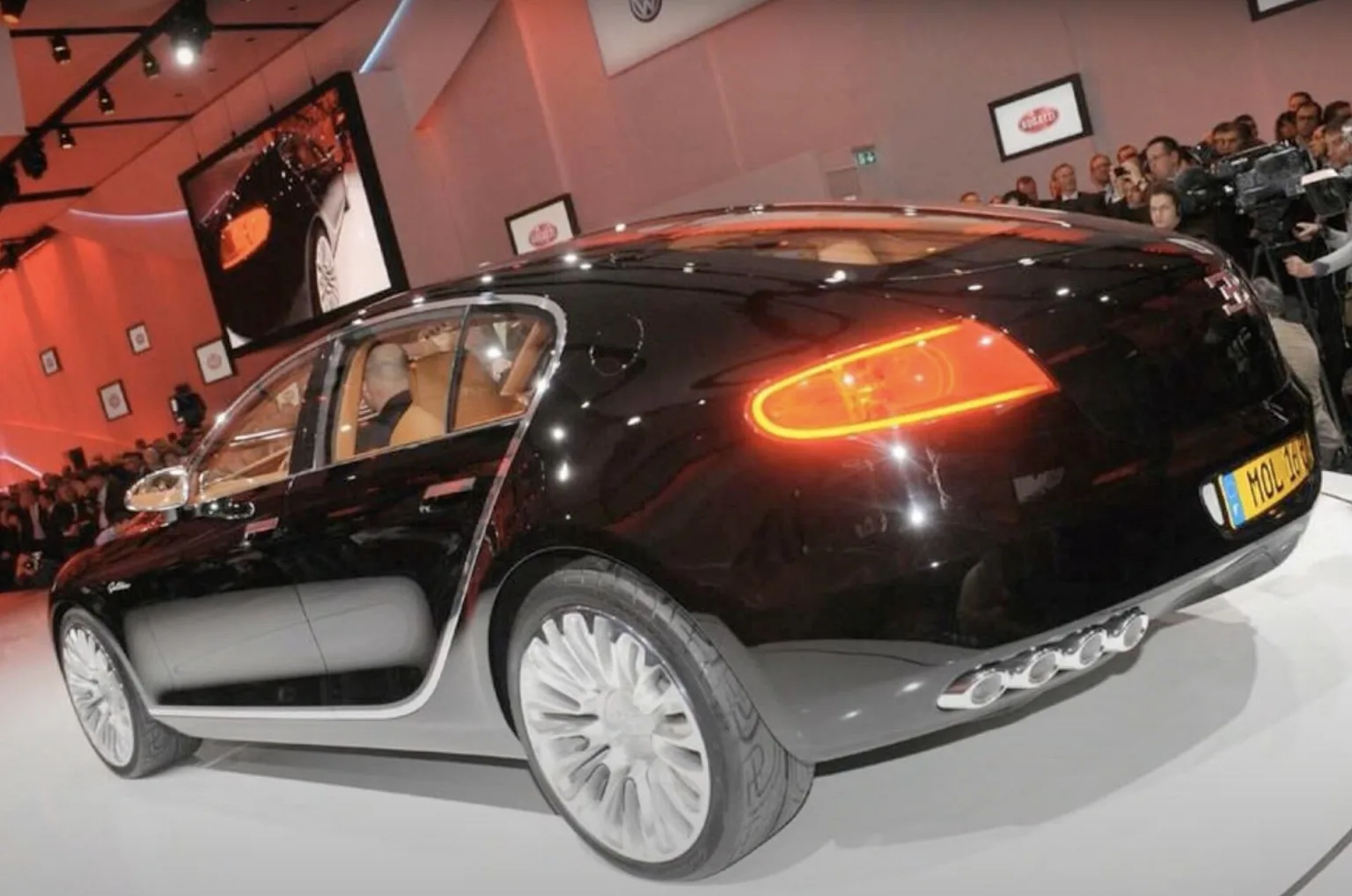
Bugatti took the wraps off the 16C Galibier concept in September 2009, introducing a four-door saloon aimed at combining the brand’s tradition of extreme performance with a new level of luxury and practicality. The concept was presented as the world’s most exclusive and powerful four-door car, with Bugatti positioning it above anything else in the segment.
The Galibier’s bodywork mixed dark blue carbon fibre with highly polished aluminium for the doors and wings. The carbon sections shimmered under light, highlighting the material’s weave, while the aluminium gave the car a striking, hand-crafted appearance. This approach was intended not just for aesthetics: Bugatti cited the rigidity and lightness of carbon fibre as essential for a car with such performance ambitions.
Bugatti’s signature design cues were present throughout. The horseshoe grille, clamshell bonnet running the length of the car, and torpedo-like profile referenced the Type 35 and Type 57, but interpreted for a modern luxury saloon. Large round LED headlights and a sweeping roofline set the Galibier apart from more traditional luxury rivals.
Technical details: W16 power and new materials
Under the bonnet, the Galibier concept featured an 8.0-litre W16 engine with two-stage supercharging. Bugatti developed the engine to run on both petrol and ethanol, reflecting some interest in alternative fuels even at the top end of the market. Power figures were not officially quoted at launch, but the intent was clear: the Galibier was designed to deliver performance on par with the Veyron, but in a grand touring saloon format.
The concept also featured four-wheel drive, ceramic brakes and a new suspension design to handle the car’s likely weight and power. Bugatti did not publish full technical specifications, but the focus was clearly on combining agility and comfort for a car of this size and performance level.
Interior and features
Inside, the Galibier carried over the exterior’s minimalist approach. The dashboard was pared back to only essential controls, with two central instruments visible to both front and rear passengers. A removable Parmigiani Reverso Tourbillon clock, which could be worn on the wrist, was developed specially for the car, underlining Bugatti’s focus on bespoke luxury.
The Galibier concept was never confirmed for production, but it signalled Bugatti’s interest in expanding beyond two-door hypercars. The brand’s use of carbon fibre and aluminium, along with its reinterpretation of classic design cues, marked the Galibier out as a serious proposal for a four-door flagship saloon.
Position in the market and legacy
At the time of its unveiling, the Galibier was positioned against the very top of the luxury saloon market, targeting buyers considering models such as the Rolls-Royce Phantom and Bentley Mulsanne, but with the promise of Veyron-level performance. The concept’s reception prompted speculation about a production version, but Bugatti did not move forward with a four-door model in the years that followed.
The Galibier remains a reference point for Bugatti’s ambitions beyond supercars. Its design and technical innovations influenced later discussions about expanding the brand’s range, though Bugatti has since focused on limited-run two-door models. The Galibier stands as one of the most striking concept saloons of its era.