Bugatti Galibier shelved as Veyron successor takes priority
Bugatti is abandoning plans for the Galibier luxury saloon, shifting focus and resources towards developing a direct replacement for the Veyron hypercar.
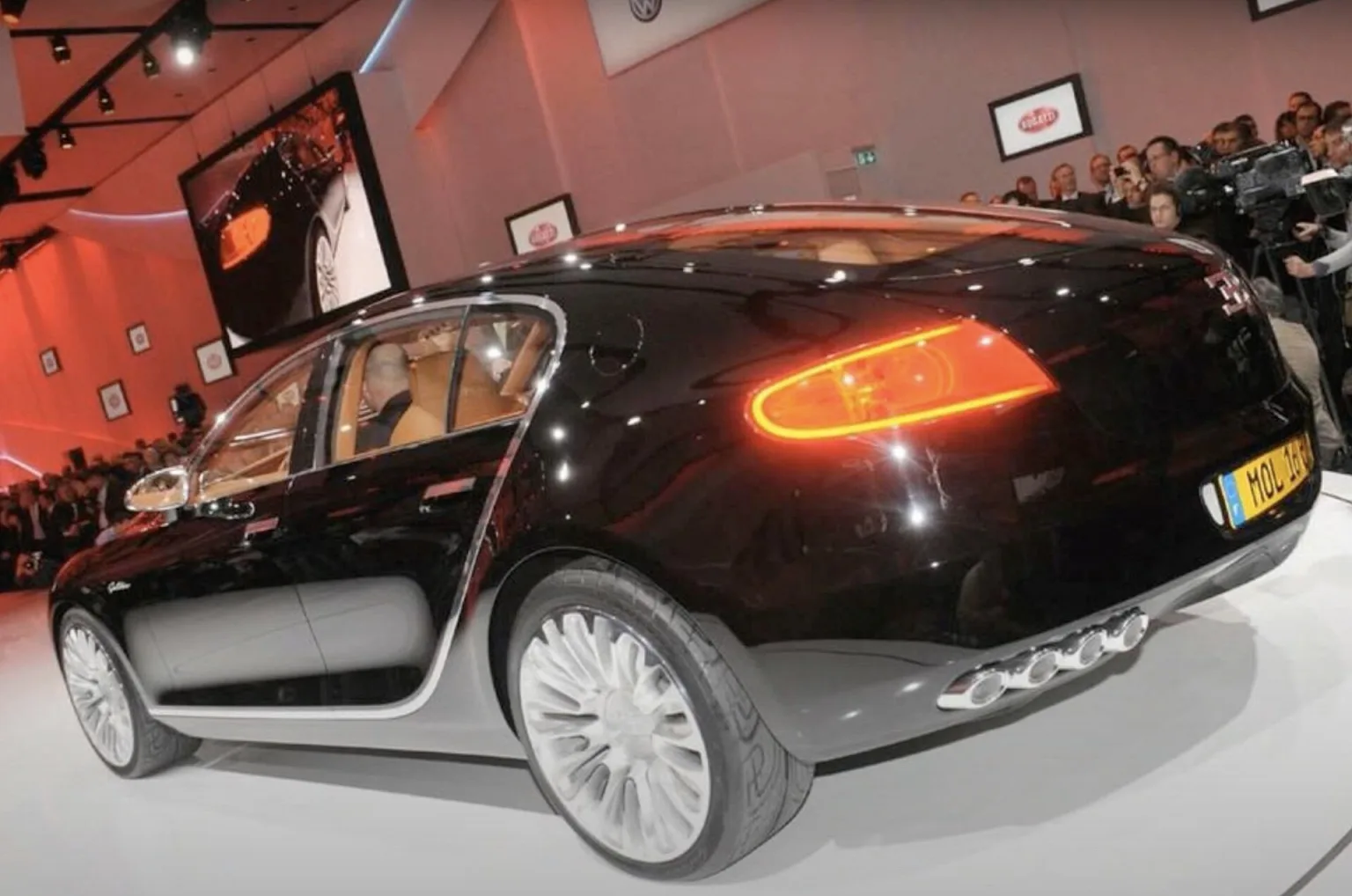
Bugatti has decided to halt development of the Galibier luxury saloon, redirecting attention and investment to a successor for the Veyron. The move, reported by Motor Trend and attributed to CEO Wolfgang Schreiber’s strategic direction, means the marque will not pursue production of the four-door Galibier concept in the near future. This decision marks a significant shift in Bugatti’s product planning, as the brand chooses to focus on its core hypercar identity rather than expanding into the luxury saloon market.
Bugatti Galibier Project Cancelled
Background: The Galibier Concept
The Galibier, first shown as a concept in 2009, was conceived as an ultra-luxury fastback saloon with a front-mounted 8.0-litre W16 engine and all-wheel drive. Early expectations placed its output above 1,000hp, with a projected top speed exceeding 235mph (378 km/h). Bugatti positioned the Galibier as a car capable of combining the brand’s performance credentials with four-door practicality. The model featured a five-door fastback body style and was intended to offer both speed and comfort, blending the technical prowess of the Veyron with greater usability for everyday driving.
Despite the excitement surrounding its unveiling, the Galibier never advanced beyond the show car stage. The final production version was initially expected to hit the market in 2014 or 2015, but no official production date was ever set. Over the years, speculation persisted about whether Bugatti would bring the concept to fruition, but shifting priorities within the company ultimately led to the project’s cancellation.
Reasons for Cancellation
Schreiber’s decision to axe the Galibier reflects doubts over whether Bugatti could sustain both a hypercar and a luxury saloon in its limited line-up. The brand’s resources and engineering capabilities are highly specialised, and dividing them between two very different models could have diluted Bugatti’s focus. According to sources, the CEO does not believe the brand can support both vehicles simultaneously, especially when considering the company’s reputation and business case are so closely tied to its hypercar offering.
The Galibier’s cancellation follows several years of uncertainty about its future. While some reports suggested Bugatti might revive the project under a different name or configuration, Schreiber’s position appears definitive for now. The company will instead concentrate its efforts on producing a worthy successor to the Veyron, aiming to retain the title of world’s fastest production car.
Implications for Bugatti’s Future
With the Galibier shelved, all attention turns to the Veyron’s replacement. Bugatti has not released technical details or a timeline for the new model, but the focus is expected to remain on extreme performance and exclusivity. The Veyron set the benchmark for production car performance, and its successor will be tasked with maintaining that legacy against increasingly strong competition from other manufacturers in the hypercar segment.
The decision to prioritise a Veyron successor underscores Bugatti’s commitment to engineering innovation and speed records. The company’s next model is expected to push the boundaries of power and speed, continuing Bugatti’s tradition of headline-grabbing performance. While details remain scarce, the industry will be watching closely to see how Bugatti responds to the challenge of surpassing the Veyron’s achievements.
Galibier Concept: Ambition Meets Reality
Bugatti’s Galibier concept was unveiled with considerable fanfare as a possible expansion beyond the two-door Veyron. Its design featured a five-door fastback body, luxurious interior appointments and the same W16 engine architecture as the Veyron, tuned for both speed and comfort. The Galibier was intended to appeal to customers seeking both performance and practicality, offering a unique proposition in the ultra-luxury segment.
Despite early speculation that production could begin by 2014 or 2015, the car remained a concept as priorities shifted within the company. The Galibier’s cancellation highlights the challenges faced by niche manufacturers in balancing ambition with commercial realities. For Bugatti, the decision to focus on a hypercar successor rather than a luxury saloon reflects a clear understanding of its brand identity and market expectations.
What Next for Bugatti?
With the Galibier project discontinued, Bugatti’s immediate future centres on the development of a new hypercar to follow in the Veyron’s footsteps. The company’s goal remains to produce vehicles that set benchmarks for speed, power and exclusivity. Although no technical specifications or launch dates for the Veyron successor have been disclosed, anticipation is high within the automotive world. Bugatti’s reputation for pushing the limits of engineering means that expectations for the next model will be substantial.
The Veyron successor is expected to target the world’s fastest production car title, continuing Bugatti’s tradition of technological innovation and performance leadership. As the company prepares for its next chapter, enthusiasts and industry observers alike will be eager to see how Bugatti maintains its position at the top of the hypercar market.