Daimler’s E-FUSO Vision One previews electric future for heavy trucks
The E-FUSO Vision One concept, revealed at the Tokyo Motor Show, signals Daimler’s plans for a new electric truck brand with a 23-tonne GVW and up to 350 km range.
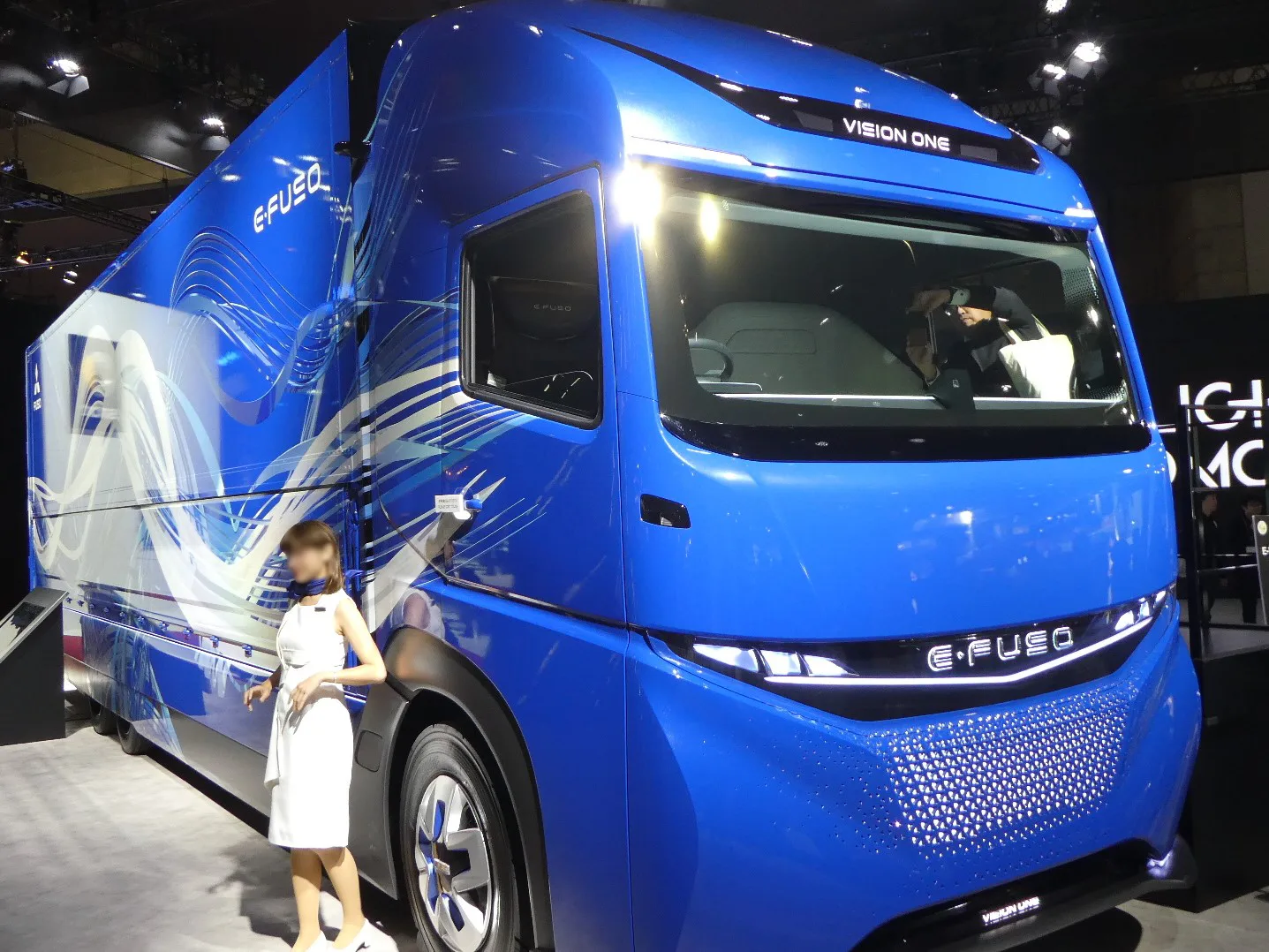
Daimler’s Mitsubishi Fuso Truck and Bus Corporation (MFTBC) used the Tokyo Motor Show to launch E-FUSO, a new brand dedicated to electric trucks and buses, and to unveil the E-FUSO Vision One concept. The Vision One is a heavy-duty electric truck designed for regional distribution, with a gross vehicle weight of 23 tonnes and a claimed range of up to 350 kilometres on a single charge.
The Vision One’s battery pack can be specified up to 300 kWh, supporting its 350 km range. The payload is around 11 tonnes, which is roughly two tonnes less than comparable diesel trucks. That shortfall reflects the current weight penalty of large battery packs, but Daimler positions the Vision One for regional and intra-city routes where range and payload demands are more manageable.
Daimler said E-FUSO will be its dedicated electric brand for trucks and buses, with the Vision One previewing the upper end of the coming portfolio. The company drew on its experience in battery and charging technology from both its passenger car and commercial divisions. The Vision One follows the FUSO eCanter, a lighter all-electric truck that had already begun deliveries to customers including UPS, Seven-Eleven and Yamato Transport Japan.
E-FUSO Vision One in context
The Vision One is not a production vehicle but a concept intended to demonstrate what Daimler’s electric heavy-duty trucks could offer in the next few years. At launch, Daimler said it was aiming to introduce a series version of the Vision One within four years in mature markets such as Japan and Europe. The company has not confirmed a production date or final specifications.
Daimler’s move to create a standalone electric brand for commercial vehicles reflects growing interest in zero-emission transport, especially for urban and regional logistics. The Vision One’s range and payload suggest it is best suited for fixed-route distribution rather than long-haul freight, at least with current battery technology.
What it means for Daimler and the market
By launching E-FUSO and previewing the Vision One, Daimler signalled that electrification is moving beyond light-duty vehicles. The company’s commitment to series production of electric heavy trucks within a few years places pressure on rivals to accelerate their own electric truck programmes. For operators, the Vision One points to a future where zero-emission trucks could be viable for regional work, though payload and recharging infrastructure remain challenges.
The Vision One’s debut came alongside the first deliveries of the eCanter, which is already in limited use by major logistics companies. Daimler’s approach suggests it is using experience from lighter vehicles to inform its heavy-duty strategy. The company has not published pricing or detailed charging times for the Vision One concept.
For more on Daimler’s electric ambitions, see Daimler-Bosch Joint Venture Doubles Electric Engine Target to 2 Million Units.