Ford and GM Face Lawsuit Over In-Car CD Ripping Systems
The Alliance of Artists and Recording Companies has sued Ford, GM, and their suppliers, alleging that in-car audio systems illegally enable music copying without required royalties.
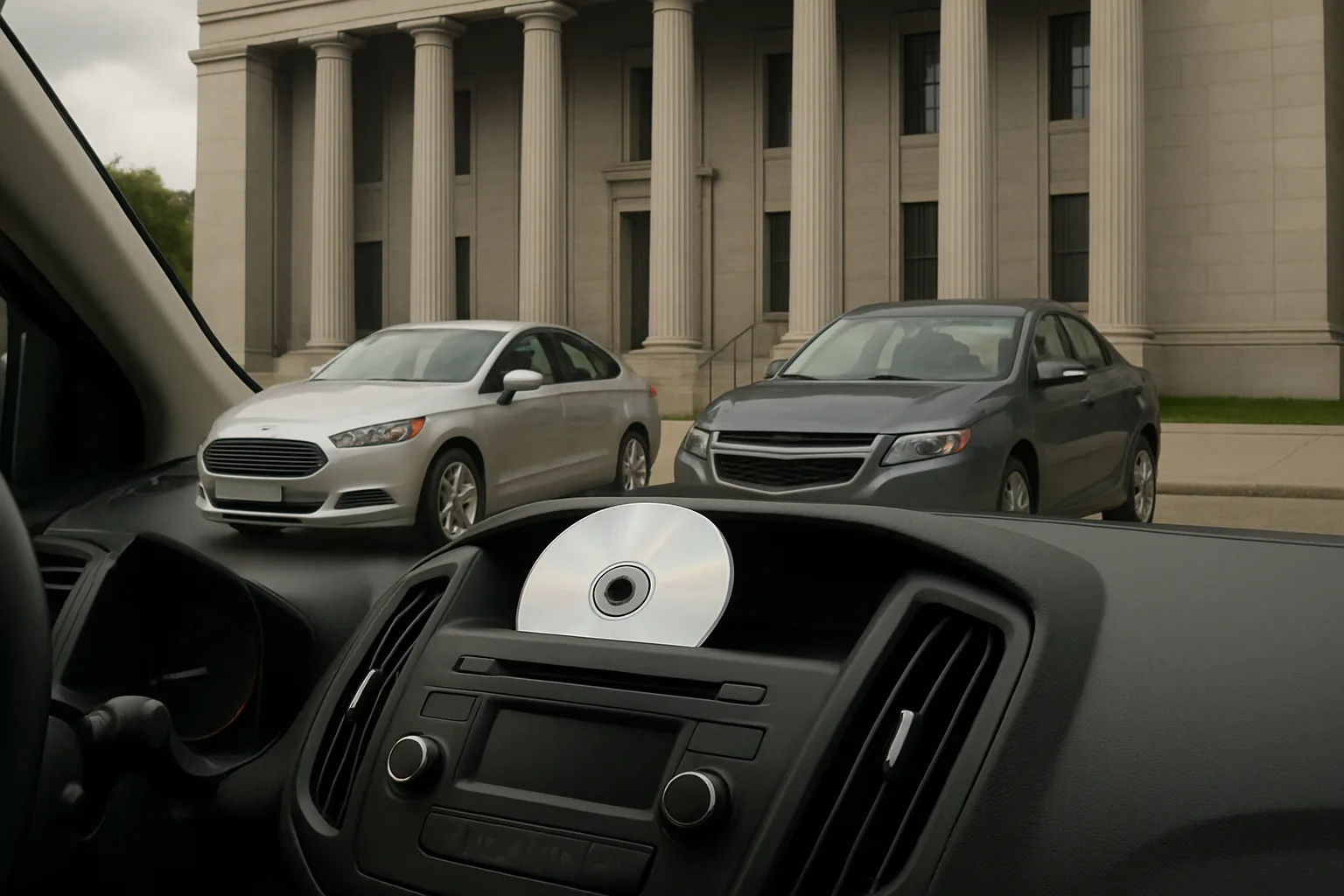
Ford and General Motors are facing legal action from the Alliance of Artists and Recording Companies (AARC), which claims the carmakers’ in-car audio systems allow drivers to copy music CDs in breach of copyright law. The suit, filed in the United States, also names Denso and Clarion, the suppliers responsible for the audio units in question.
At the centre of the case are factory-fitted infotainment systems described as “Jukebox” and “Hard Drive Device”, which have been available on various Ford and GM models for several years. These systems allow users to copy, or ‘rip’, the contents of an audio CD directly to the vehicle’s hard drive, making the music available for playback without the original disc.
Royalties and the Audio Home Recording Act
The AARC’s claim is based on the US Audio Home Recording Act (AHRA) of 1992, which requires manufacturers of certain recording devices to pay royalties to artists and record companies. The alliance argues that Ford and GM’s in-car systems fall under this law, and that the carmakers have failed to pay the required royalties for each unit sold. According to the AARC, damages could reach hundreds of millions of dollars, given the number of vehicles equipped with these features.
The AHRA was introduced to address concerns from the music industry over cassette and digital copying devices. It mandates royalties for standalone digital audio recording devices, but includes exemptions for devices integrated into larger systems. The lawsuit raises the question of whether an in-car audio system with CD ripping capability qualifies as a dedicated recording device or as a component of a broader system, which would be exempt from the law’s requirements.
Implications for automakers and suppliers
The outcome could have consequences for both automakers and their suppliers. If the court finds that the systems do fall under the AHRA, Ford, GM, Denso and Clarion could face substantial back payments and be required to alter or disable CD ripping features in future vehicles. The suit also brings renewed attention to the role of technology partners in compliance with intellectual property laws.
For buyers and owners, the dispute is unlikely to affect existing vehicles in the short term, but future infotainment features could be restricted depending on the legal outcome. The case highlights the challenges manufacturers face when integrating consumer electronics functions into vehicles, particularly when copyright laws lag behind technological development.
No court decision had been reached by the time of publication. The case is expected to test the boundaries of the AHRA and could set a precedent for how copyright law applies to automotive infotainment systems in the US market.