

Ford previews next-gen driver assist tech and self-loading wheelchair
Ford has revealed a set of advanced driver assistance features and mobility innovations, including a self-loading electric wheelchair, at its European Research and Innovation Center in Aachen.
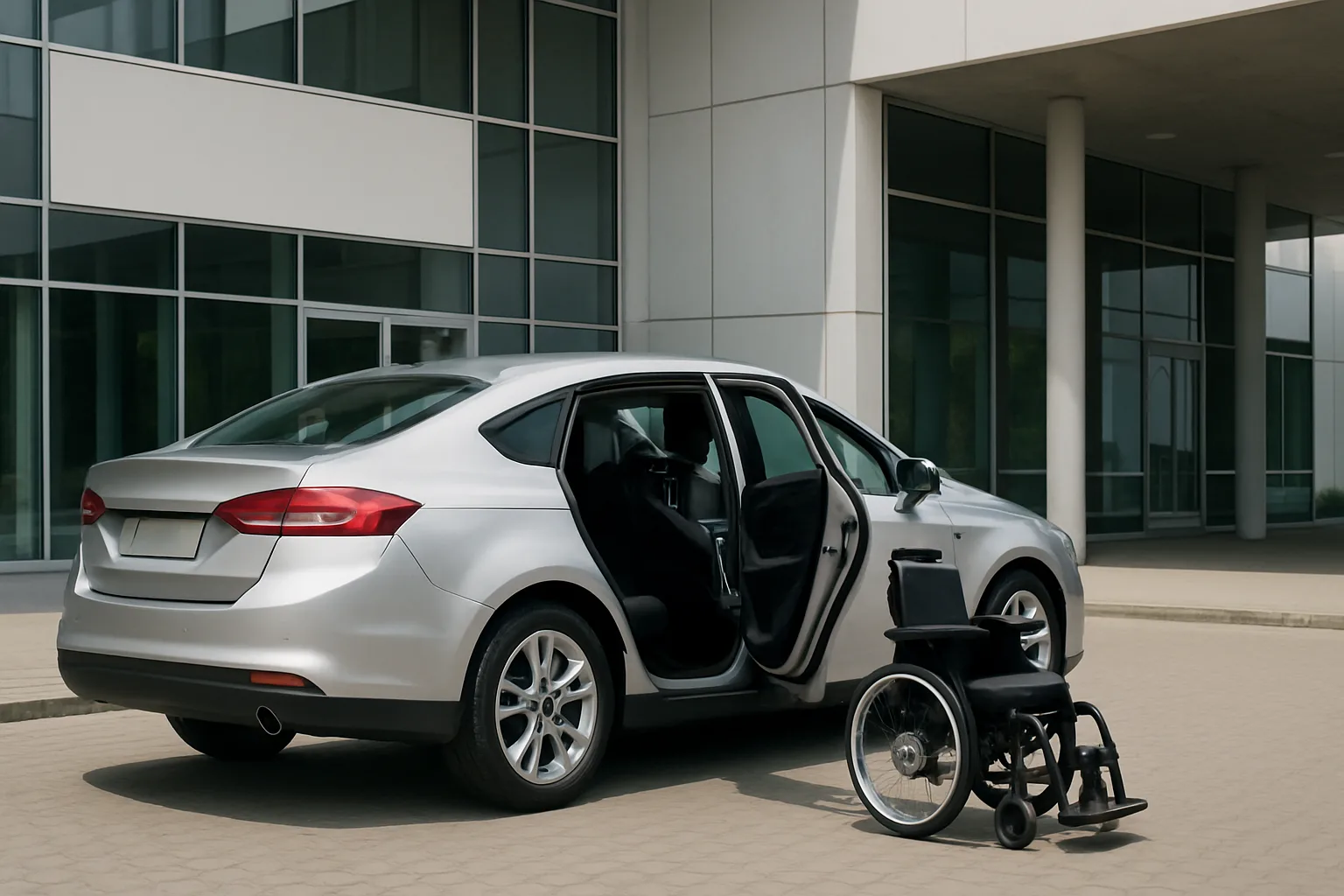
Ford has shown a suite of new driver assistance technologies and mobility devices developed at its European Research and Innovation Center in Aachen, Germany. The company previewed features set to appear on future models, alongside concepts aimed at improving personal mobility for people with disabilities.
Next-generation driver assistance systems
A highlight among the new technologies is cross-traffic alert with braking, designed to detect people or objects passing behind the vehicle when reversing. The system warns the driver and, if there is no response, automatically applies the brakes to prevent a collision. This feature is intended to reduce the risk of accidents in car parks and driveways, particularly where visibility is limited.
Ford also presented a new rear wide-view camera, which offers a wide-angle image of the area behind the car. This is displayed on the in-car screen and is particularly useful when reversing out of tight spaces or into traffic. The enhanced active park assist system, meanwhile, can now handle both parallel and perpendicular parking at the push of a button, taking over steering, throttle and braking as required.
Further developments include steering assistance to help drivers avoid other vehicles in emergency situations, and a warning system to alert drivers if they are travelling the wrong way down a motorway. Ford says these features are part of its commitment to making driving less stressful and safer, with some technologies expected to reach production models within the next two years.
Mobility innovations: the eChair and more
Alongside its driver assistance systems, Ford showcased three mobility concepts shortlisted from over 600 entries in its Global Mobility Challenge. Most notable is the eChair, a self-loading electric wheelchair designed to improve independence for disabled drivers. The eChair can load itself into and out of a vehicle, removing the need for manual handling and potentially making car travel more accessible for wheelchair users.
Other devices on display included the Carr-E, a compact electric rideable platform for short journeys, and the TriCiti, a folding electric tricycle. Both are aimed at solving the so-called last-mile problem in urban mobility, where traditional vehicles are less practical.
What comes next for Ford’s tech rollout
Ford has not given precise launch dates, but several of the driver assistance features are expected to enter production within two years. The eChair and other mobility concepts remain at the prototype stage, with no confirmed timeline for commercial availability.
The push for advanced driver assistance and inclusive mobility is part of a broader trend among major carmakers. Bosch, for example, has forecasted strong growth in assisted driving technology sales (see /assisted-driving-will-make-e1-billion-by-2016). Ford’s approach ties safety, convenience and accessibility into its future product strategy, with the Aachen centre playing a central role in bringing these ideas to market.



