Google’s Project Glass Points to Future Smart Windscreens
Google’s Project Glass, revealed in April 2012, showcased augmented reality eyewear that could pave the way for advanced windscreen displays in future vehicles.
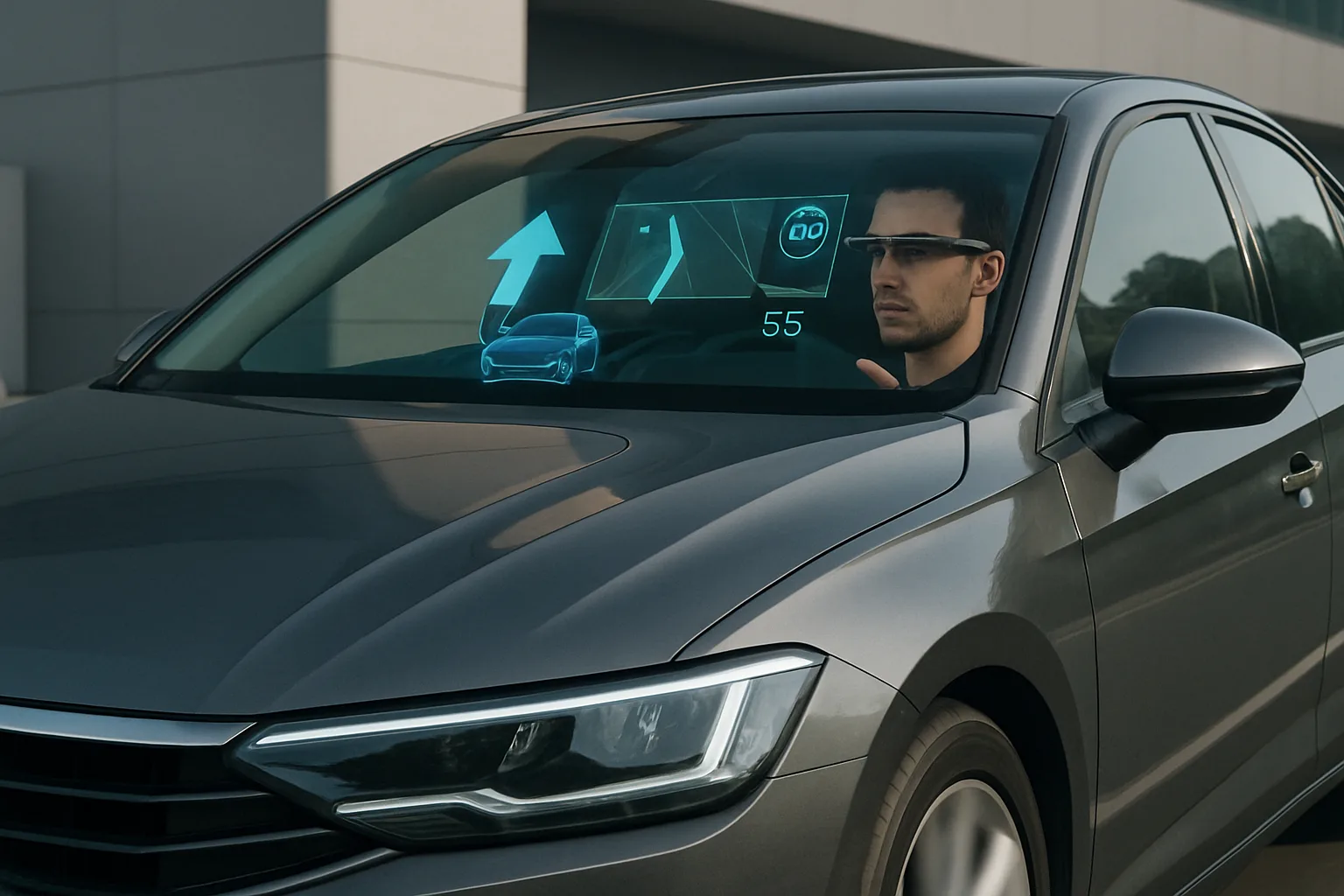
Google’s public unveiling of Project Glass in April 2012 put augmented reality eyewear firmly on the technology map. The company’s demonstration video showed digital information projected directly onto a user’s field of vision, including navigation, messaging, and live video chat. For the automotive sector, the most intriguing implication was how such technology could underpin a new generation of smart windscreens.
From wearable AR to in-car integration
Project Glass used a head-mounted display to overlay digital content onto the real world. The demonstration included walking navigation, real-time video calls, and instant photography, all triggered by voice commands. Google’s interface appeared to scan the user’s surroundings, offering context-aware information, such as directions or local business details, directly in the user’s line of sight.
The automotive industry quickly recognised the potential for similar augmented reality (AR) systems built into windscreens. Instead of glancing down at a sat-nav or dashboard, drivers could see navigation prompts, hazard warnings, and even local fuel prices projected onto the glass itself. This would place critical information directly within the driver’s view, reducing distraction and potentially improving safety.
Potential features of a smart windscreen
- Navigation arrows overlaid on the road ahead.
- Real-time hazard and speed limit alerts in the driver’s eye line.
- Contextual information such as fuel prices or restaurant locations.
- Gesture or voice control for hands-free operation.
Manufacturers had already begun exploring head-up displays (HUDs) by 2012, but these were limited to basic data such as speed or turn-by-turn directions. Google’s vision suggested a leap towards full-windscreen AR, merging digital content with the real world in a way that could transform driving. The possibility of gesture recognition, changing music tracks with a head movement, for example, was also raised as a future control method.
Safety and practical hurdles
The idea of projecting more information onto a windscreen raised immediate safety questions. Drivers could be overloaded with data or have their view obscured by digital overlays. Any viable system would need to balance the benefits of instant information with the risk of distraction or reduced visibility, a challenge that had not yet been solved in 2012.
Outlook for the automotive sector
Google’s Project Glass announcement fuelled speculation about how quickly AR could move from wearables to vehicles. While the company did not announce any direct automotive partnerships at launch, the demonstration was seen as a proof of concept for future smart windscreens. Automakers and suppliers began to consider how such systems might be integrated with existing vehicle electronics and what regulatory or safety standards would be required.
As of 2012, the technology remained experimental. But the direction was set: augmented reality had the potential to change not just personal electronics, but also the way drivers interact with their cars and the world outside the windscreen.