Hyundai Begins US Road Tests of Autonomous Hydrogen SUV
Hyundai has started public road testing in Nevada with fully autonomous fuel cell Tucson SUVs, aiming to advance both hydrogen and self-driving technologies.
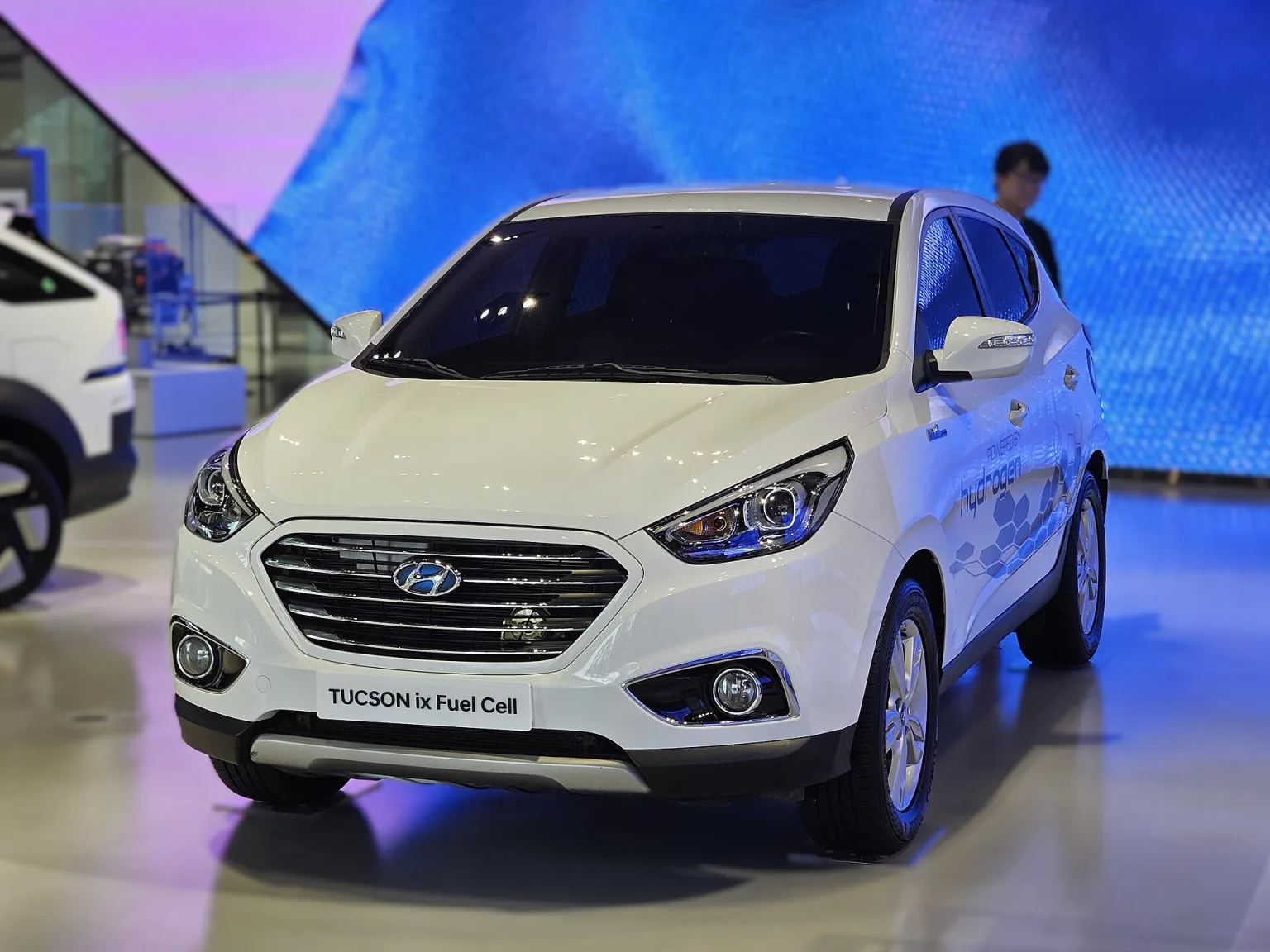
Hyundai has begun real-world testing of its fully autonomous hydrogen fuel cell SUV on public roads in Nevada, using the Tucson (ix35) Fuel Cell as the test platform. The state of Nevada granted the South Korean manufacturer a licence to operate two of the self-driving SUVs on its roads, making Hyundai one of the first carmakers to trial both hydrogen fuel cell and autonomous technologies together in the US.
The test vehicles are equipped with a suite of sensors and systems designed for autonomous operation. These include LiDAR, GPS, an Around View Monitor Camera, Blind Spot Detection Radar, Smart Cruise Control Radar and ultrasonic sensors. The Tucson Fuel Cell is fitted with features such as interval autonomous driving for controlled roads, traffic jam assist for low-speed following, an emergency stop system, and narrow path assist for navigating tight spaces. Hyundai is evaluating both partially and fully autonomous capabilities under real-world conditions.
Focus on US public roads and real-world scenarios
Hyundai’s programme in Nevada allows the company to gather data from actual traffic, road layouts and unpredictable driver behaviour. Previous autonomous testing by Hyundai took place in South Korea, but the move to the US signals an effort to accelerate development for international markets. The company has already logged over 10,000 miles of autonomous testing in Korea, including city and highway conditions.
The Nevada tests are intended to validate the system’s performance outside controlled environments and to support Hyundai’s goal of bringing autonomous features to production vehicles. The Tucson Fuel Cell’s hydrogen powertrain is also under scrutiny, with the company using these tests to monitor fuel cell reliability and efficiency during extended autonomous operation. Readers interested in Hyundai’s future hydrogen models can find further details at Hyundai to Unveil New Hydrogen Fuel Cell SUV in 2017.
Hyundai’s investment in autonomous technology
Hyundai has announced plans to invest around $10 billion in research and development for autonomous driving technologies over five years. This investment covers both hardware, such as in-house chips and sensors, and software development. The company’s roadmap includes a mix of partially and fully autonomous features, with the Nevada trials forming a key part of its validation process. Hyundai is also developing its own autonomous driving computers and sensors, aiming to reduce reliance on third-party suppliers.
What it means for hydrogen and self-driving cars
Combining hydrogen fuel cell power with autonomous systems positions Hyundai at the intersection of two major automotive trends. While hydrogen vehicles remain a niche segment, autonomous technology is advancing rapidly across the industry. Hyundai’s dual focus aims to address both emissions reduction and future mobility. For a look at how other manufacturers view these technologies, see Daimler CEO: Fuel Cells Face Hurdles, Autonomous Tech Advances Faster.