Local Motors Targets Expansion with 3D Printed Micro-Factories
US startup Local Motors plans to expand its network of micro-factories using 3D printing to produce electric vehicles, following demonstrations at Detroit's auto show.
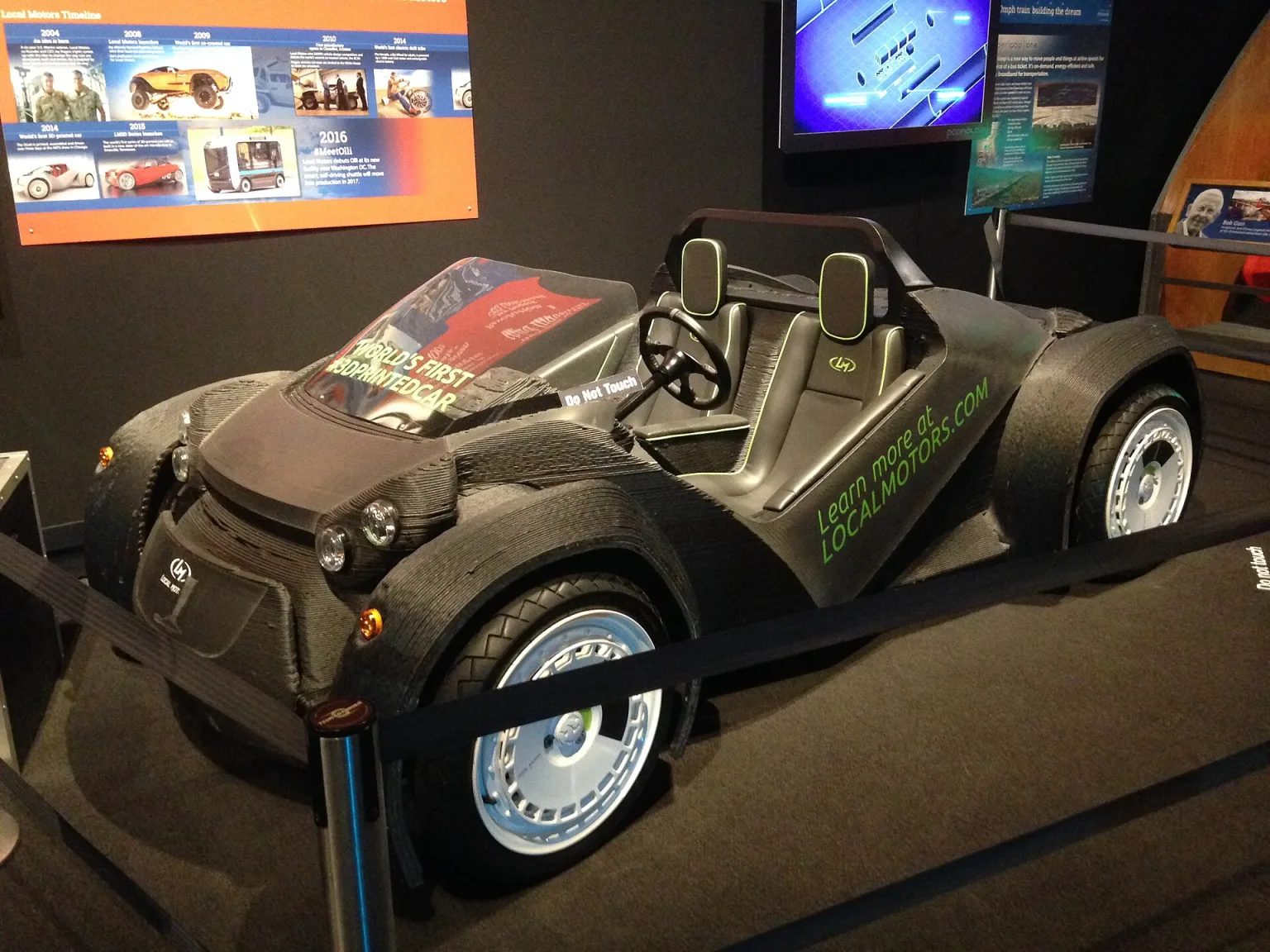
Local Motors, the US-based automotive startup, has announced plans to expand its network of micro-factories focused on 3D printed vehicle production, following public demonstrations of its technology at the 2015 North American International Auto Show in Detroit.
The company, known for its Strati electric car, has already established two micro-factories in Phoenix and Las Vegas. Local Motors intends to add sites in Washington, D.C. and Knoxville, Tennessee, as it prepares to bring its 3D printed vehicles to market later in 2015. The Strati is produced using a digital file to drive large-scale 3D printers, which fabricate the body, chassis and interior components. Conventional automotive parts, such as the suspension, wheels and powertrain, are then fitted to complete the vehicle.
How Local Motors Builds 3D Printed Cars
Unlike traditional car manufacturing, which relies on stamping, welding and large-scale assembly lines, Local Motors employs additive manufacturing. The process, also known as stereolithography, uses computer-controlled lasers to fuse powdered or liquid materials layer by layer, creating solid vehicle structures directly from digital designs. While major automakers have used 3D printing for rapid prototyping and select components, Local Motors is among the first to attempt production of entire vehicle bodies and chassis by this method.
Once the 3D printed structures are complete, the company fits traditional automotive hardware, including batteries, motors, suspension and wheels, to create a fully functional electric car. The Strati's powertrain is battery-electric, aligning with the growing interest in low-emission urban vehicles. Local Motors claims the process allows for rapid iteration and localised production, reducing the need for large, centralised factories.
Implications for Manufacturing and Jobs
The micro-factory model could reshape how vehicles are produced and supplied. Smaller, decentralised facilities allow for greater flexibility in responding to local market demand and customisation. For workers, such a model may mean a shift from traditional assembly line roles to more specialised technical positions in digital design, additive manufacturing and final assembly. However, the scale of job creation compared to conventional plants remains to be seen.
3D Printing in the Broader Industry
While Local Motors pushes ahead with full-scale 3D printed vehicles, most established manufacturers continue to use additive manufacturing primarily for prototyping or limited-run parts. The potential for 3D printing to disrupt traditional supply chains and manufacturing models has attracted attention across the sector, but widespread adoption for volume production remains limited.