Mercedes F1 V6 Turbo Engine Output Revealed by Lauda
Niki Lauda has stated that Mercedes’ new Formula One turbo V6 engine produces about 580 horsepower from its internal combustion unit, excluding the electrical boost.
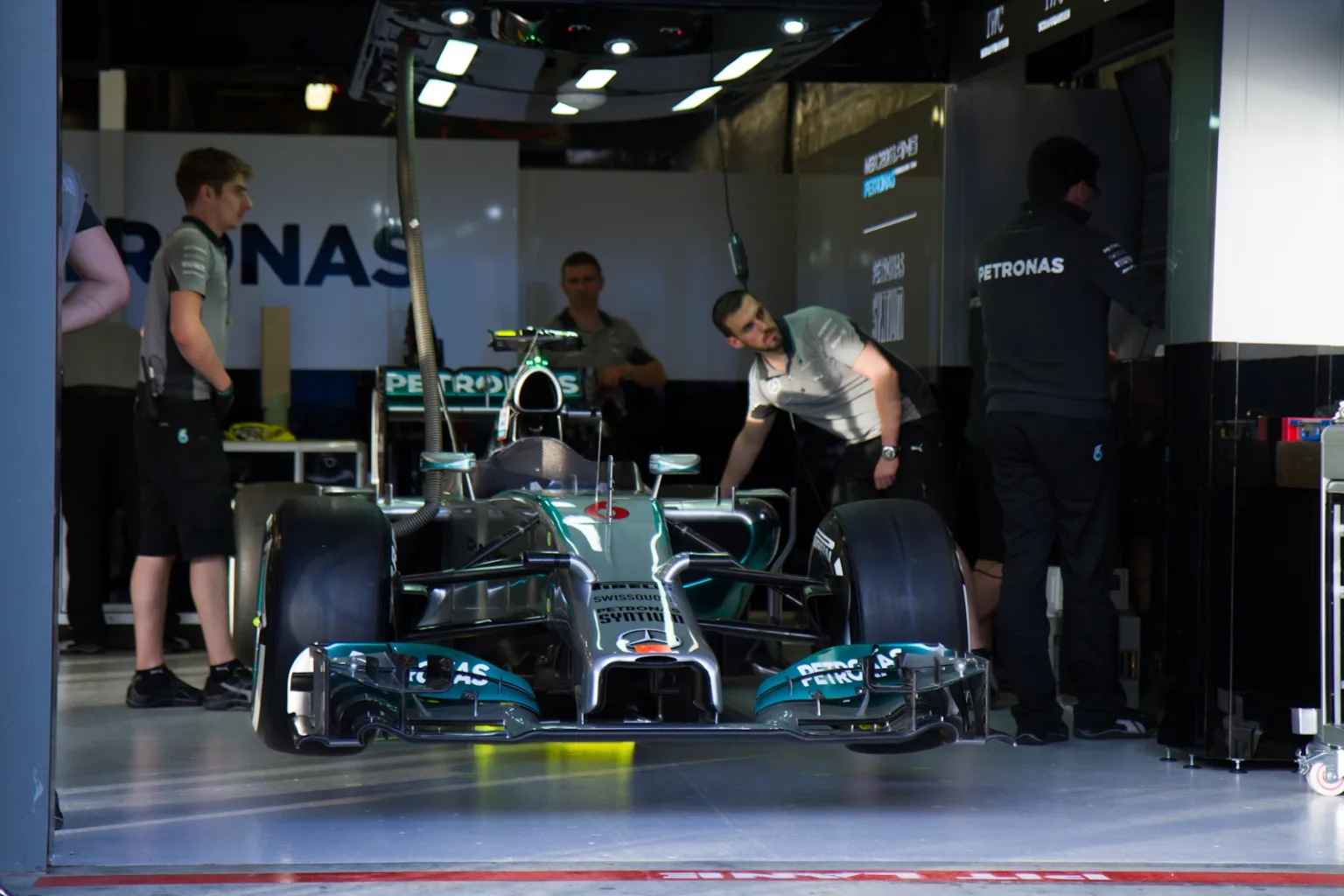
Mercedes F1 chairman Niki Lauda made headlines in March 2014 by revealing that the team's new turbocharged V6 engine produced approximately 580 horsepower from its internal combustion engine alone. This statement was made as Formula One entered a new era of hybrid turbo V6 regulations, which dramatically changed the technical landscape of the sport. Lauda’s comment, given to Austrian broadcaster Servus TV, offered a rare insight into the performance of the Mercedes power unit at a time when teams were usually secretive about such details.
Mercedes V6 Produces 580hp: Lauda Reveals Power Figures
Technical Details of the Mercedes Power Unit
At the core of Mercedes’ 2014 power unit was a 1.6-litre turbocharged V6 engine. According to Lauda, this engine alone was responsible for around 580hp, a figure that set a new benchmark for the sport’s new generation of powertrains. However, the internal combustion engine was only one part of the equation. The 2014 regulations also introduced an advanced energy recovery system (ERS), capable of delivering an extra 160hp for a limited period each lap. This hybrid system harvested energy from both braking (MGU-K) and exhaust gases (MGU-H), storing it in batteries for use during acceleration.
When both the internal combustion engine and the ERS were delivering maximum power, the combined output of the Mercedes hybrid system could approach 740hp. This made Mercedes’ power unit a formidable force at the start of the 2014 season. The figures provided by Lauda were particularly notable because Formula One teams typically avoid disclosing such specifics, preferring to keep their technical advantages under wraps. Lauda’s openness was unusual and highlighted Mercedes’ confidence in its engineering lead.
Reactions from Rivals and the Formula One Community
Lauda’s admission did not go unnoticed by competitors. Dr Helmut Marko, representing Red Bull Racing, responded to the figures by expressing his envy, noting that he would be pleased to have 580hp from his own team’s engine at the time. Red Bull, the reigning world champions, were struggling to match Mercedes’ pace and reliability in the early part of the season. The public disclosure of Mercedes’ power figures only underscored the gap between the teams and highlighted the scale of the challenge facing Mercedes’ rivals.
The 2014 season was the first to feature these highly complex hybrid power units, which combined traditional combustion engines with sophisticated electrical systems. The new rules limited fuel flow and capped the total amount of fuel allowed per race, forcing teams to focus on efficiency as well as raw power. Mercedes’ early success was attributed not only to its powerful engine but also to its superior integration of the hybrid systems and its reliability, which allowed the team to capitalise on its technical advantage from the outset.
2014 F1 Power Unit Regulations and Their Impact
The introduction of 1.6-litre V6 turbocharged engines in 2014 marked one of the most significant regulatory changes in Formula One history. The aim was to make the sport more relevant to road car technology and to improve efficiency. The ERS could deliver up to 160hp for about 33 seconds per lap, a substantial increase over the previous KERS system. The combination of downsized engines and hybrid technology led to a new era of development, with Mercedes emerging as the early leader thanks to its innovative approach and early investment in hybrid systems.
- 1.6-litre V6 turbocharged internal combustion engine
- ERS (Energy Recovery System) providing up to 160hp electrical boost
- Combined peak output close to 740hp under maximum deployment
- Strict fuel flow and total fuel usage limits per race
Mercedes’ willingness to disclose the combustion engine’s output was in contrast to the secrecy surrounding the full details of hybrid deployment and engine mapping. The complexity of the 2014 power units forced all teams to accelerate their development programmes, but Mercedes’ head start gave it a significant competitive advantage that would shape the season and the years that followed.
Clarification on Power Figures
It is important to clarify that Lauda’s 580hp figure referred specifically to the petrol-powered internal combustion engine. The total system output, when the ERS was fully deployed, could reach close to 740hp, but this peak was available only for short periods each lap due to regulatory limits on ERS deployment. The exact strategies for using the hybrid boost, as well as the detailed mapping of engine modes, remained closely guarded secrets within Mercedes and other teams.
Lauda’s comments provided a rare glimpse into the technical strengths that helped Mercedes become the dominant force in Formula One’s hybrid era. The combination of a powerful and efficient combustion engine, advanced hybrid technology, and strong reliability established Mercedes as the team to beat in 2014 and set a benchmark for others to follow.
| Engine type | 1.6-litre turbocharged V6 |
|---|---|
| Internal combustion engine output | Approx. 580hp |
| ERS electrical boost | Up to 160hp |
| Combined peak output | Close to 740hp |
| Season introduced | 2014 |
| Key advantage | Power and reliability |