Swiss Researchers Trial 15-Minute EV Charging Station
EPFL engineers have demonstrated a prototype charging station using buffer battery storage to deliver a 4.5MW charge, allowing an electric car to recharge in just 15 minutes.
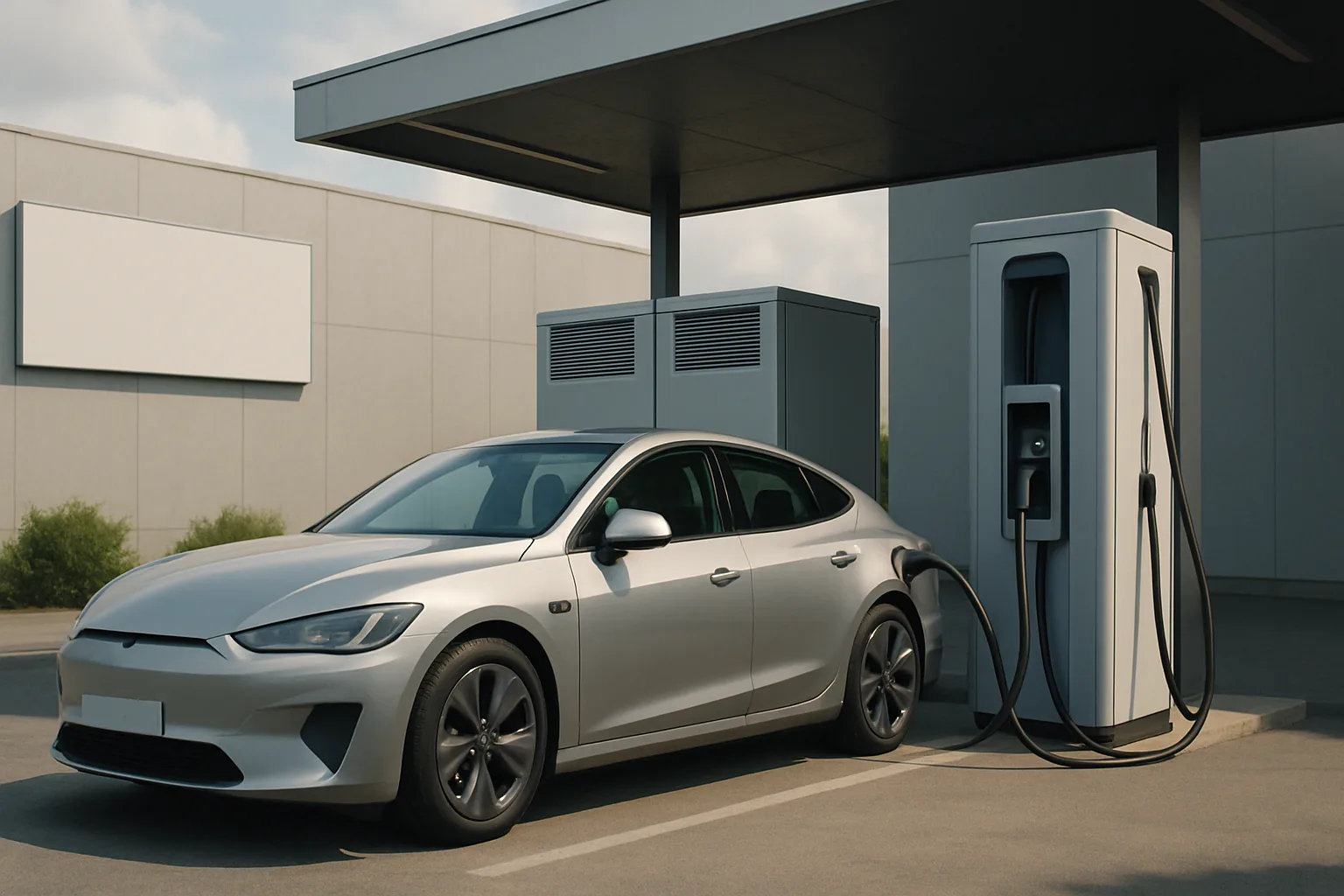
A team at the Ecole Polytechnique Fédérale de Lausanne (EPFL) has demonstrated a prototype electric vehicle charging station capable of delivering a full charge in 15 minutes. The system uses a 4.5 megawatt power output, enabled by a buffer battery storage solution designed to avoid overwhelming the local electricity grid.
The EPFL project addresses one of the main hurdles to wider electric vehicle adoption: long charging times. While battery capacities and ranges have improved, rapid charging remains limited by the power available from most grids. Delivering 4.5MW directly from the grid would risk destabilising local supply, but the EPFL team’s buffer storage approach sidesteps this by charging a stationary lithium iron battery slowly and then transferring the stored energy rapidly to the vehicle when needed.
Buffer battery technology
The demonstrator uses a lithium iron battery roughly the size of a shipping container, installed on a trailer for mobility. This buffer battery is charged continuously at a low rate from the existing low-voltage or medium-voltage grid, which reduces the infrastructure investment compared to upgrading local power lines for direct high-power charging.
When a car requires a quick charge, the system disconnects from the grid and the buffer battery releases its stored energy at high power. This avoids the risk of grid overload and enables charging speeds comparable to refuelling a petrol or diesel vehicle. The EPFL team said the system was designed to break the psychological barrier of half-hour charging, with the prototype achieving a 15-minute turnaround.
Practical considerations and next steps
The prototype was developed in partnership with other scientific institutions and tested with a typical EV battery size. The approach could allow high-speed charging stations to be deployed in areas where grid upgrades would otherwise be prohibitively expensive or slow. The researchers noted that the current system could be improved further, but the demonstration proves the technical feasibility of buffer battery charging for EVs.
For now, the EPFL prototype remains a research project, but its practical implications are clear. If scaled, such technology could help make ultra-fast charging widely available without the need for major changes to local electricity infrastructure. This would address a major concern for both potential EV buyers and operators of charging networks.
Related stories on battery and charging innovation can be found at Nissan invests £26.5m in Sunderland battery plant to secure UK EV supply.