Prince Salman Named Saudi Crown Prince After Nayef’s Death
Saudi Arabia has appointed Prince Salman as crown prince following the death of Prince Nayef, ensuring a clear line of succession for the world’s leading oil exporter.
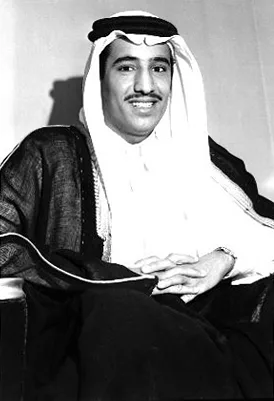
Saudi Arabia has appointed Prince Salman as the new crown prince, one day after the burial of Crown Prince Nayef. The announcement, made by royal decree and reported on state television on 18 June 2012, follows the death of Nayef bin Abdulaziz al-Saud, who had served as both crown prince and interior minister. Prince Nayef died on 16 June 2012 after a period of medical treatment in Geneva. His passing required the kingdom to move swiftly to ensure continuity at the top of the monarchy.
Background to the Succession
Prince Salman, who was previously the governor of Riyadh and later served as defence minister, is now next in line to the throne of the world’s largest oil exporter. The Allegiance Council, a body comprised of King Abdulaziz’s sons and some of his grandsons, is responsible for approving the appointment of the new crown prince. This council was established to formalise the succession process and minimise internal disputes within the royal family.
Significance for Saudi Arabia and the Oil Market
The swift appointment of Prince Salman was intended to reassure both domestic and international audiences of a smooth transition. As the world’s largest oil exporter, Saudi Arabia’s leadership changes are closely watched by global energy markets. The kingdom has a central role in OPEC and significant influence over oil pricing and supply. A clear succession plan is seen as essential for maintaining market confidence, especially during periods of political uncertainty in the region.
Saudi Arabia holds the world’s largest proven oil reserves and remains the leading crude oil exporter. Stability in its leadership is particularly important for international partners and oil customers, who rely on consistent policy and reliable supply. The government’s approach to succession, formalised in recent years, is designed to avoid uncertainty that could affect the global oil market.
Domestic Challenges and Regional Context
The timing of Prince Salman’s appointment comes as Saudi Arabia faces a range of domestic challenges. These include high youth unemployment, demands for women’s rights, and the wider impact of the uprisings across the Arab world. While the kingdom has remained more stable than some of its neighbours during the Arab Spring, the ruling family recognises the need to address public concerns and maintain order.
The death of Prince Nayef and the subsequent appointment of Prince Salman occur at a period of heightened regional instability. The government’s ability to manage succession efficiently is seen as a key factor in maintaining both domestic stability and its influence in the region.
Succession Structure and Next Steps
The Saudi succession process is governed by royal decree and the endorsement of the Allegiance Council. Prince Salman’s appointment as crown prince positions him as the immediate heir to King Abdullah. Following tradition, the royal court is expected to observe a period of mourning after Prince Nayef’s death.
For Saudi Arabia’s international partners and oil customers, the transition signals continuity at the top of the kingdom’s leadership. The formalised succession process is designed to provide stability for both domestic governance and the global oil market. With Prince Salman now in place as crown prince, observers will be watching closely for any further developments in Saudi leadership and policy direction.