IIHS Plans Passenger-Side Small Overlap Crash Test Requirement
The US Insurance Institute for Highway Safety is preparing to add a passenger-side small overlap crash test to its safety awards after research showed weaker protection for right-front occupants.
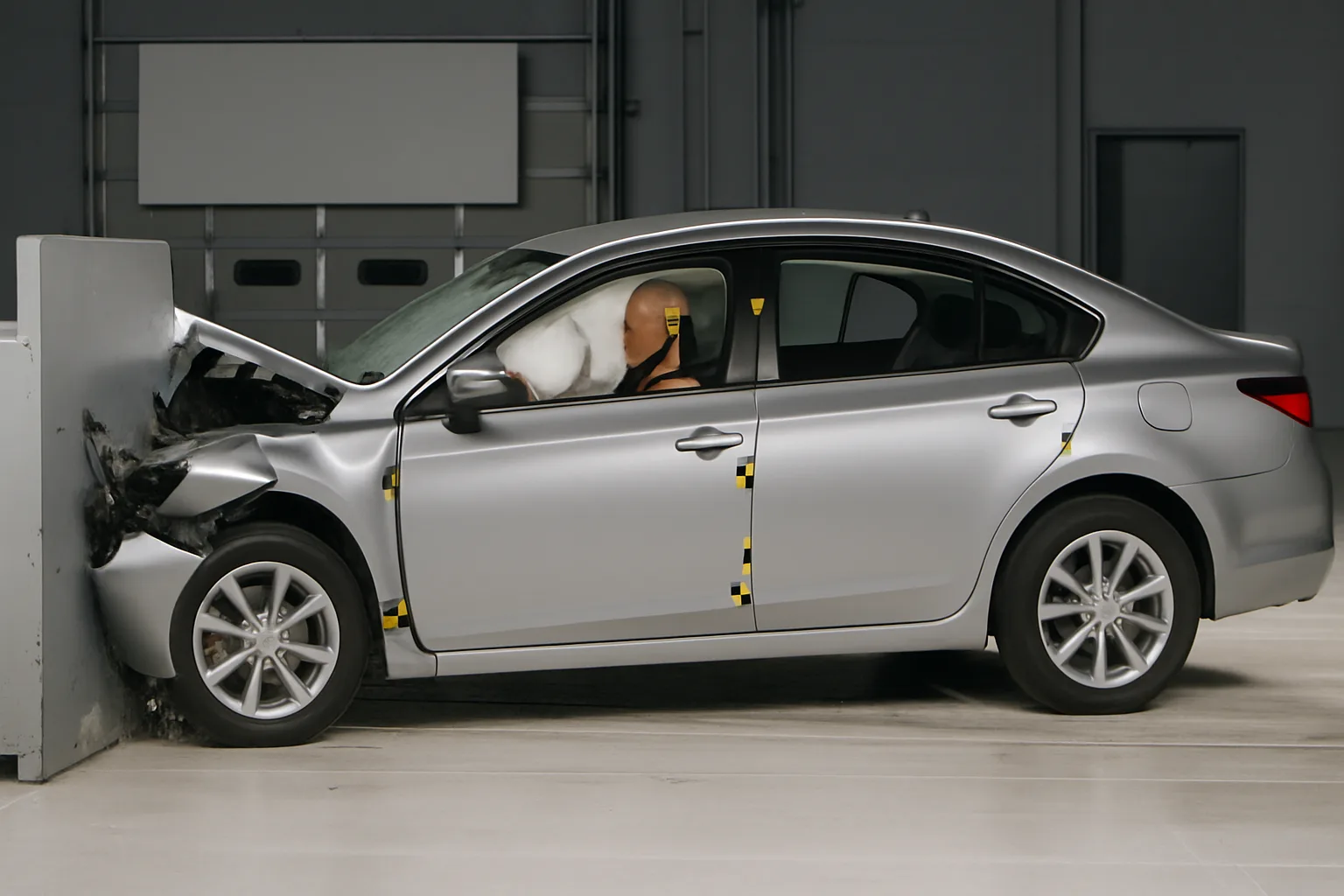
The US Insurance Institute for Highway Safety (IIHS) is preparing to strengthen its crash test regime by introducing a passenger-side small overlap frontal crash test, following research that revealed right-front passengers are not as well protected as drivers in many vehicles. The IIHS said the new evaluation could become part of its Top Safety Pick requirements as early as 2018.
The move follows an IIHS study which found that vehicles rated highly for driver-side small overlap protection did not always offer the same level of safety to front passengers. The small overlap test, introduced in 2012, simulates a collision where just the front corner of a vehicle strikes another car or a fixed object at 40 mph. This type of impact can bypass much of the car’s main crash structure, making it a severe test of occupant protection.
Since the test’s introduction, manufacturers have made structural changes to improve driver-side protection. According to the IIHS, 13 carmakers modified 97 models, with nearly three-quarters earning a good rating after updates. However, the focus on the driver’s side has left the passenger side less well protected in some vehicles. IIHS research engineer Becky Mueller, who led the study, highlighted that more than 1,600 right-front passengers died in US frontal crashes in 2014.
What the new test means for manufacturers
If the IIHS adds the passenger-side small overlap test to its Top Safety Pick criteria, manufacturers aiming for the institute’s highest safety awards will need to demonstrate strong protection for both front occupants. That could require further structural upgrades, particularly for models where the passenger side has not been reinforced to the same standard as the driver’s side. Automakers have previously responded quickly to IIHS test changes, as seen after the original small overlap test prompted widespread updates.