AC Cobra Replica Survives 130mph Crash After Suspension Failure
A high-speed crash involving an AC Cobra replica at 130 mph left the driver with only minor injuries, after a rear suspension failure caused the car to roll multiple times on a race track.
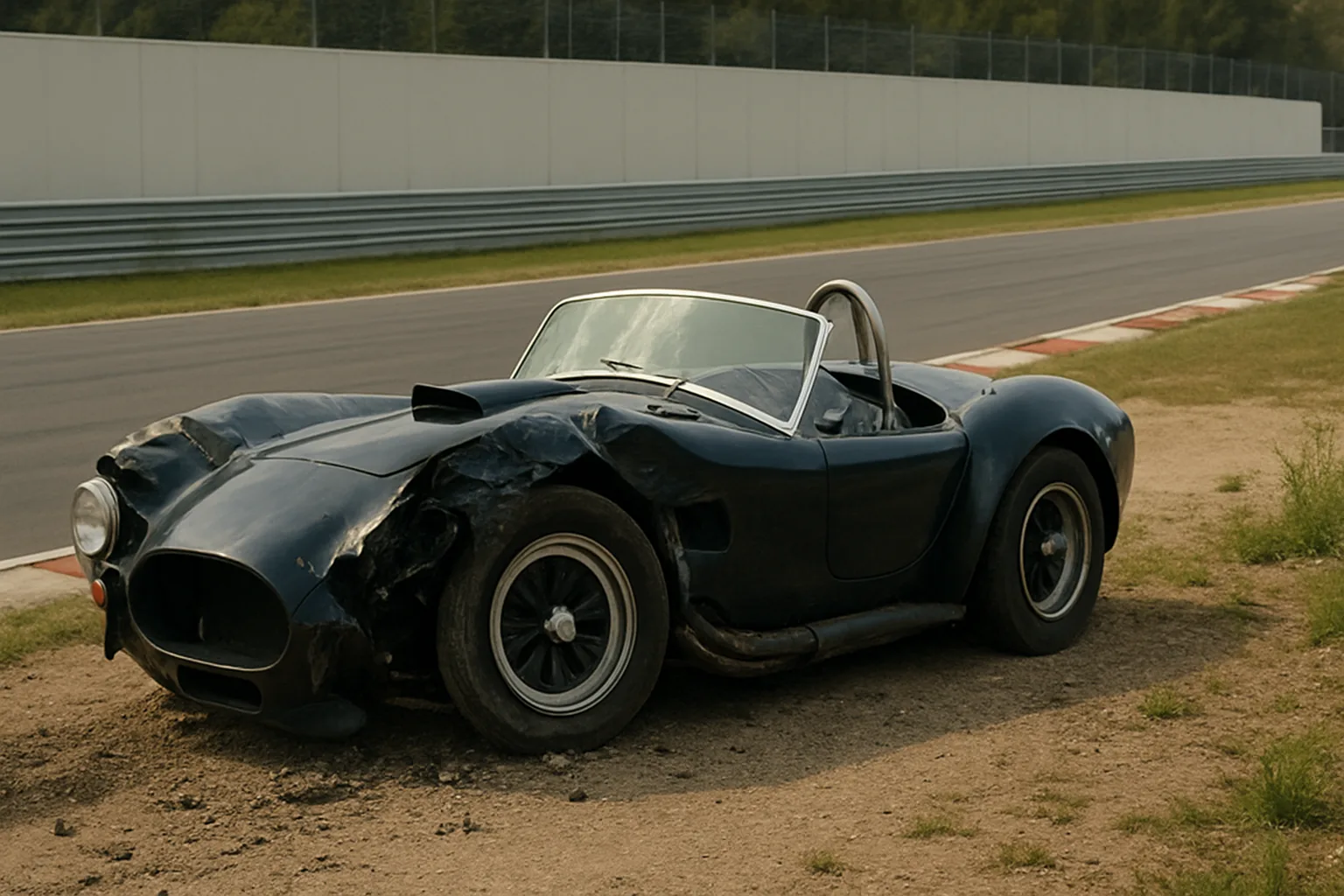
A driver escaped with minor injuries after an AC Cobra replica crashed at a speed of 130 mph on a race track. The incident, which was captured on video, occurred when the car was travelling down the main straight, just before the braking zone. At this critical moment, a part of the rear suspension failed, destabilising the vehicle. The sudden mechanical issue caused the car to lose control and roll several times at high speed.
Overview of the Crash
Accident Details and Safety Equipment
The AC Cobra replica lacked several pieces of modern safety equipment, including a roll cage, a racing seat, and a HANS (Head and Neck Support) device. These features are now standard in most high-speed motorsport events but were absent in this particular vehicle. The absence of such equipment made the incident particularly dangerous, yet the driver survived with only minor injuries.
- No roll cage to protect the driver in a rollover
- No racing seat to keep the driver securely in place
- No HANS device to prevent neck injuries
- Driver relied on a standard seatbelt
The driver’s injuries were limited to a bruised left knee and bruised ribs. He was able to walk away from the wreck, which is remarkable considering the speed and violence of the crash. The lack of a roll cage and HANS device meant there was little structural protection or restraint beyond the standard seatbelt, increasing the risk of serious injury. In modern motorsport, these safety features are considered essential, especially for cars capable of such high speeds. Their absence in this case highlights the risks associated with driving older or replica vehicles on track days without adequate preparation.
Mechanical Failure and Track-Day Risks
Unlike many high-speed crashes that are attributed to driver error, this accident was caused by a mechanical failure. The rear suspension component’s failure was sudden and occurred at one of the fastest points on the circuit. Mechanical problems at speed can have severe consequences, particularly in cars not built or maintained to the latest safety standards. The video footage and subsequent reports confirmed that the loss of control was due to the suspension failure, not excessive speed or misjudgement by the driver.
Even experienced drivers can find themselves in dangerous situations if a critical component fails at speed. This incident demonstrates the importance of regular maintenance and the value of modern safety gear.
Comparisons with Other High-Profile Crashes
| Incident | Vehicle | Cause | Outcome |
|---|---|---|---|
| AC Cobra replica at 130 mph | AC Cobra replica | Rear suspension failure | Driver survived with minor injuries |
| McLaren 650S destroyed after delivery | McLaren 650S | Loss of control | Car destroyed, injuries not specified |
| Nissan GT-R in canal | Nissan GT-R | Festival mishap | Car in water, outcome varied |
Crashes involving high-performance or exotic cars at speed are not rare, and the outcome often depends on both the car’s structural integrity and the safety equipment fitted. While some drivers in modern supercars benefit from advanced safety systems, those in older or replica vehicles may be at greater risk if something goes wrong. The AC Cobra incident is a reminder that, regardless of the car’s pedigree, high-speed driving carries inherent dangers, and mechanical failures can occur without warning. Survivability in such cases is often a combination of luck, the car’s construction, and any safety measures in place.
Lessons for Track Day Participants
- Ensure your vehicle is mechanically sound before any track event
- Equip your car with modern safety features such as a roll cage, racing harnesses, and a HANS device
- Follow organiser safety requirements, even for non-competitive events
- Regularly inspect and maintain critical components like suspension and brakes
For enthusiasts considering taking their cars to the track, this crash serves as a cautionary tale. Ensuring that the vehicle is mechanically sound and equipped with appropriate safety equipment is crucial. Many organisers now require cars to meet certain standards, even for non-competitive events, to reduce the risk of serious injury. Regular maintenance checks, upgraded safety gear, and adherence to best practices can make a significant difference in the event of an accident.
While the AC Cobra replica crash could have ended much worse, it highlights the unpredictable nature of motorsport and the value of preparation. The driver’s fortunate escape is a reminder to all track day participants to prioritise safety alongside performance.