Ferrari F40 crashes in Vancouver after wet-road loss of control
A rare Ferrari F40 suffered serious damage in Vancouver when the driver lost control on a wet road, striking a telephone pole after leaving a car show.
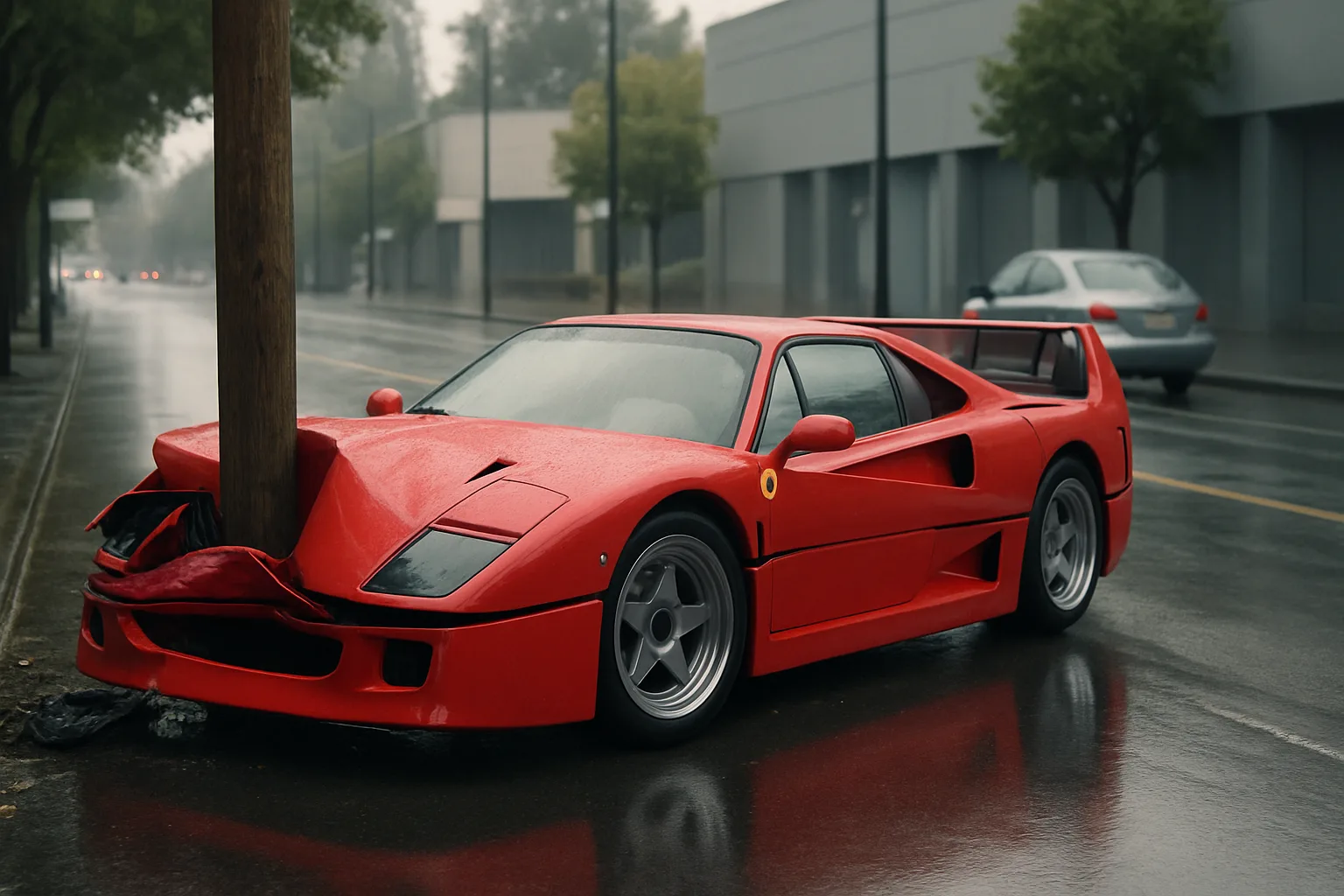
A Ferrari F40 was badly damaged in Vancouver, Canada, after its driver lost control on a wet road and struck a telephone pole while returning from a car show. Both occupants escaped with only minor injuries, but the accident left one of Ferrari’s most celebrated supercars in need of major repairs.
Crash Details and Incident Overview
The incident took place as the F40 was being driven back from a local event. According to reports, the car’s rear wheels broke traction on the slick surface, sending the mid-engined supercar into a pole at the roadside. Emergency services attended the scene, but neither the driver nor the passenger was seriously hurt.
This accident highlights the challenges posed by powerful, rear-wheel-drive cars in poor weather conditions. The F40, designed with minimal electronic driver aids and built for performance, can be difficult to control on wet roads. Owners of such vehicles are often reminded of the importance of caution, particularly when driving in less-than-ideal circumstances.
Damage and Aftermath
Images and video from the scene show extensive damage to the F40’s front and side. The impact with the pole appears to have compromised structural components, including the chassis and suspension. Repairs to such a rare vehicle are likely to be complex and costly, involving specialist workshops and potentially a lengthy restoration process.
Given the F40’s value and collectability, even heavily damaged examples are often restored rather than written off. Owners and collectors typically seek to return these cars to original condition, both for preservation and for maintaining their market value. The process can involve sourcing rare parts and working with marque experts to ensure authenticity.
Ferrari F40: Background and Specifications
The Ferrari F40 is regarded as one of the most iconic supercars in automotive history. Produced between 1987 and 1992, it was the last model personally approved by Enzo Ferrari and served as the successor to the Ferrari 288 GTO. Its design prioritised performance and minimalism, with a focus on lightweight construction and raw driving experience.
| Engine | 2.9-litre twin-turbocharged V8 |
|---|---|
| Power Output | 471bhp |
| Transmission | Five-speed manual |
| Drive Type | Rear-wheel drive |
| Production Numbers | 1,315 units |
| Successor | Ferrari F50 |
The F40’s reputation for demanding handling is well known, especially in poor weather. With no traction control or stability systems, drivers rely entirely on skill and caution. This approach was typical of late 1980s supercars, offering a purist’s driving experience but also increasing the risk of accidents under challenging conditions.
Context: F40 Values and Rarity
The F40’s reputation and limited production run have made it one of the most valuable Ferraris on the collector market. Even cars with accident histories can command high prices if properly restored. Examples that have been involved in incidents are often carefully repaired, with attention paid to maintaining originality and provenance.
Incidents involving rare Ferraris are not uncommon, as the combination of high power, rear-wheel drive and limited electronic driver aids can catch out even experienced owners. The Vancouver crash follows other high-profile Ferrari accidents, including those involving the F40’s successor, the F50, and more modern models such as the F12 Berlinetta and LaFerrari. These incidents serve as reminders of the inherent risks of driving high-performance classics on public roads.
Consequences and Lessons for Owners
For owners and enthusiasts, the Vancouver F40 crash is a sobering example of how quickly things can go wrong, even for experienced drivers. The combination of wet roads, high power and a lack of electronic safety systems demands respect and careful judgement. Clubs and insurance providers often recommend additional driver training for those who own or operate classic supercars, particularly those with reputations for challenging behaviour.
Despite the risks, many collectors continue to drive their cars, valuing the experience as much as the investment. The F40’s enduring appeal lies in its raw, analogue nature, but this also means it requires a steady hand and an understanding of its limits, especially when conditions are far from ideal.