Volkswagen claims historic diesel victory at 2009 Dakar Rally
Giniel de Villiers and Dirk von Zitzewitz led a Volkswagen 1-2 in the first South American Dakar, marking the first diesel win in the rally’s car category.
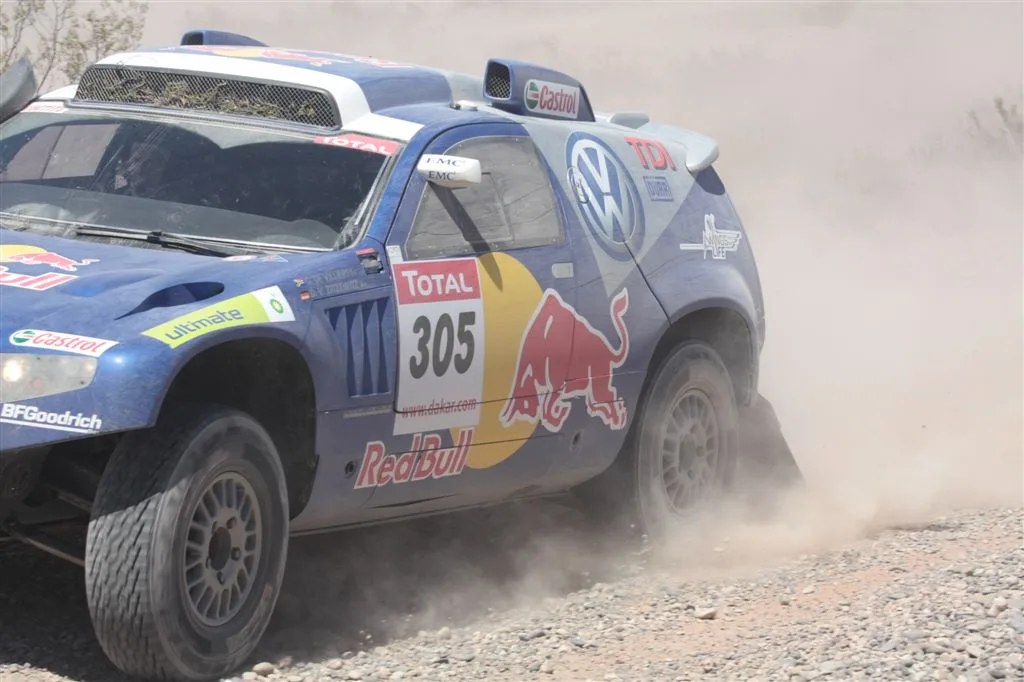
Volkswagen won the 2009 Dakar Rally, securing both first and second place in the car category with its Race Touareg TDI prototypes. The team’s lead crew, South African driver Giniel de Villiers and German co-driver Dirk von Zitzewitz, finished ahead of team-mates Mark Miller and Ralph Pitchford after more than 9,000 kilometres of competition across Argentina and Chile.
The 2009 event marked a major shift for the Dakar Rally, which moved to South America for the first time in its history. The route started and ended in Buenos Aires, with stages crossing the Andes and some of the world’s highest sand dunes, as well as river crossings and rocky terrain. Temperatures ranged from over 40°C in the lowlands to freezing conditions at altitude, adding to the challenge for teams and machinery.
First diesel-powered winner in Dakar car history
Volkswagen’s victory was the first for a diesel-powered car in the Dakar’s thirty-year history. The Race Touareg 2 TDI used a five-cylinder turbo diesel engine producing 280 horsepower and around 440 lb-ft of torque. The team’s reliability and pace over the two-week event proved decisive, particularly as rivals including Mitsubishi and BMW suffered mechanical issues or failed to match the Volkswagen’s consistency.
Mark Miller’s second-place finish, alongside co-driver Ralph Pitchford, set a new record for the highest-placed American in Dakar car history. Their result underlined Volkswagen’s dominance, with both crews running at the front throughout the rally and managing to avoid the major setbacks that affected many competitors.
Volkswagen’s Race Touareg TDI: technical details
| Engine | 2.5-litre five-cylinder turbo diesel |
|---|---|
| Power | 280 hp |
| Torque | Approx. 440 lb-ft |
| Drivetrain | All-wheel drive |
| Transmission | 5-speed sequential manual |
| Weight | 1,900 kg (minimum, as per regulations) |
The Race Touareg 2 was engineered specifically for cross-country rallying, with a tubular spaceframe chassis, long-travel suspension and extensive underbody protection. The diesel engine’s torque and efficiency gave Volkswagen an advantage over petrol rivals, particularly in the demanding dunes and long liaison sections.
What the win meant for Volkswagen
Victory in the 2009 Dakar gave Volkswagen a major boost in both motorsport credibility and diesel technology promotion. The result coincided with the company’s push for clean diesel models in global markets, including the launch of the six-cylinder Touareg TDI for consumers. The win also set the stage for Volkswagen’s continued investment in cross-country rallying, leading to further developments of the Race Touareg for future events.
The 2009 Dakar Rally demonstrated both the endurance of Volkswagen’s diesel technology and the effectiveness of its motorsport programme. The event’s move to South America and the team’s historic win marked a turning point for the rally and for diesel-powered competition vehicles.
For coverage of Volkswagen’s subsequent Dakar efforts, see Volkswagen Race Touareg 3 targets Dakar Rally hat-trick in 2011