BMW Confirms Next-Generation M5 Will Use Turbocharged V8
BMW insiders have confirmed the 2010 M5 will switch from a V10 to a turbocharged V8, with development already underway and Nürburgring testing ongoing.
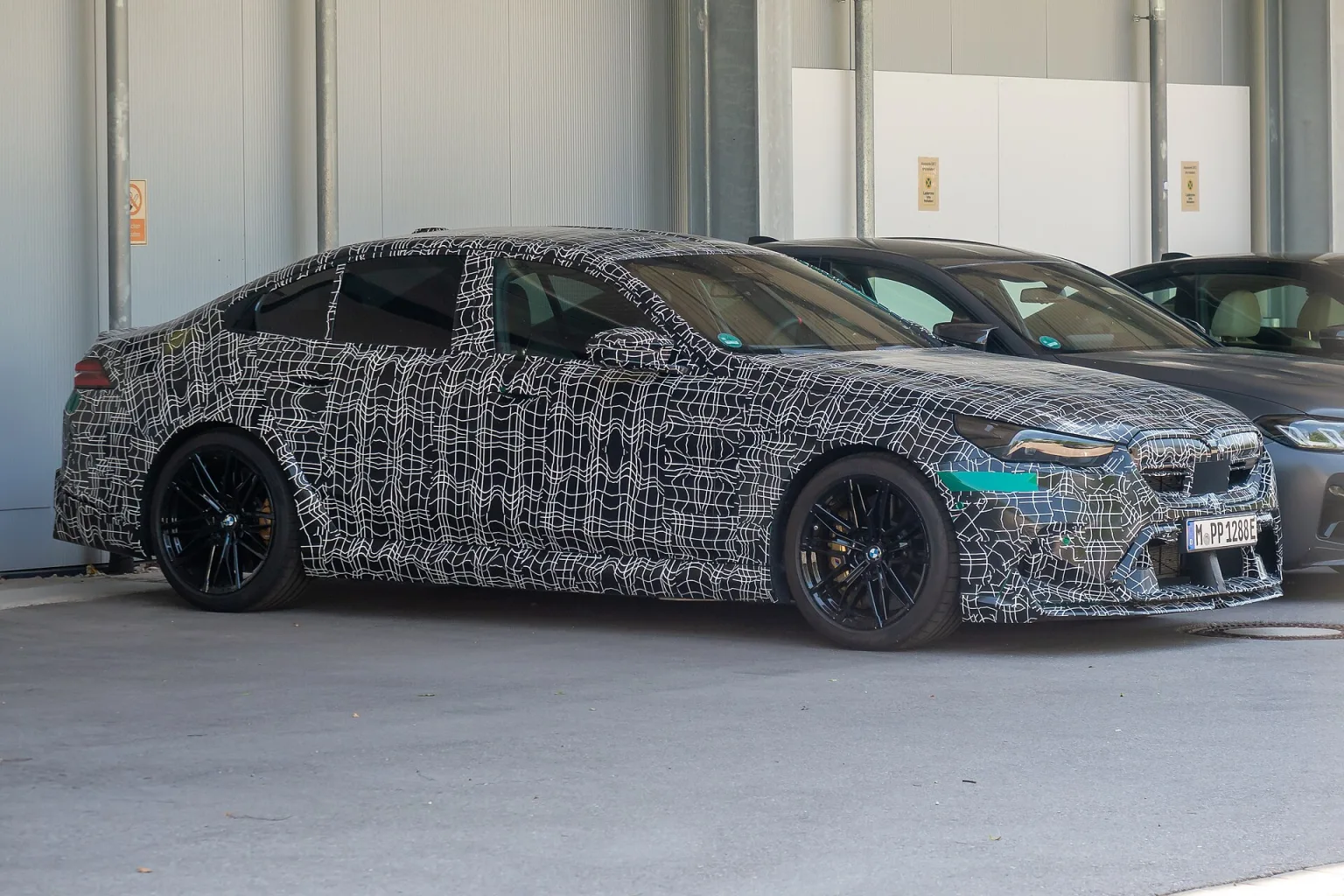
BMW has confirmed that the next-generation M5, due in 2010, will drop its naturally aspirated V10 in favour of a turbocharged V8. The move brings the M5 in line with the M division’s latest thinking on powertrains and follows months of speculation about the future of the super saloon’s engine.
Insiders at BMW have stated that the new M5 will use a turbocharged engine, but have not released full technical details. The most likely candidate is the 4.4-litre twin-turbocharged V8 already found in the X5 M and X6 M, which produces 555hp and 500lb ft of torque in those models. This would represent a considerable increase over the outgoing M5’s 5.0-litre V10, which delivers 500hp and 383lb ft.
The new engine is expected to offer not just more power, but also a substantial increase in torque. For buyers, this should mean improved real-world performance and potentially better efficiency, as forced induction allows for greater flexibility across the rev range. BMW’s decision to move away from the high-revving V10 signals a shift towards engines that can meet stricter emissions standards without sacrificing performance.
What changes for the 2010 M5
The outgoing E60 M5 made its name with a naturally aspirated 5.0-litre V10 and a seven-speed SMG transmission. The new model, based on the F10 5 Series platform, is expected to use the 4.4-litre twin-turbo V8, already a proven unit in M division SUVs. Although BMW has not confirmed exact figures for the M5, the X5 M and X6 M’s 555hp output would put the saloon ahead of its predecessor in both power and torque.
BMW has not revealed performance figures or a launch date, but the car’s test programme is well underway. The new M5 is expected to compete directly with rivals such as the Mercedes-Benz E63 AMG and Audi RS6, both of which have adopted turbocharged engines in recent years.
Implications for buyers and rivals
For buyers, the switch to turbocharging is likely to mean stronger acceleration and better drivability at lower revs, in line with market trends. The move also positions the M5 to meet tightening emissions regulations. For BMW, it keeps the M5 competitive in a segment where forced induction is now the norm.
More technical details and official images are expected as the car nears its debut. For a look at the technical side of the later F10 M5, see BMW’s 2012 M5 F10: Twin-Turbo V8 and Seven-Speed DCT Detailed.