Jaguar XFR-S Sportbrake debuts at 2014 Geneva Motor Show
Jaguar has launched the XFR-S Sportbrake at Geneva, bringing 542hp and a 300km/h top speed to the estate segment alongside rivals from Audi, BMW and Mercedes-Benz.
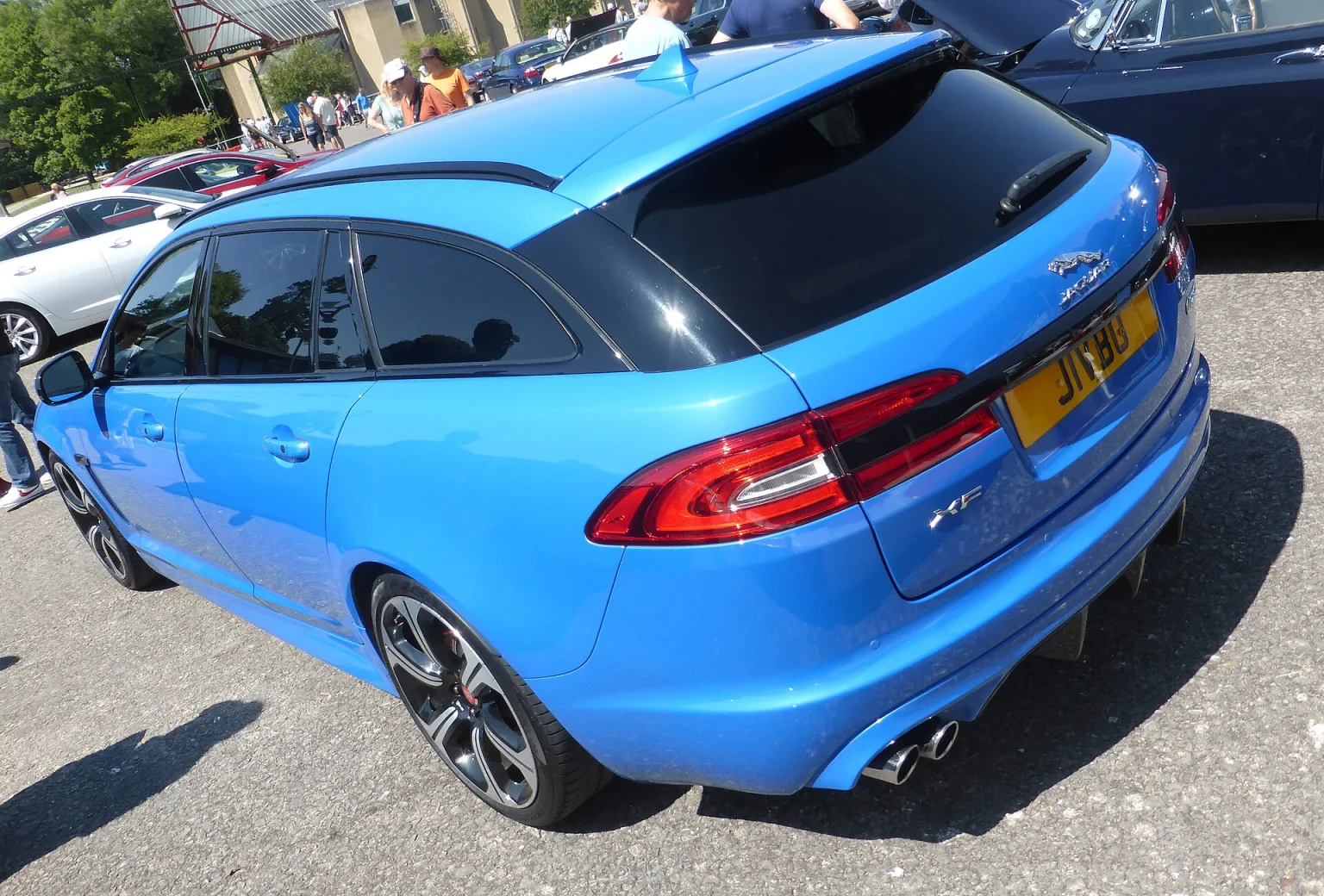
Jaguar made a significant statement at the 2014 Geneva Motor Show by unveiling the XFR-S Sportbrake. This marked the first time the XFR-S badge appeared on an estate, expanding Jaguar’s high-performance range and taking direct aim at established fast wagons from Audi, BMW, and Mercedes-Benz. The public debut at Geneva highlighted Jaguar’s ambition to compete in the performance estate segment, an area traditionally dominated by German manufacturers.
Introduction and Geneva Debut
Powertrain and Performance
Under the bonnet of the XFR-S Sportbrake sits Jaguar’s 5.0-litre supercharged V8 engine, producing 542hp (405kW) and 680Nm of torque. This is the same engine found in the XFR-S saloon, making the Sportbrake the most powerful estate Jaguar had built by 2014. Power is delivered to the rear wheels via an eight-speed QuickShift automatic transmission, a system already proven in the F-Type sports car. This combination allows the XFR-S Sportbrake to accelerate from 0 to 100km/h in just 4.8 seconds and reach an electronically limited top speed of 300km/h (186mph).
Despite its impressive performance, the XFR-S Sportbrake’s fuel consumption is quoted at 12.7 litres per 100km on the combined cycle. CO2 emissions are rated at 297g/km. These figures are in line with other high-performance estates, though buyers will need to consider the associated running costs. The car’s performance credentials place it firmly among the leading contenders in its class.
Chassis, Suspension and Exterior Changes
To cope with the increased performance and the practical demands of an estate, Jaguar reinforced the Sportbrake’s suspension with stiffer rear springs. The car rides on 20-inch Varuna forged alloy wheels, fitted with 265/35 tyres at the front and 295/30 at the rear. Braking is handled by large ventilated discs, measuring 380mm at the front and 376mm at the rear, providing strong stopping power suitable for a car of this capability. An active electronic differential is fitted as standard, helping the XFR-S Sportbrake manage its considerable power output.
Visually, the XFR-S Sportbrake stands apart from the standard Sportbrake with a new body kit, carbon fibre inserts on the bumpers, and a prominent roof spoiler. These design changes are not only for appearance; they also contribute to improved aerodynamic stability at high speeds. The combination of functional and aesthetic updates ensures the XFR-S Sportbrake is easily distinguishable from lesser models in the range.
Competition and Segment Position
The XFR-S Sportbrake enters a competitive segment, going up against the Audi RS6 Avant, BMW M5 Touring, and Mercedes-Benz E63 AMG Wagon. These rivals have set high standards for performance, practicality, and technology in the estate market. Jaguar’s decision to launch the XFR-S Sportbrake at Geneva signals its intent to challenge these established names, offering a blend of British engineering and supercharged V8 performance.
| Model | Engine | Power | Drivetrain |
|---|---|---|---|
| Audi RS6 Avant | 4.0-litre twin-turbo V8 | 560hp | quattro all-wheel drive |
| BMW M5 Touring (previous generation) | 5.0-litre V10 | 507hp | Rear-wheel drive |
| Mercedes-Benz E63 AMG Wagon | 5.5-litre twin-turbo V8 | Up to 585hp | Rear- or all-wheel drive |
Each of these cars brings its own approach to the performance estate formula. The Audi RS6 Avant is known for its all-wheel drive traction and everyday usability, the BMW M5 Touring for its high-revving V10 and rear-wheel drive dynamics, and the Mercedes-Benz E63 AMG Wagon for its muscular twin-turbo V8 and available all-wheel drive. The Jaguar XFR-S Sportbrake offers a supercharged V8 and rear-wheel drive, providing a distinct character in the segment.
Practicality and Appeal
By combining estate practicality with the performance of its supercharged V8, Jaguar gives buyers an alternative to the German offerings. The XFR-S Sportbrake’s spacious interior and large boot make it suitable for families or those needing extra cargo space, while its performance credentials ensure it remains engaging to drive. The addition of features like the active electronic differential and uprated brakes further enhance its capability on the road.
Significance of the Geneva Launch
The Geneva Motor Show is one of the most important events on the automotive calendar, often used by manufacturers to showcase their latest innovations and headline models. Jaguar’s choice to reveal the XFR-S Sportbrake at this venue demonstrates the significance it places on the car’s role within its line-up. The model’s debut alongside other high-profile launches ensured it received attention from both the press and the public.
With the XFR-S Sportbrake, Jaguar extended its performance credentials into the estate segment, offering a compelling choice for those wanting both speed and practicality. The model’s combination of a powerful supercharged V8, distinctive styling, and everyday usability made it a noteworthy addition to the 2014 Geneva Motor Show.