Peugeot 108 debuts at 2014 Geneva Motor Show with three variants
Peugeot has unveiled its new 108 city car in Geneva, offering three- and five-door options plus a fabric-roofed TOP! model, with two petrol engines available.
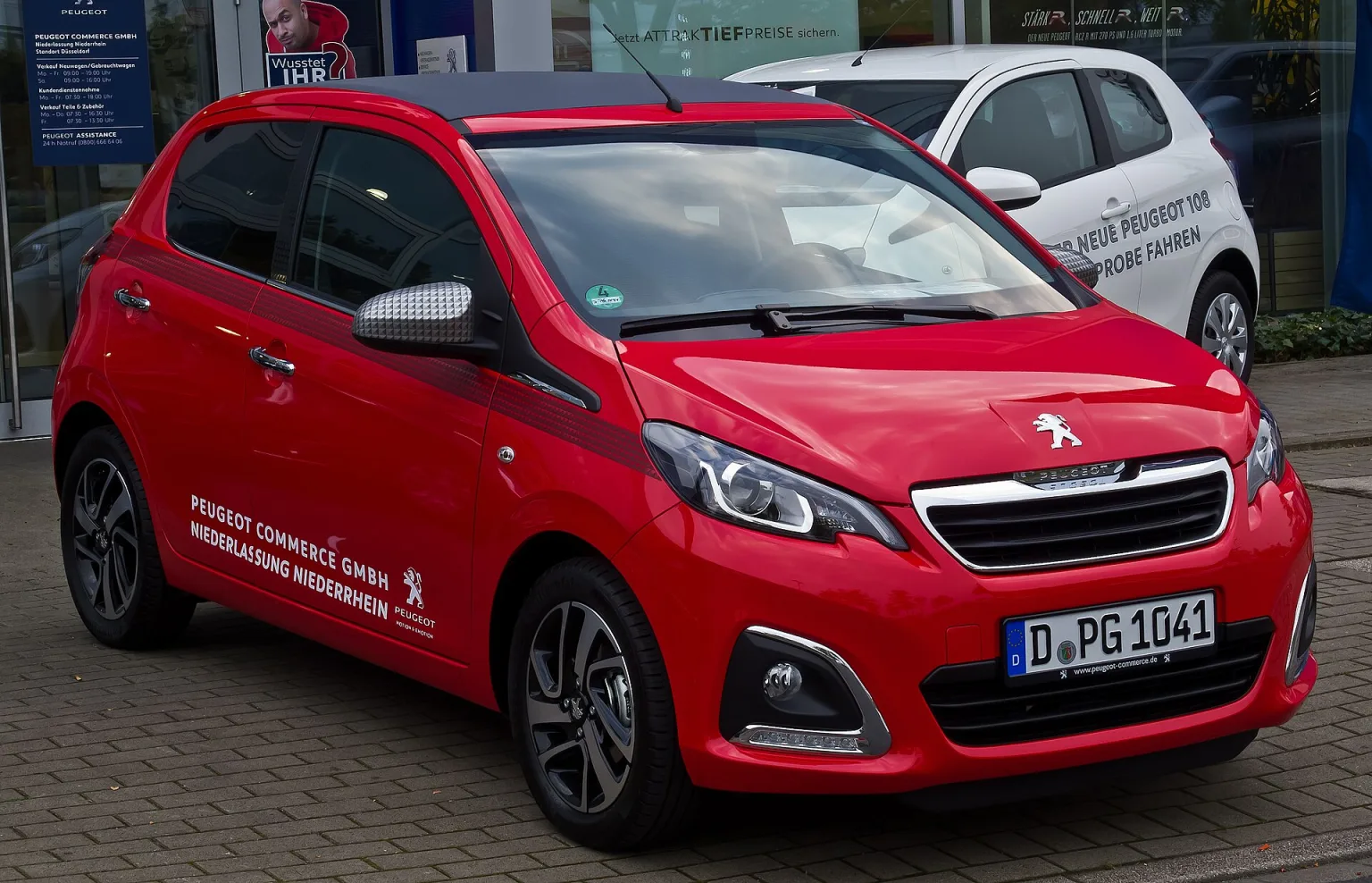
Peugeot has revealed the new 108 city car at the 2014 Geneva Motor Show, marking the world premiere of its latest urban model. The 108 arrives alongside its platform siblings, the Citroën C1 and Toyota Aygo, and will be offered in three body styles: three-door, five-door, and the retractable fabric-roofed 108 TOP!.
Three body styles and light weight
The new Peugeot 108 keeps its focus on urban practicality, with compact dimensions of 3.47 metres in length and 1.62 metres in width. All versions weigh just 840kg, contributing to its agility and efficiency in city driving. The 108 TOP! variant features a retractable fabric roof measuring 76cm by 80cm, providing an open-air option in the city car segment. Buyers can choose between three- and five-door hatchbacks or the fabric-roofed model, broadening its appeal to a wider range of customers.
The lightweight construction not only helps with fuel efficiency but also supports nimble handling, which is especially important for urban environments. The small footprint of the 108 makes parking and manoeuvring in tight spaces easier, a key consideration for city car buyers.
Engines and equipment
Peugeot offers the 108 with two three-cylinder petrol engines. The 1.0-litre e-VTi produces 68hp, while the 1.2-litre PureTech VTi delivers 82hp. Both are paired with a five-speed manual transmission, designed to provide a balance between performance and efficiency for city use. The car sits on 14- or 15-inch alloy wheels and features ventilated front discs and rear drum brakes for reliable stopping power.
Safety and convenience equipment includes six airbags, ABS, ESP, EBD, emergency braking system, hill start assist, and an indirect tyre pressure warning system. These features aim to provide reassurance and safety for drivers and passengers alike. Inside, the 108 receives a 7-inch touchscreen, automatic air conditioning, electric power steering, and a height-adjustable driver’s seat. The specification is designed to keep the model competitive in the city car market, where rivals are increasingly well equipped.
- 14- or 15-inch alloy wheels
- 247mm ventilated front discs
- 200mm rear drums
- Indirect tyre under-inflation system
- Hill start assist
- Six airbags
- ABS, ESP, EBD, and emergency collision braking
- Automatic air conditioning
- 7-inch touchscreen display
- Electric power steering
- Height-adjustable driver’s seat
Market position and availability
The Peugeot 108 shares its underpinnings with the new Citroën C1 and Toyota Aygo, all developed as part of a joint venture to target the European city car segment. This collaboration allows the three brands to offer similar mechanical packages while differentiating themselves through design and equipment. The 108 is expected to appeal to buyers looking for a compact, efficient, and well-equipped option for city driving.
Pricing had not been announced at launch, but Peugeot confirmed that the 108 would go on sale soon after its Geneva debut. The new model will compete with established city cars, such as the Volkswagen Up, Hyundai i10, and Fiat 500. With its combination of light weight, modern features, and multiple body styles, the 108 aims to carve out a space in a crowded and competitive market.
Comparison with platform siblings
The Peugeot 108 was developed alongside the Citroën C1 and Toyota Aygo, sharing much of its engineering with these models. All three cars are built on the same platform and use similar engine options. However, each brand has given its model a distinct exterior design and interior finishes. The 108 distinguishes itself with Peugeot’s signature front grille and styling cues, while the C1 and Aygo have their own unique looks. This approach enables buyers to choose a car that fits their personal taste while benefiting from the shared development.
| Model | Engine Options | Body Styles | Key Features |
|---|---|---|---|
| Peugeot 108 | 1.0 e-VTi, 1.2 PureTech VTi | 3-door, 5-door, TOP! (retractable roof) | 7-inch touchscreen, six airbags, hill start assist |
| Citroën C1 | 1.0 VTi, 1.2 VTi | 3-door, 5-door, Airscape (retractable roof) | Touchscreen, safety features |
| Toyota Aygo | 1.0 VVT-i | 3-door, 5-door, x-wave (retractable roof) | Customisation options, safety features |
What to expect from the Peugeot 108
The introduction of the Peugeot 108 expands the city car choices for European buyers. Its compact size, light weight, and range of safety and convenience features make it well-suited to urban life. The addition of the retractable-roof TOP! version offers something different for those who want open-air motoring in a small package. Buyers will also benefit from the joint development with Citroën and Toyota, which should translate into proven reliability and shared parts availability.
With the 108 set to go on sale shortly after its Geneva debut, Peugeot is looking to attract customers seeking a fresh and practical city car. The model’s arrival further intensifies competition in the segment, where buyers increasingly expect advanced features and stylish design even in the smallest vehicles.
For more on Geneva debuts from the same show, see the Citroën C5 Cross Tourer.