Hyundai Santa Cruz Crossover Truck Concept debuts at 2015 NAIAS
Hyundai has unveiled the Santa Cruz Crossover Truck Concept at the 2015 Detroit motor show, targeting buyers seeking utility and style in a compact package.
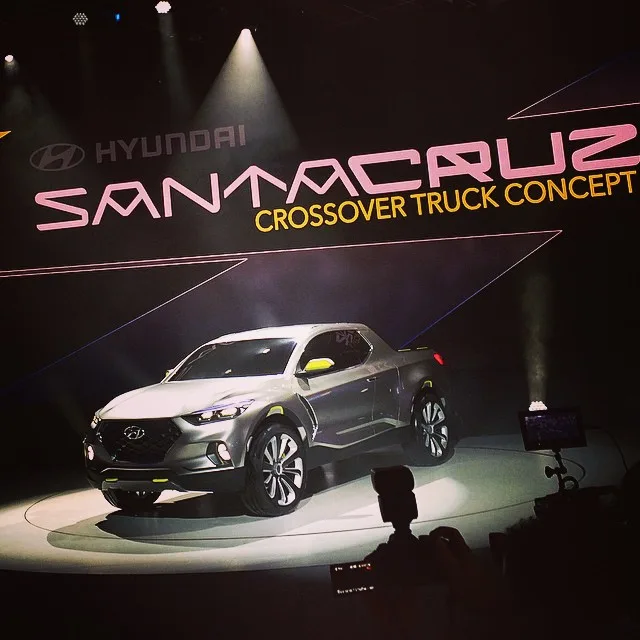
Hyundai presented the Santa Cruz Crossover Truck Concept at the 2015 North American International Auto Show in Detroit, aiming to attract urban buyers who want the practicality of a pickup without the bulk of a traditional truck. The concept signals Hyundai’s interest in expanding its range with a new approach to utility vehicles.
The Santa Cruz concept is powered by a 2.0-litre turbocharged diesel engine producing 190hp and 406Nm of torque, paired with Hyundai’s HTRAC all-wheel drive system. This combination is designed to offer strong performance and traction for a variety of driving conditions, while the compact footprint and four-door layout target buyers who need flexibility for both city and outdoor use.
Design features and practicality
The concept’s styling departs from conventional pickups, with a bold hexagonal grille, LED-accented fog lights, honeycomb headlights and muscular wheel arches. Large alloy wheels with centre locking hubs, wrapped in Michelin tyres, and yellow Brembo brake calipers reinforce the sporty look. Rear-hinged doors improve access to the rear seats, a feature rarely seen in the segment.
Hyundai positions the Santa Cruz as a crossover for buyers who want the utility of a truck bed but without the compromises of a full-size pickup. The brand says the concept is meant for those with active lifestyles, needing space for gear and flexibility for professional and social use.
Production prospects and segment context
At launch, Hyundai made no announcement about a production version of the Santa Cruz. The concept’s appearance at Detroit reflected growing interest in crossover-style pickups, especially among younger buyers and those living in urban areas. Hyundai’s approach mirrors a broader trend across the industry, with manufacturers experimenting with new body styles to attract customers who might not consider a conventional pickup.