Ruf debuts all-new CTR with carbon monocoque at Geneva
Ruf unveiled its first in-house chassis at the 2017 Geneva Motor Show, reviving the CTR nameplate with a 700hp, carbon-bodied supercar inspired by the 1987 Yellow Bird.
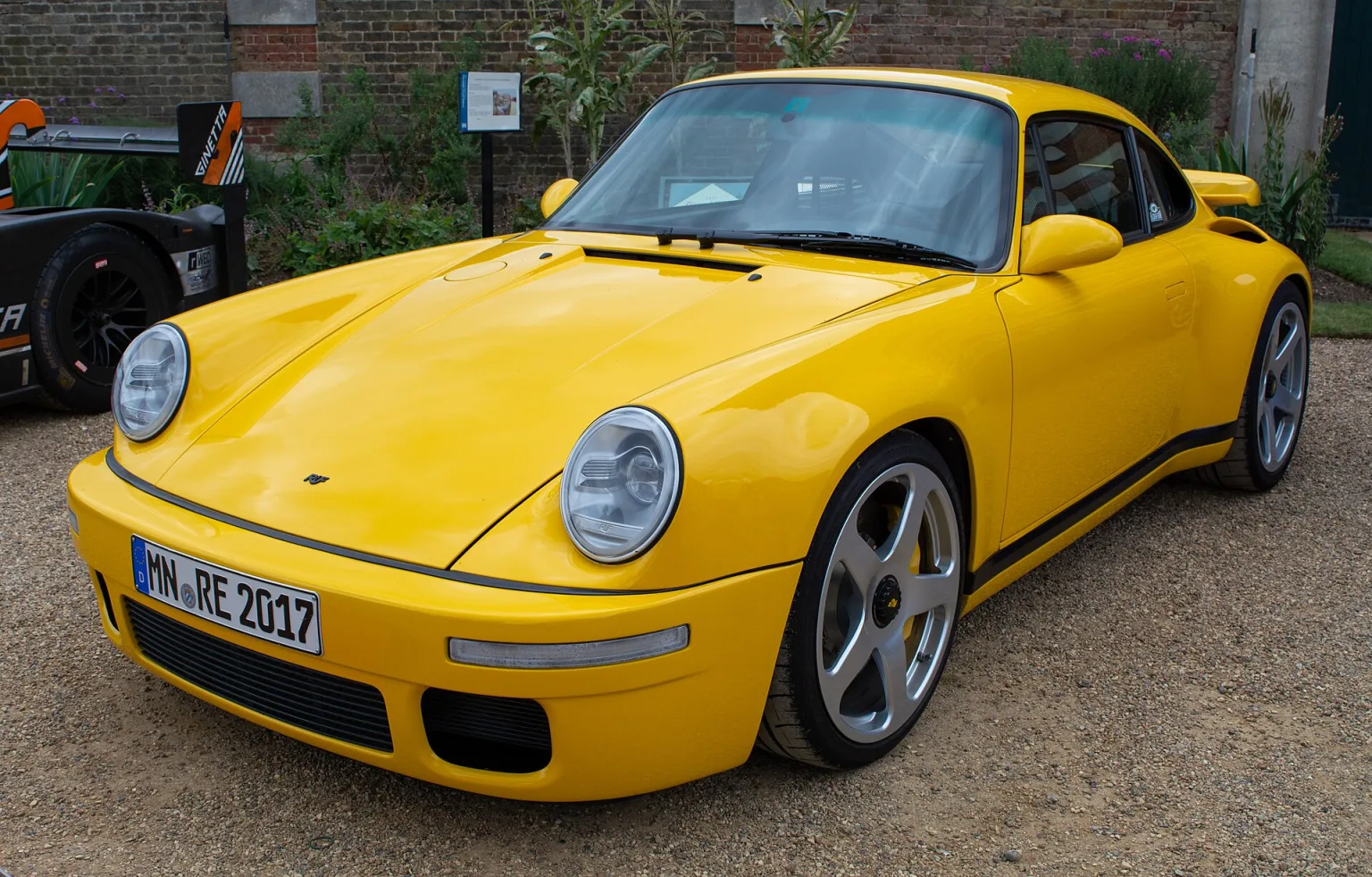
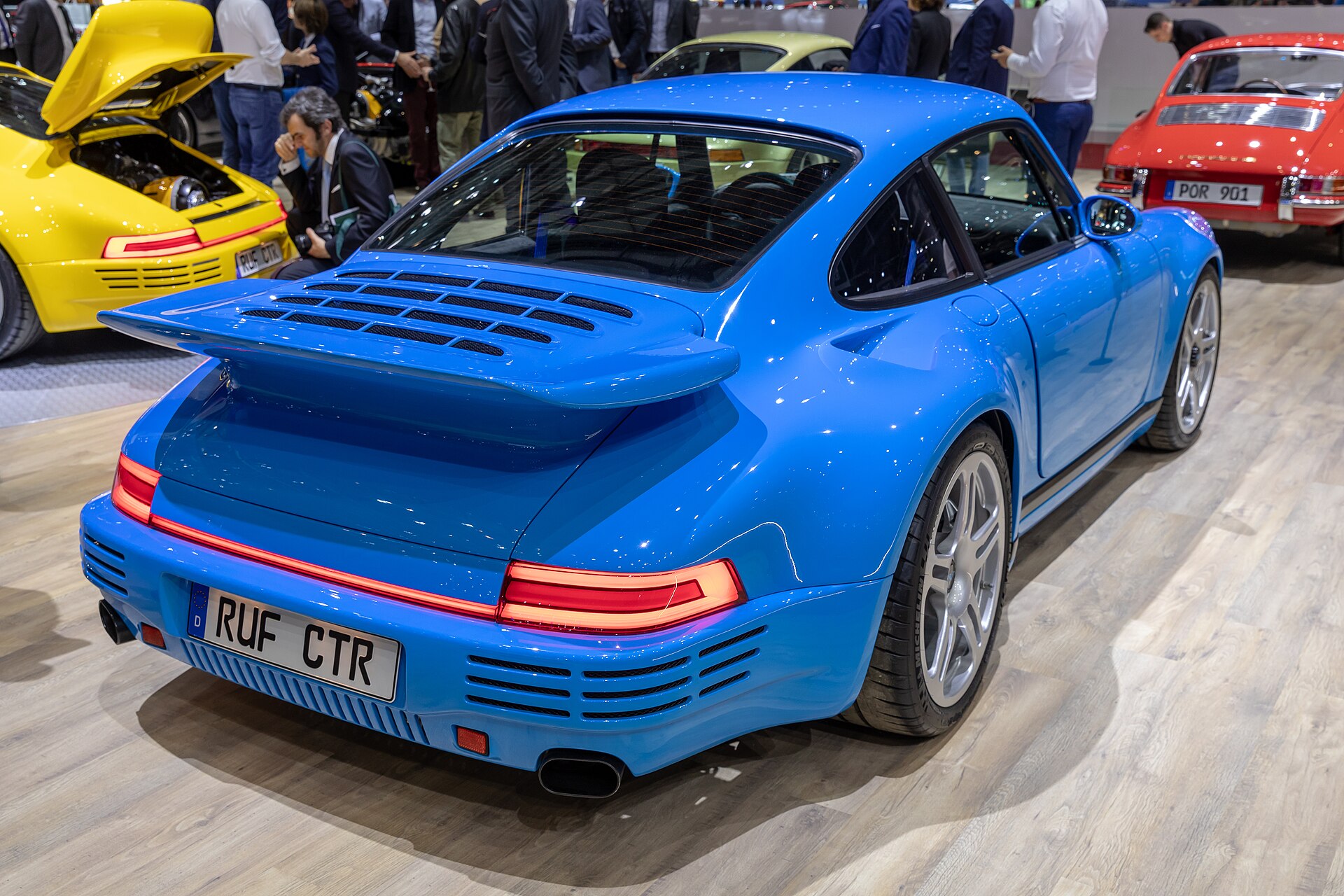
Ruf used the 2017 Geneva Motor Show to reveal a new CTR, marking the 30th anniversary of the original Yellow Bird by launching its first car with an in-house developed chassis. The new supercar, shown publicly for the first time in Geneva, is built around a carbon fibre monocoque and features a body styled to echo the 1987 CTR, but with modern proportions and construction.
The new CTR departs from Ruf’s usual practice of reworking existing Porsche 911s. Instead, it sits on a bespoke carbon fibre structure, with only the crash structures at each end made from steel. According to Ruf, this is a world first for a rear-engined road car, and it helps keep the weight down to a claimed 1,200kg. Every external panel is carbon fibre, contributing to both strength and lightness.
Power comes from a rear-mounted, twin-turbocharged 3.6-litre flat-six producing 700hp and 880Nm. Drive is sent to the rear wheels through a newly developed six-speed manual gearbox with a limited-slip differential. Performance figures are in line with the CTR’s supercar status: 0-62mph takes less than 3.5 seconds, 0-124mph comes up in under nine seconds, and Ruf claims a top speed of 224mph.
Design draws on Yellow Bird heritage
The CTR’s shape is a clear homage to the original Yellow Bird, with its upright stance, simple surfacing and classic 911 cues. Underneath, though, the engineering is entirely modern. The use of a carbon monocoque is a major technical step for Ruf, allowing for both increased rigidity and reduced weight compared to the steel structures of previous models.
Alois Ruf, president of Ruf Automobile GmbH, described the project as a long-held ambition, timed to coincide with the Yellow Bird’s 30th anniversary. The company’s move to a ground-up design puts the CTR in a different league from the usual restomod or re-engineered Porsche 911s that have defined Ruf’s output until now.
Performance and technical highlights
- Twin-turbo 3.6-litre flat-six engine
- 700hp, 880Nm torque
- Six-speed manual gearbox
- Rear-wheel drive with limited-slip differential
- Carbon fibre monocoque chassis
- Carbon fibre body panels
- Dry weight: 1,200kg
- 0-62mph: under 3.5 seconds
- 0-124mph: under 9 seconds
- Top speed: 224mph
Ruf’s new CTR is not simply a tribute to a classic. Its technical specification puts it among the most advanced and fastest cars at the 2017 Geneva Motor Show, and marks a turning point for the company’s engineering ambitions. For more coverage of Geneva’s major launches, see Honda Civic Type R debuts at 2017 Geneva Motor Show.