Audi R18 E-Tron Quattro Claims First Hybrid Win at Le Mans
Audi secured its 11th Le Mans victory in 2012 with the R18 E-Tron Quattro, marking the first time a hybrid car has won the 24-hour endurance race.
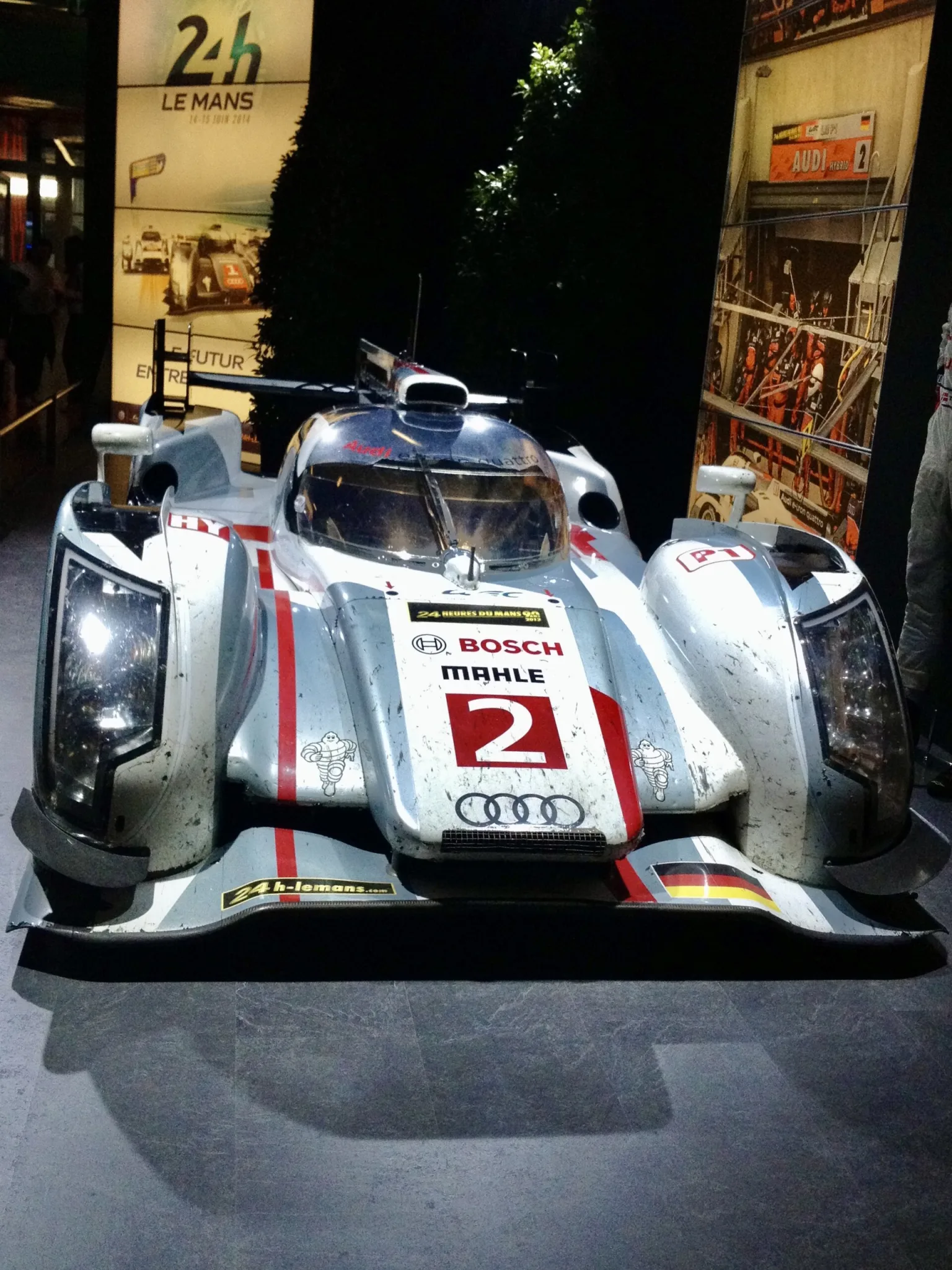
Audi made endurance racing history at the 2012 24 Hours of Le Mans, as the R18 E-Tron Quattro became the first hybrid-powered car to take overall victory. The No. 1 Audi, driven by André Lotterer, Marcel Fässler and Benoît Tréluyer, completed 378 laps to secure the German marque’s 11th win at the event.
Audi’s victory came after a race marked by attrition and incident. The No. 2 Audi of Tom Kristensen, Allan McNish and Dindo Capello finished second, one lap behind the winners. The third-placed No. 4 Audi, driven by Mike Rockenfeller, Oliver Jarvis and Marco Bonanomi, was three laps further back. Audi’s clean sweep of the podium followed Peugeot’s withdrawal from the 2012 race, leaving Toyota as the main challenger with its new TS030 Hybrid.
Hybrid technology at the front
The R18 E-Tron Quattro’s win was a milestone for hybrid technology in endurance racing. Audi’s car combined a V6 turbodiesel engine powering the rear wheels with a flywheel-based hybrid system driving the front axle under acceleration. This system allowed the car to recover and deploy energy during each lap, a technical step that paid off with reliability and pace across the full 24 hours.
Toyota’s TS030 Hybrid made its Le Mans debut but both entries retired following accidents. Anthony Davidson suffered a fractured back in a high-speed crash after contact with a GTE-class Ferrari in the sixth hour. The other Toyota was eliminated following a collision with the experimental Nissan DeltaWing, which also ended its race prematurely. For more on the Nissan DeltaWing’s fate, see Nissan DeltaWing Exits Le Mans After Collision.
Audi’s dominance and the privateer battle
Audi’s hybrid and conventional diesel cars faced a reduced factory field after Peugeot’s departure, but the race was still far from routine. Incidents and mechanical issues affected all four Audis at various points, with the No. 2 car losing time after Allan McNish ran off at the karting section. Despite the challenges, all Audi entries finished, underlining the team’s preparation and the R18’s durability. For context on Peugeot’s exit, see Peugeot Withdraws from 2012 Le Mans Amid Economic Pressure.
In LMP2, reliability was the story, with 12 of 20 starters running at the finish. The privateer class saw intense competition, but the main headlines remained with the hybrid prototypes at the front. In total, 21 cars retired from the 56-car field, a figure that included both factory Toyotas and the Nissan DeltaWing.
What the win means for hybrid racing
Audi’s 2012 Le Mans victory marked a turning point for hybrid technology in top-level endurance racing. The R18 E-Tron Quattro’s success demonstrated that hybrid systems could deliver not just efficiency but also outright speed and reliability over 24 hours. This result set the template for future Le Mans campaigns, with manufacturers increasingly investing in hybrid and electrified powertrains for the World Endurance Championship.