Lexus hoverboard: technology, limitations and the story behind the Slide project
Lexus's maglev hoverboard, revealed in 2015, drew global attention for its futuristic design and technical challenges, but real-world use proved far more complex than viral videos suggested.
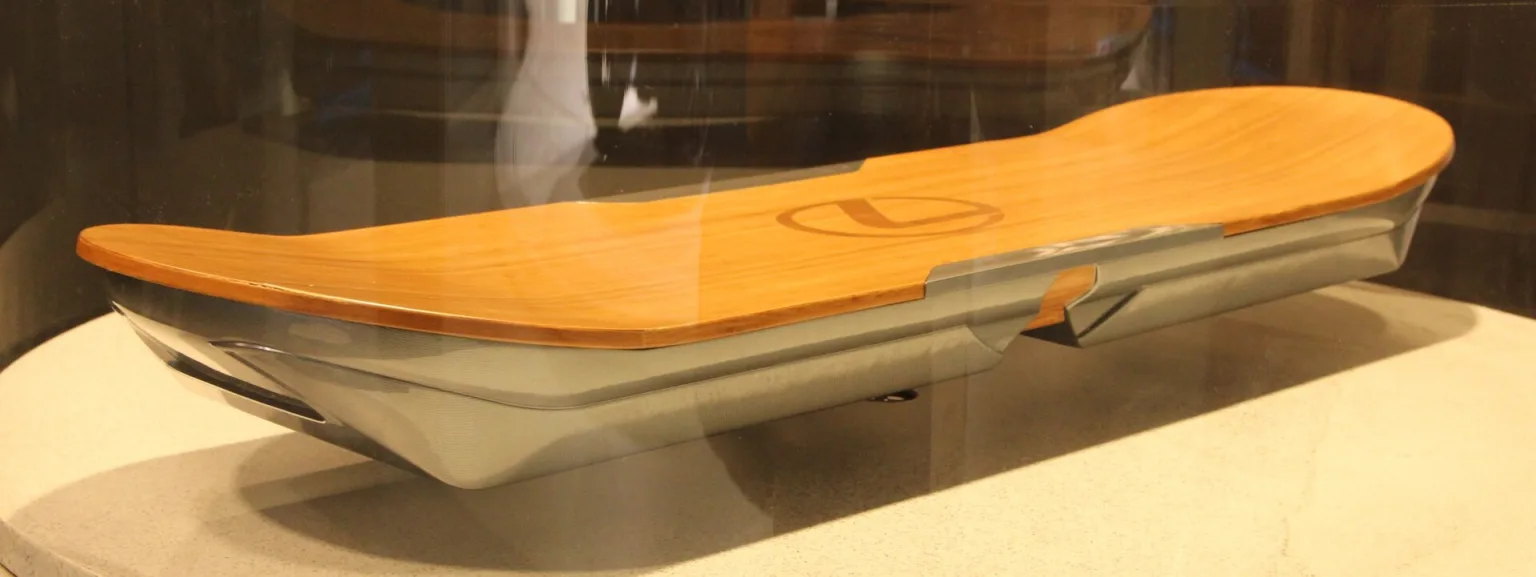
When Lexus unveiled its working hoverboard in 2015, the project quickly became an internet sensation. The Slide board, developed with German partner Evico, appeared to bring science fiction to life, floating several centimetres above the ground and carrying professional skateboarder Ross McGouran across a specially built skate park in Barcelona.
The board's operation relied on magnetic levitation (maglev), a technology more familiar from high-speed trains than personal transport. Lexus's team used liquid nitrogen-cooled superconductors inside the board, which interacted with a track embedded with hundreds of permanent magnets. The result: a frictionless ride, but only over the prepared surface. On ordinary concrete, the board would not hover at all.
How the Lexus hoverboard works
The Slide board contains superconducting blocks cooled to extremely low temperatures by liquid nitrogen. When placed above a magnetic track, these superconductors create a repulsive force, allowing the board to float. This is the same principle used in maglev trains, but miniaturised for a board-sized platform. The bamboo finish and spindle-shaped design drew clear visual links to Lexus's car range, but the real innovation was in the engineering underneath.
Riding the board proved far more difficult than skateboarding. Without friction or resistance, balance and control became a major challenge even for experienced riders. McGouran, the professional skateboarder featured in Lexus's promotional videos, described the sensation as floating on air, with none of the feedback a normal board provides. Momentum was essential to maintain stability, and the board could not be steered or manoeuvred in the same way as a conventional skateboard.
Why the Slide board cannot work everywhere
The most serious limitation was the need for a specially prepared magnetic track. Lexus and Evico converted part of a Barcelona skate park, embedding hundreds of magnets beneath the surface. Without this infrastructure, the board cannot lift off. This rules out use on public pavements or existing skate parks. The cooling system also limited ride time, as the superconductors must be kept at cryogenic temperatures using liquid nitrogen, which boils off during use.
What the Slide project meant for Lexus
For Lexus, the Slide board was a marketing exercise rather than a product destined for sale. The project demonstrated the company's willingness to experiment with advanced technology and design, linking the hoverboard's futuristic appeal to its car brand. The viral success of the Slide videos brought global attention, but the technical and practical barriers meant the board remained a one-off demonstration rather than a step towards commercial hoverboards.
The Slide board's design cues echoed Lexus's contemporary models, including the spindle grille and bamboo trim seen on the RX and other models of the era. For more on Lexus's design direction at the time, see Independent Rendering Previews 2016 Lexus RX Ahead of Detroit Debut.