Audi introduces power-based naming but keeps S, RS and R8 badges
Audi has launched a new global naming system based on power output, but S, RS and R8 models will retain their established names to mark their top-tier status.
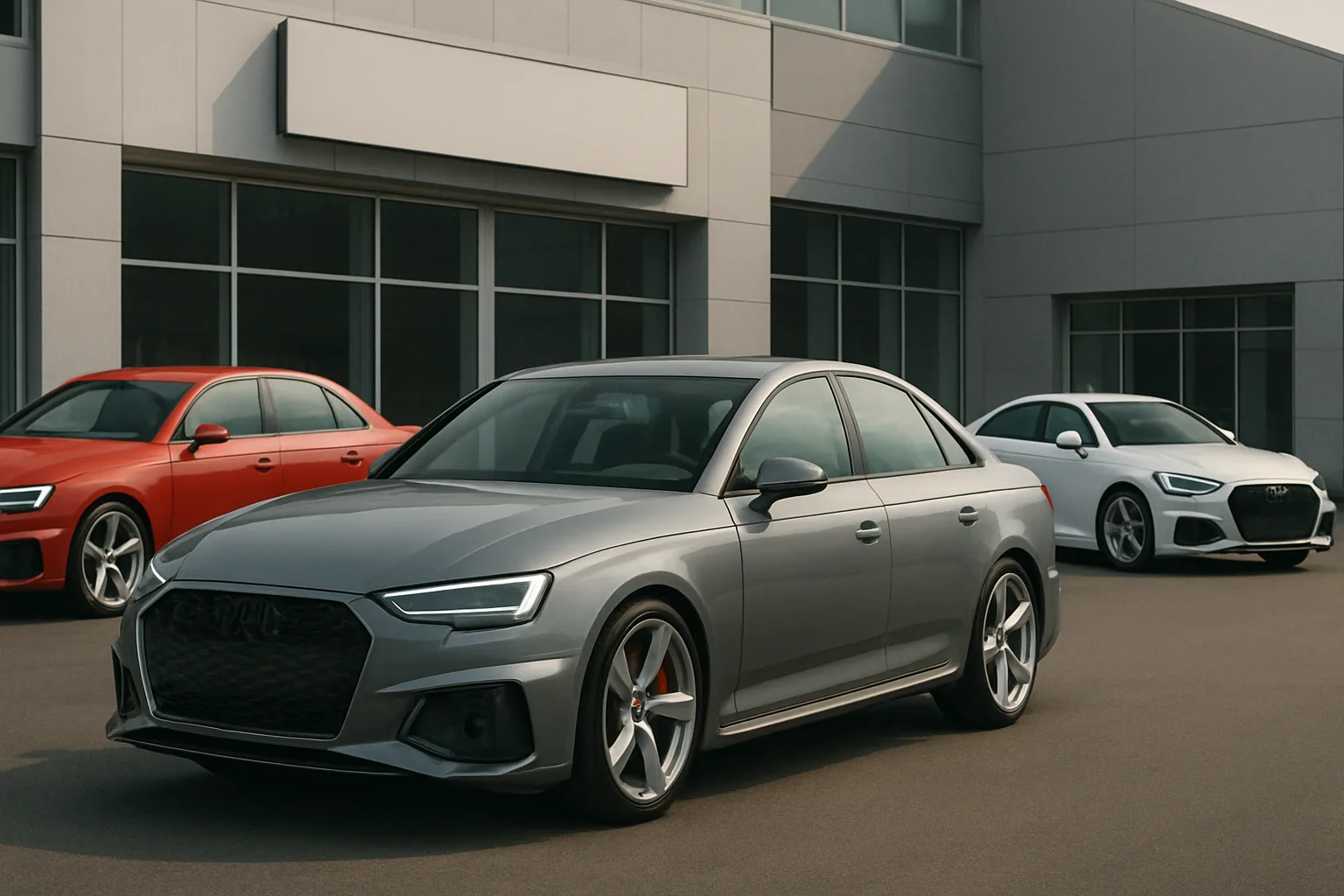
Audi has announced a new global naming convention for its model range, moving away from the traditional system tied to engine displacement. The new approach uses two-digit numbers to reflect the car’s power output, but the established S, RS and R8 badges will remain unchanged for flagship performance models.
How the new Audi naming works
Under the revised system, each Audi model will receive a two-digit number, ranging from 30 to 70, that corresponds to its power output bracket in kilowatts. For example, ‘30’ covers models producing between 81 and 96 kW (109 to 128 hp), while ‘45’ applies to cars with 169 to 195 kW (226 to 248 hp). The highest designation, ‘70’, is reserved for models with more than 400 kW (536 hp).
These new numbers will be paired with existing powertrain badges such as TFSI, TDI, G-tron or E-tron, so buyers will see combinations like ‘A6 45 TFSI’ or ‘Q5 40 TDI’. The A8 was the first model to carry the new numbers, and the rest of the range will follow as new models and updates arrive. Audi said the change is intended to clarify performance levels as alternative powertrains become more common and engine displacement becomes less relevant.
S, RS and R8 models keep classic badges
While the new numbers will appear across most of the range, Audi confirmed that S and RS models, along with the R8 supercar, will retain their existing names. These badges are well-established as indicators of the brand’s high-performance offerings and will remain to mark their special status in the line-up. For buyers and enthusiasts, this means the S4, RS6 and R8 will not switch to the new number format.
Why Audi is changing its naming convention
Audi’s decision is driven by the growing diversity of powertrains in its line-up. With electric and hybrid models joining petrol and diesel, engine size is no longer a clear indicator of performance. By adopting a power-based system, Audi aims to give buyers a more direct way to compare models, regardless of what’s under the bonnet. The company said this approach will be used worldwide, covering all markets and all types of propulsion.
The move follows a wider industry trend of decoupling model names from engine displacement as electrification and downsizing blur the old distinctions. For Audi, the new scheme is intended to bring consistency and transparency, though the coexistence of old and new badges may cause confusion as the system beds in.