Jaguar E-Type Zero: Classic Icon Reborn as Electric Concept
Jaguar Land Rover Classic has unveiled the E-Type Zero, a fully electric conversion of the 1968 Series 1.5 E-Type, pairing original looks with modern EV technology.
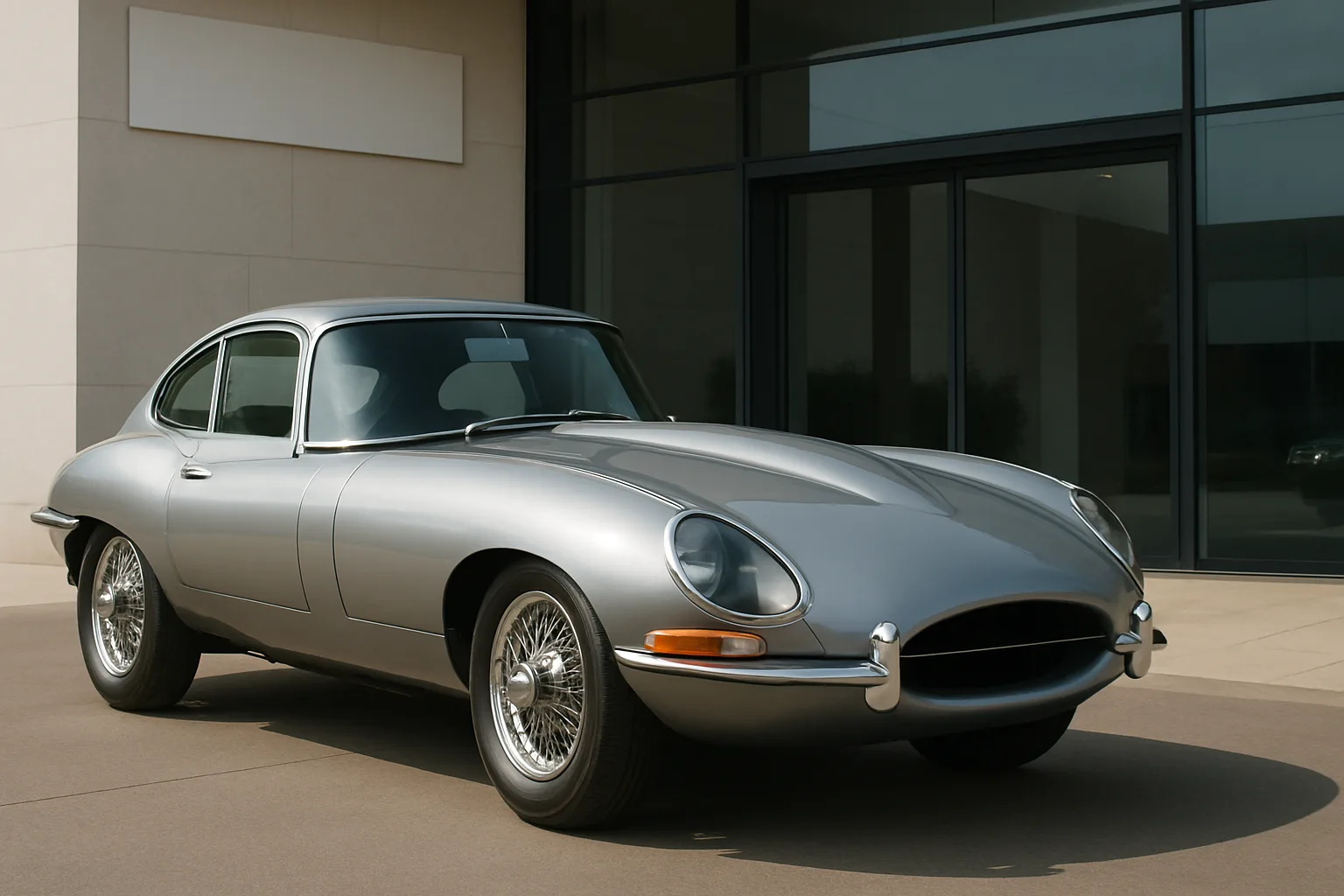
Jaguar Land Rover Classic has revealed the E-Type Zero, a fully electric version of the 1968 Jaguar E-Type, as part of the company’s electrification strategy announced at the inaugural JLR Tech Fest in September 2017. The car retains its original bodywork and mechanical layout but replaces the straight-six petrol engine with a battery and electric motor setup, offering a glimpse at how classic motoring might adapt to future environmental demands.
The E-Type Zero uses a bespoke battery pack and electric motor, designed to fit within the original engine bay and transmission tunnel. Jaguar Land Rover says the conversion preserves the car’s weight distribution and handling characteristics, with the new powertrain actually making the car 80 kilograms lighter than the original. The company claims a real-world range of 170 miles and a 0-62 mph time of 5.5 seconds, both improvements on the classic specification.
Classic looks, modern technology
Visually, the E-Type Zero is almost indistinguishable from a standard Series 1.5 E-Type. Jaguar Land Rover Classic restored an original 1968 car for the project, retaining the suspension, brakes and even the driveshafts. The only major change is under the bonnet, where batteries and EV control systems now sit in place of the XK engine. The intention is to offer a classic driving experience without the emissions or maintenance associated with vintage petrol engines.
The E-Type Zero arrives as part of Jaguar Land Rover’s wider commitment to electrification. The company announced at Tech Fest that every new model range introduced from 2020 onwards would include an electrified variant, spanning fully electric, plug-in hybrid and mild hybrid options. The E-Type Zero stands out as a statement of intent, showing that even the most revered classics can have a future in a world of tightening emissions regulations.
Implications for classic car owners
Electrifying classic cars is a growing trend, driven partly by concerns over future restrictions on combustion engines in urban areas. Jaguar’s decision to develop the E-Type Zero as a fully engineered concept suggests a potential business in offering factory-backed EV conversions for historic models. For owners, this could mean continued access to their cars as regulations tighten, as well as improved reliability and performance. The project also signals a shift in how manufacturers view the legacy of their heritage fleets, balancing preservation with adaptation.
Jaguar has not confirmed production plans for the E-Type Zero, but the concept’s full engineering and road-ready status indicate that customer demand could shape its future. The company’s move parallels similar efforts in the industry to future-proof classic models for a low-emissions era. For more on the E-Type’s evolution, seeJaguar E Type Speedster Coming.