Aston Martin Hybrid Hydrogen Rapide S completes Nurburgring lap
Aston Martin's Hybrid Hydrogen Rapide S became the first hydrogen-powered car to lap the Nürburgring Nordschleife, ahead of its planned entry in the 24-hour endurance race.
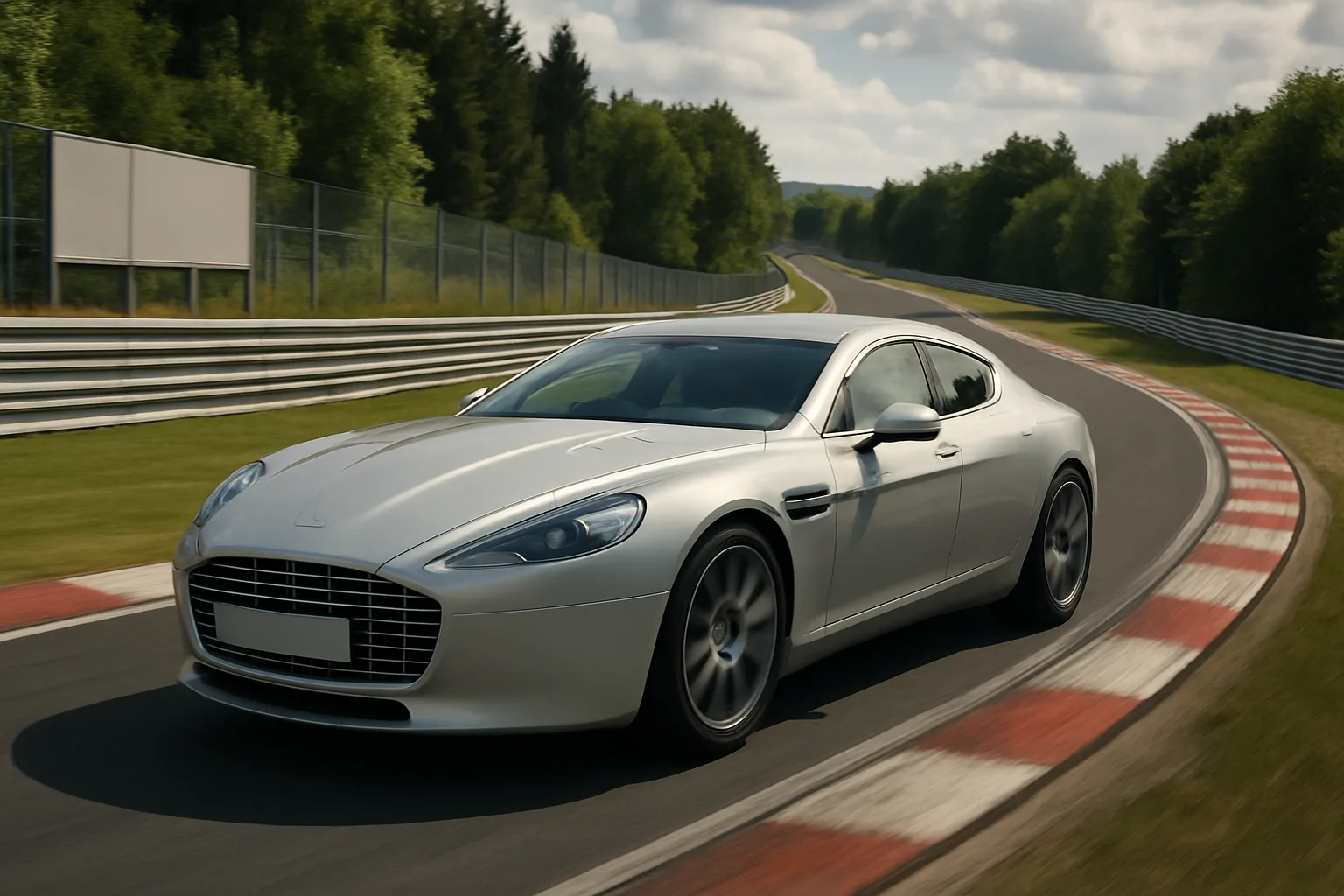
Aston Martin’s Hybrid Hydrogen Rapide S has become the first hydrogen-powered car to complete a lap of the Nürburgring Nordschleife. The milestone run, carried out in late April 2013, was part of preparations for the car’s entry in the Nürburgring 24 Hours endurance race scheduled for 19 May 2013.
The car used for the lap, the Hybrid Hydrogen Rapide S, is based on the production Rapide S but features a dual-fuel system developed with Alset Global. Its 6.0-litre V12 engine can operate on pure hydrogen, petrol, or a blend of both fuels. This flexibility allowed Aston Martin to demonstrate hydrogen combustion technology in a high-performance setting without relying on fuel cells or electric motors.
Technical approach: hydrogen combustion, not fuel cell
Unlike most hydrogen-powered vehicles, which use fuel cells to generate electricity for electric motors, the Rapide S prototype combusts hydrogen directly in its modified V12 engine. The system includes pressurised hydrogen storage tanks and a specially adapted fuel delivery system. Aston Martin has not published detailed performance figures for the hydrogen mode, but the underlying V12 engine is closely related to the 550hp unit in the standard Rapide S.
Preparation for 24-hour race entry
The Nürburgring lap was part of an extended test session, with Aston Martin CEO Ulrich Bez among the drivers. The team ran the car for four hours on the circuit to validate the hydrogen system’s reliability and performance ahead of the 24-hour race. The endurance event would see the Hybrid Hydrogen Rapide S compete against conventional petrol and diesel-powered rivals, with the aim of completing race stints using hydrogen as well as petrol.
Aston Martin’s effort marked the first time a hydrogen-powered car had been officially run at the Nürburgring, a circuit known for its technical demands and length. The project was presented as a demonstration of the viability of hydrogen combustion technology in motorsport, rather than a production preview. No production plans for a hydrogen-powered Rapide S were announced at the time.
Hydrogen in motorsport and beyond
The Hybrid Hydrogen Rapide S’s lap placed hydrogen combustion in the spotlight at a time when most low-emission racing projects focused on battery-electric or hybrid-electric powertrains. While fuel cell vehicles such as the Toyota Mirai have since entered high-profile events as pace cars, Aston Martin’s combustion approach remains unusual. For more on the broader context of hydrogen-powered vehicles and their hurdles, seeFuel cell cars: hydrogen’s promise and the hurdles ahead.