Ford Mustang Hatchback Renderings Spark Debate on Body Styles
Digital renderings imagine the 2015 Ford Mustang as a hatchback, raising questions about the potential for muscle cars in new body styles beyond the traditional coupe and convertible.
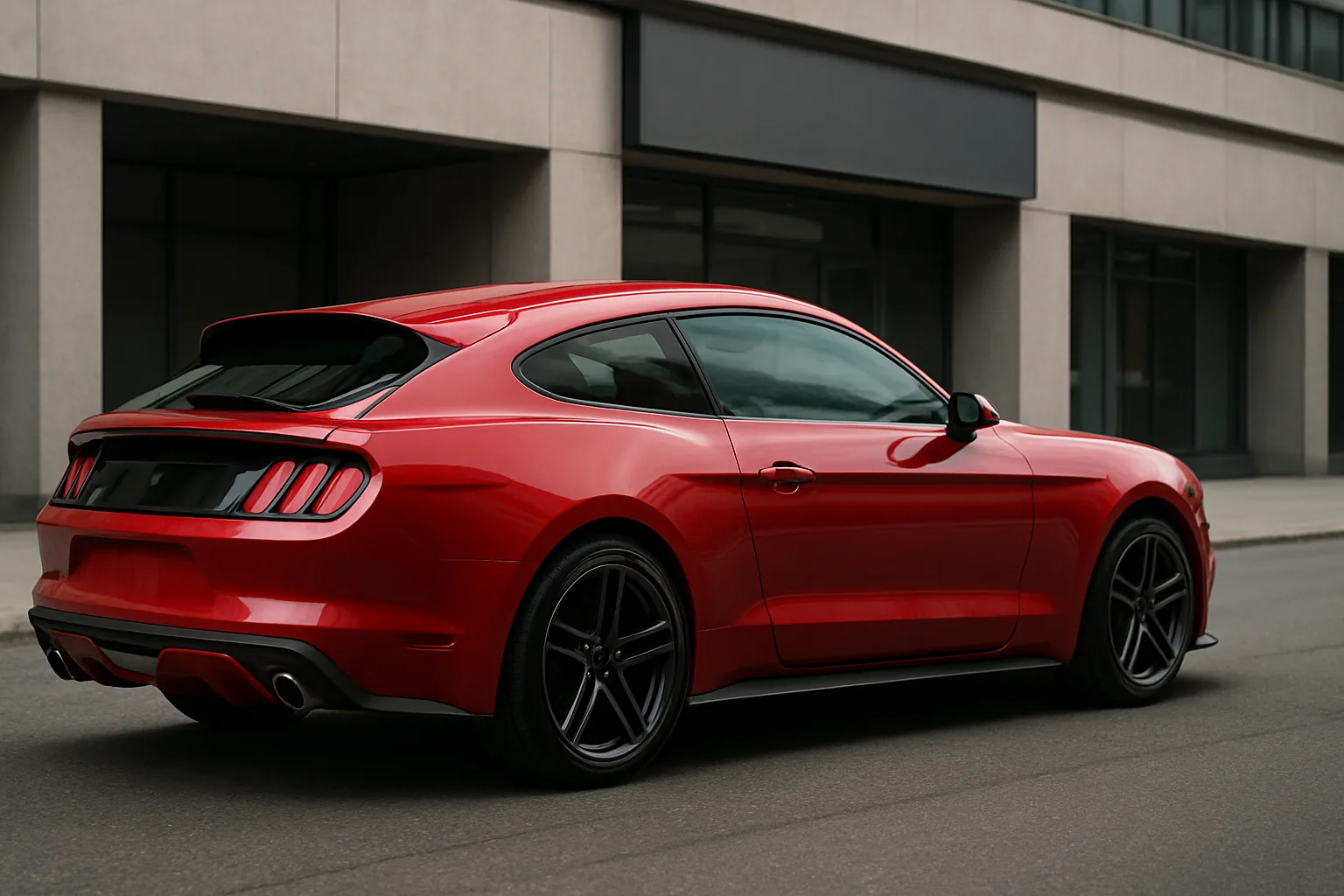
Digital renderings of the 2015 Ford Mustang have reimagined the classic American muscle car as a hatchback, prompting fresh discussion about the future of Mustang body styles. The images, created by rendering artist Theophilus Chin, circulated in early 2015 and show the sixth-generation Mustang with a sloping rear and extended roofline, departing from the familiar fastback and convertible silhouettes.
The renderings were initially intended as a take on a Shooting Brake, but the result leans more towards a hatchback profile. The idea of a Mustang hatchback is not official, Ford has not announced any plans to produce such a variant. For now, the Mustang remains available only as a coupe or convertible, both in the United States and Europe.
Mustang body styles: tradition and speculation
The sixth-generation Mustang, unveiled in late 2013 and arriving in Europe in 2015, stuck closely to its heritage with a fastback coupe and a soft-top convertible. The model marked a shift for Ford, as it became the first Mustang designed for global markets, including right-hand-drive production for the UK. Engine options for Europe included the 2.3-litre EcoBoost turbocharged four-cylinder with 310hp and the 5.0-litre V8 with 435hp, while the US also received a 3.7-litre V6 base model.
Despite the global push, Ford has not strayed from the Mustang’s core two-door formats. The idea of a hatchback, as depicted in the renderings, would mark a break from tradition. The last time Ford offered a Mustang with a hatchback-style rear was in the third-generation “Fox body” cars of the late 1970s through early 1990s, though those were still marketed as fastbacks rather than true hatchbacks.
Why a Mustang hatchback remains unlikely
Ford’s current strategy for the Mustang focuses on maintaining its identity as a rear-wheel-drive coupe and convertible. The hatchback renderings highlight the potential for a more practical Mustang, but also underline the risk of diluting the car’s image. Ford’s European line-up already includes hatchbacks like the Focus and Fiesta, which cater to buyers prioritising practicality over performance heritage.
Enthusiast reaction to the hatchback concept has been mixed, with some praising the fresh take and others preferring the classic lines. The renderings have nonetheless sparked conversation about how far the Mustang formula could stretch, especially as the model continues to evolve for new markets. For now, the Mustang hatchback exists only in pixels.
For more on the sixth-generation Mustang’s arrival in Europe, see2015 Ford Mustang Reservation Frenzy Signals Strong European Demand.