Renault Kangoo E-Tech updated with 52kWh battery and 354km range
Renault has upgraded the Kangoo E-Tech with a 52kWh battery, faster charging, two new motors and a 10-inch screen, with production remaining in France.
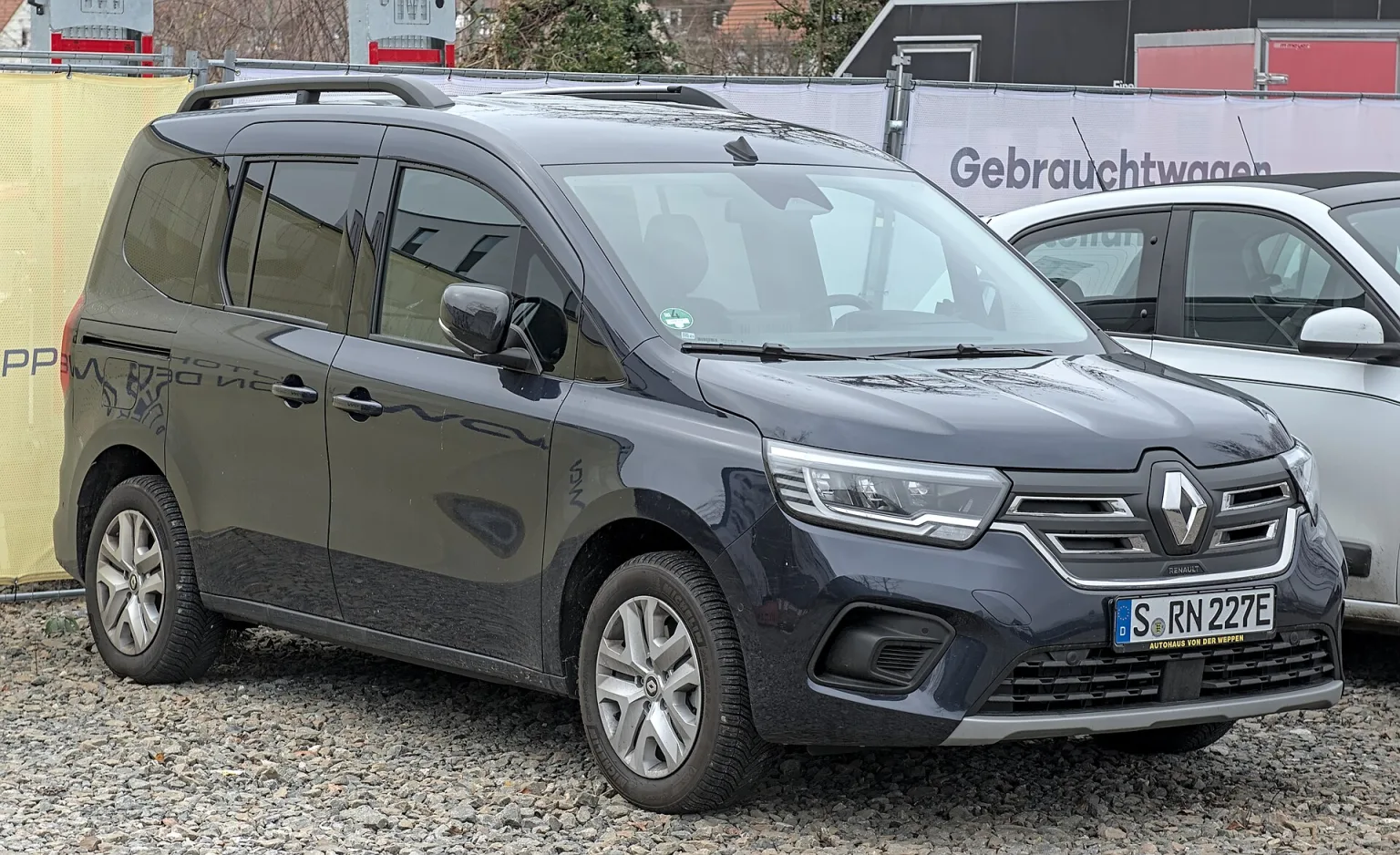
Renault has introduced a significant update to its Kangoo E-Tech Van and passenger models, equipping them with a new 52kWh battery. This upgrade replaces the previous 45kWh pack and uses nickel manganese cobalt chemistry. With this change, the Kangoo E-Tech is now capable of covering up to 354km on a single charge, a notable increase over the outgoing model. The stated range is based on the WLTP cycle and remains subject to homologation.
Renault Kangoo E-Tech: Battery and Range Upgrade
The new battery is assembled at Renault’s Douai facility, while final assembly of the van and passenger models continues at Maubeuge. This battery update aligns the Kangoo E-Tech more closely with other compact electric vans and small EVs in terms of both capacity and range, making it a more competitive option for commercial and personal buyers.
Faster Charging and Improved Usability
Charging performance has also been enhanced. The updated Kangoo E-Tech now supports a peak DC fast-charging rate of 100kW, up from 80kW previously. As a result, the time required to charge the battery from 15% to 80% is reduced from 40 minutes to 30 minutes. This improvement means the van can add up to 240km of range in half an hour, compared to 179km with the previous battery and charging system. This faster charging capability will be particularly useful for fleet operators and businesses that rely on short turnaround times.
In addition to DC charging, the Kangoo E-Tech supports AC charging, allowing flexibility for users who charge at home or on the go. The combination of increased battery size and faster charging addresses two key concerns for electric van users: range anxiety and downtime during charging.
New Motor Options and Driving Features
Renault has replaced the previous single 90kW motor with two new options: a 100kW unit and a higher-output 115kW motor. These are the same electric motors used in the Renault 5 and Renault 4 E-Tech electric models, reflecting Renault’s modular approach to electric powertrains. The new motors are produced at the Cléon plant in France.
The 115kW motor introduces a Perfo mode, designed to deliver extra power when the van is fully loaded. This feature is aimed at commercial users who need consistent performance regardless of payload. Both motors offer improved efficiency and performance compared to the outgoing 90kW version.
Drivers now have the ability to choose from four levels of regenerative braking using steering wheel paddles. This allows for more control over braking energy recovery, helping to maximise range and adapt the driving experience to different road conditions or preferences.
Vehicle-to-Load (V2L) Capability
A notable feature of the updated Kangoo E-Tech is the inclusion of vehicle-to-load (V2L) power as standard. This allows users to power tools, equipment, or other devices directly from the vehicle’s battery. For tradespeople, outdoor workers, and those using the van at worksites or events, this feature can be a practical benefit, reducing the need for separate generators or power sources.
Technology and Infotainment
Every updated Kangoo E-Tech now comes equipped with a 10-inch infotainment screen. The new openR link infotainment system replaces TomTom mapping with Here mapping, offering updated navigation and connectivity features. The system is designed to be more responsive and user-friendly, providing drivers with access to navigation, media, and vehicle settings in a single interface.
The larger screen and improved software reflect the growing expectations for technology in both commercial and passenger vehicles. For business users, features such as connected services and real-time mapping can help optimise routes and reduce operating costs.
Production and Manufacturing
Production of the Kangoo E-Tech remains entirely in France, with different components assembled at specialised facilities:
- Maubeuge: Final assembly of Kangoo Van and passenger model
- Douai: Battery assembly
- Cléon: Motor production
- Le Mans: Running gear production
This manufacturing approach supports Renault’s strategy of keeping high-value electric vehicle production within France, maintaining control over quality and supply chains. It also allows for closer integration between the various components, which can improve reliability and aftersales support.
Market Position and Pricing
Renault states that the Kangoo Van is the best-selling light commercial vehicle in France, both in combustion and electric forms. The electric Kangoo is also claimed to lead its class in Europe, reflecting its popularity among fleet operators and small businesses. The combination of increased range, faster charging, and added features is likely to strengthen its position further.
Pricing for the updated Kangoo E-Tech models will be announced in the coming weeks. This information will be important for buyers comparing it to rivals such as the Citroën ë-Berlingo, Peugeot e-Partner, and other compact electric vans.
Comparison with Rivals
The Kangoo E-Tech’s new 52kWh battery and 354km range bring it in line with key competitors in the European compact electric van segment. Many rivals, such as the Citroën ë-Berlingo and Peugeot e-Partner, offer similar battery capacities and ranges. However, the Kangoo E-Tech’s faster 100kW charging rate and the availability of two motor options provide it with a potential edge in flexibility and usability.
| Model | Battery Capacity | Range (WLTP) | Fast Charging Peak | Motor Output |
|---|---|---|---|---|
| Renault Kangoo E-Tech | 52kWh | Up to 354km | 100kW | 100kW or 115kW |
| Citroën ë-Berlingo | 50kWh | Up to 280km | 100kW | 100kW |
| Peugeot e-Partner | 50kWh | Up to 275km | 100kW | 100kW |
The Kangoo’s higher range, optional more powerful motor, and vehicle-to-load capability may appeal to buyers seeking more flexibility and advanced features.
Impact on Fleets and Business Users
For fleet operators and small businesses, the Kangoo E-Tech’s improvements could translate into lower running costs and greater operational flexibility. The longer range reduces the need for midday charging stops, while faster charging minimises vehicle downtime. The addition of V2L power and advanced regenerative braking also supports a wider range of use cases, from mobile workshops to urban deliveries.
Renault’s modular approach, sharing components with other electric models, may also help keep maintenance and repair costs predictable, as parts are more widely available and familiar to service centres.
Background: Renault’s EV Strategy and History
Renault has been a pioneer in electric vehicles, with the Kangoo Z.E. (now E-Tech) among the first electric vans offered in Europe. The company’s continued investment in battery upgrades and modular electric powertrains is part of a broader strategy to electrify its commercial vehicle range. Previous updates, such as the Renault Samsung SM3 Z.E. gaining a 36kWh battery, show a pattern of incremental improvements across the line-up.
The use of nickel manganese cobalt chemistry in the new 52kWh battery reflects industry trends towards higher energy density and longer life cycles. By assembling batteries, motors, and vehicles in France, Renault is also supporting local industry and meeting European supply chain requirements for electric vehicles.
Looking Ahead: What’s Next for the Kangoo E-Tech?
The latest upgrades to the Kangoo E-Tech position it strongly for the growing electric van market in Europe. As more cities introduce low-emission zones and businesses seek to decarbonise their fleets, demand for electric vans with practical range and features is likely to increase. The Kangoo E-Tech’s combination of range, charging speed, and technology should help it remain a popular choice.
Further developments may include software updates, expansion of connected services, and continued refinement of battery and motor technology. Renault’s ongoing commitment to in-house production and modular design is likely to support future upgrades and variants, including potential all-wheel-drive or longer-wheelbase models.
References and Further Reading
- Renault Grand Kangoo launches in France from €20,750
- Renault Samsung SM3 Z.E. gains 36-kWh battery for 2018
- Renault official press releases and product information (2024)