Rotary Supercars claims 2,800hp Predator GT to eclipse Veyron SS
German start-up Rotary Supercars says its Predator GT will produce 2,800hp from a quad-turbo, eight-rotor engine, aiming to surpass the Bugatti Veyron Super Sport’s top speed and acceleration records.
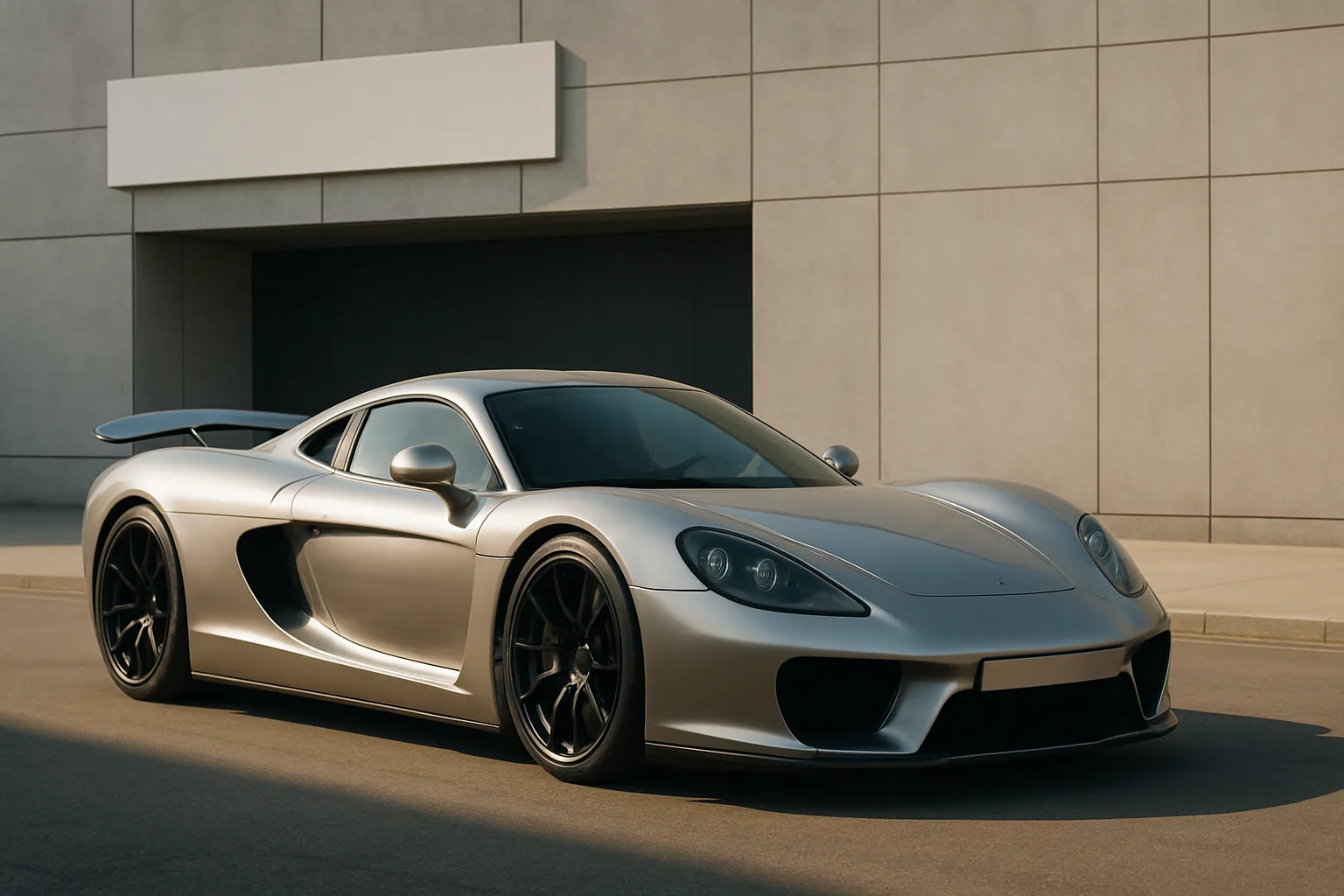
Rotary Supercars, a German engineering firm, has announced plans for a new hypercar it claims will leave the Bugatti Veyron Super Sport behind on both power and outright speed. The company says its Predator GT will develop 2,800hp from a quad-turbocharged, eight-rotor rotary engine, more than double the Veyron SS’s 1,200hp.
According to Rotary Supercars, the Predator GT’s engine displaces 5.2 litres and uses four turbochargers. The firm says the car will be capable of reaching 100km/h from standstill in just 0.9 seconds, and 400km/h in 4.8 seconds. The claimed top speed is over 600km/h, a figure that would eclipse every current production car record. For comparison, the Veyron Super Sport set a verified top speed of 431km/h and accelerates from 0–100km/h in 2.5 seconds.
Unprecedented performance claims
The Predator GT’s claimed acceleration figures are far beyond what any production car has achieved. Rotary Supercars says the car will go from rest to 400km/h in less than five seconds, and to 600km/h in under seven. These numbers, if realised, would require not only extraordinary power but also tyres, aerodynamics and electronics capable of handling forces well beyond those seen in today’s hypercars. No details have been released on the transmission, drivetrain or the tyres that could withstand such loads on a road car.
Rotary Supercars began development of the Predator GT in 2009, initially with a prototype using a twin-turbo rotary engine producing 1,200hp from 2.6 litres. The company claimed this version could reach 100km/h in under three seconds and 400km/h in 25 seconds. The new eight-rotor, quad-turbo engine more than doubles both displacement and power, pushing the project well beyond the scale of established hypercars such as the Bugatti Veyron Super Sport and the American SSC Ultimate Aero.
Feasibility and unanswered questions
Rotary Supercars has not released details on how it intends to address the technical challenges of delivering such performance, particularly with respect to tyres, cooling, and drivetrain durability. The company has also not published evidence of a running prototype with the 2,800hp engine. Hypercar manufacturers have struggled to move beyond 1,500hp in production vehicles, mainly due to the limits of current technology and the laws of physics governing traction and safety.
No pricing or production timeline has been confirmed, and the company has not indicated whether the car will be road legal or track-only. The previous Predator GT prototype has not been independently tested. Until a working example is demonstrated, the Predator GT’s claimed figures remain theoretical.
For those interested in the current benchmark, the Bugatti Veyron Super Sport remains the world’s fastest production car by official measurement. For more on the Veyron’s capabilities, seeour coverage of the Veyron Super Sport’s first drive.