Volvo unveils three range-extending electric concepts
Volvo revealed three electric concept cars with range-extending powertrains at the 2011 Frankfurt Motor Show, each exploring different hybrid configurations based on the C30 and V60.
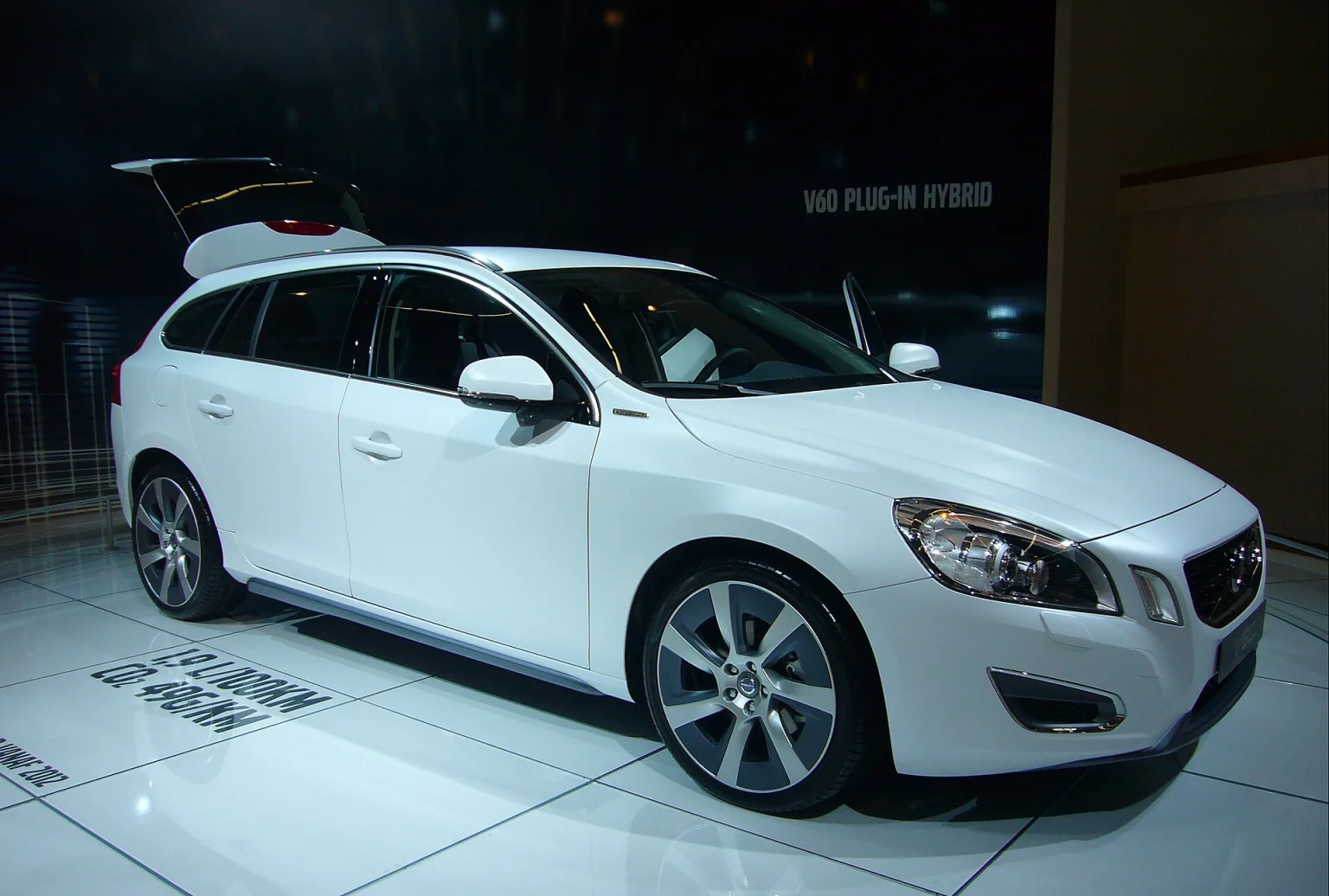
Volvo presented three new electric concept vehicles at the 2011 Frankfurt Motor Show, each fitted with a range-extending petrol engine and designed to explore different hybrid configurations. The concepts, based on the C30 and V60, demonstrate the Swedish manufacturer's approach to addressing range limitations in battery-powered cars.
Three approaches to range extension
The first concept uses the Volvo C30 Electric as its base and adopts a series-hybrid layout. Here, a compact three-cylinder petrol engine, capable of running on E85 or petrol, powers a generator rather than driving the wheels directly. The generator produces electricity to recharge the battery or supply the electric motor, which delivers 111hp (82kW) to the wheels. The engine itself is rated at 60hp (44kW). This configuration is intended to maximise electric drive with minimal direct engine involvement.
The second concept, also built on the C30, takes a parallel-series approach. It features a turbocharged three-cylinder engine producing 140kW, mounted at the rear and driving the rear wheels via a six-speed automatic gearbox. This setup allows the car to operate as a pure electric, a series hybrid, or a parallel hybrid, with the combustion engine capable of directly assisting propulsion when needed. The electric motor output remains at 111hp, matching the first concept.
The third concept is based on the larger V60 estate and also uses a parallel-series hybrid system. It combines a 190PS (140kW) turbocharged three-cylinder engine, a 111PS (82kW) electric motor, and a two-stage automatic transmission. At speeds below 50km/h, the V60 concept operates solely on electric power, with the petrol engine and generator providing additional range and performance at higher speeds.
Technical comparison
| Concept | Base Model | Engine Output | Electric Motor Output | Hybrid System |
|---|---|---|---|---|
| Concept I | C30 | 60hp (44kW) | 111hp (82kW) | Series |
| Concept II | C30 | 140kW (turbo) | 111hp (82kW) | Parallel-Series |
| Concept III | V60 | 190PS (140kW, turbo) | 111PS (82kW) | Parallel-Series |
Volvo's electrification strategy
The three concepts form part of Volvo's broader research into electrification and hybrid powertrains. By trialling both series and parallel-series systems, Volvo aimed to identify the most practical and efficient approach for future production models. The company highlighted the challenge of battery cost and limited pure-electric range, positioning range extenders as a bridge technology until battery technology matures.
All concepts use a flex-fuel engine, able to run on either petrol or E85 ethanol, and share a compact three-cylinder layout to minimise weight and packaging. The C30 Electric itself had already been revealed as a pure battery vehicle, and these new concepts built on that platform to test hybrid integration. For more on the original C30 Electric, seeAll Electric Volvo C30 Project Presented for the First Time.
What it means for future Volvo models
While these concepts were not intended for immediate production, they provided Volvo with practical data on the strengths and weaknesses of different hybrid architectures. The V60 concept foreshadowed later plug-in hybrid production models, while the C30-based prototypes informed Volvo's approach to electric and hybrid small cars. The company continued to develop its electrification strategy in the years following Frankfurt, with the first production plug-in hybrids arriving later in the decade.