US Army to name $30bn JLTV contract winner today
The Army is set to award its largest tactical vehicle contract in decades, with Lockheed Martin, Oshkosh and AM General vying to replace the long-serving Humvee fleet.
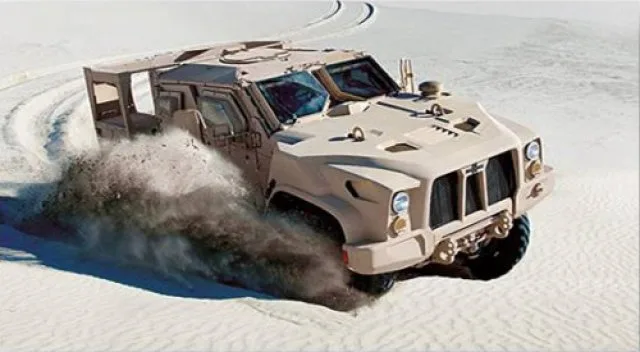
The US Army will announce the winner of its $30 billion Joint Light Tactical Vehicle (JLTV) programme today, selecting from Lockheed Martin, Oshkosh and AM General to supply around 55,000 new tactical vehicles through 2040. The contract is intended to replace the ageing Humvee fleet, which has been in service since 1985.
The JLTV programme is one of the Army’s largest vehicle procurement efforts in decades. The new vehicles are expected to offer a blend of mobility and protection, combining the off-road capability of the Humvee with the blast resistance of Mine-Resistant Ambush-Protected (MRAP) vehicles, which were rapidly introduced during the Iraq war in response to widespread IED attacks. The Army’s requirements call for improved survivability against improvised explosive devices, mechanical dependability, all-terrain mobility, and compatibility with modern tactical data networks.
A new tactical vehicle for modern threats
The Humvee was developed in an era when roadside bombs and anti-vehicle explosives were not a primary concern. The Iraq conflict exposed its vulnerability, prompting the urgent fielding of MRAPs. While MRAPs offered better protection, their weight and limited off-road ability restricted their use in some environments. The JLTV is intended as a more versatile solution, offering protection with greater mobility.
The Army and Marine Corps plan to use the JLTV as a multi-role platform, with variants for troop transport, command and control, and other battlefield tasks. The winning design must be robust enough for frontline use, yet flexible enough to integrate future technology and communications systems.
Funding and production timeline
According to Army budget documents, JLTV funding was set to double to $457 million by 2016, with projections reaching $1.3 billion in 2018 and $1.8 billion by 2020. Full production is scheduled to continue into the next two decades, with the aim of delivering all 55,000 vehicles by 2040. The programme’s scale ensures that the contract award will have implications for the winning manufacturer’s US operations and supply chain.