Idaho Couple’s Solar Roadways Project Aims to Turn US Roads into Power Generators
Julie and Scott Brusaw’s Solar Roadways concept proposes replacing traditional road surfaces with solar panels strong enough for trucks, offering a potential new source of electricity and on-the-go EV charging.
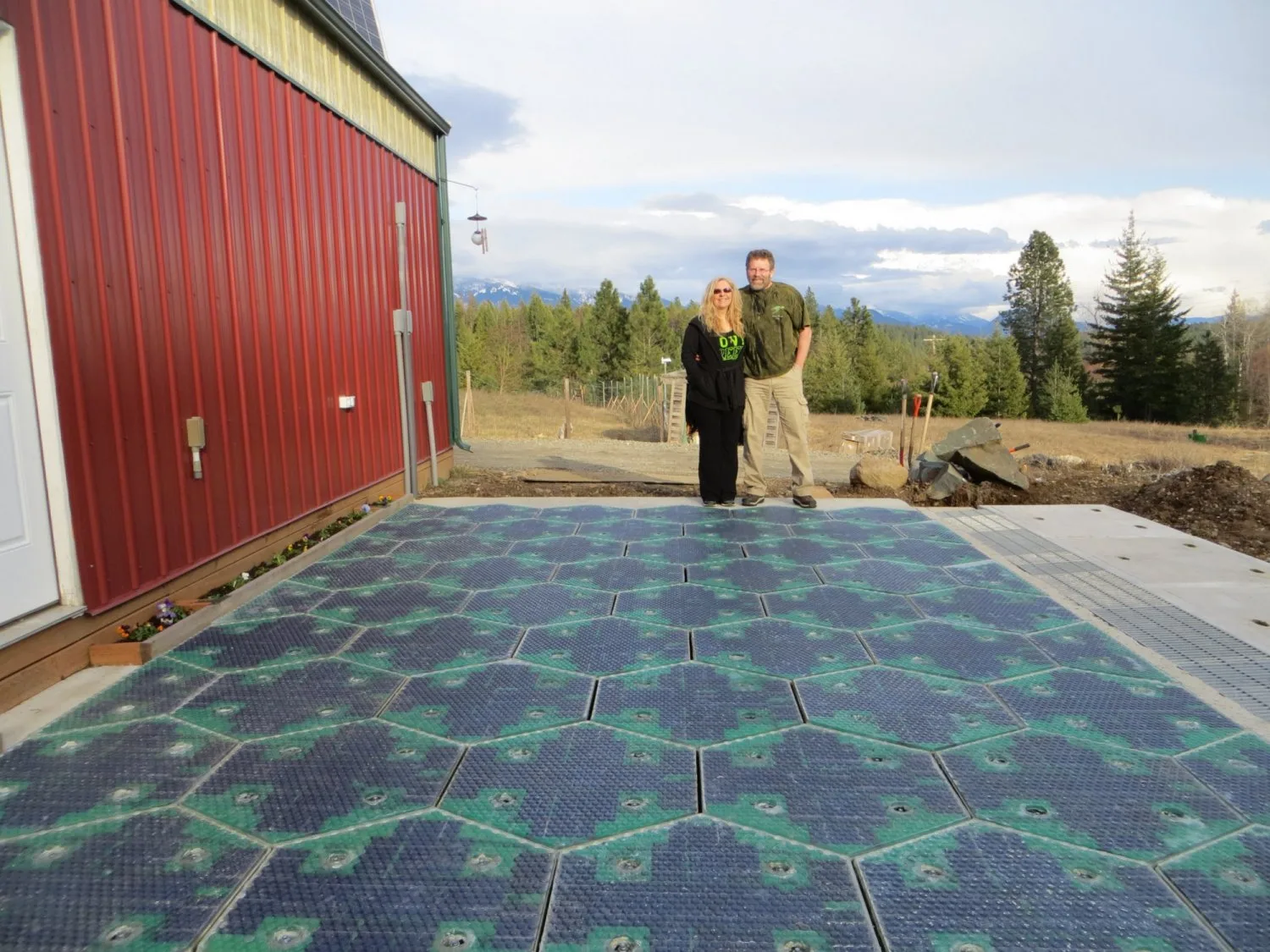
A pair of engineers from Idaho, Julie and Scott Brusaw, have developed a prototype for Solar Roadways: modular, industrial-strength solar panels designed to replace conventional road surfaces across the US. The couple’s vision is to turn the nation’s highways, car parks and pavements into a vast distributed power plant, generating electricity directly from sunlight while supporting the full weight of heavy goods vehicles.
Solar Roadways Inc. claims that if all 31,251 square miles of US roads, car parks, driveways and walkways were surfaced with its panels, the resulting network could theoretically generate three times the country’s current annual electricity consumption. The idea goes beyond power generation: the panels could also support wireless charging for electric vehicles, with receiver plates fitted to cars and transmitters embedded in the road.
How Solar Roadways Works
The Brusaws’ panels use a toughened glass surface engineered to provide enough grip for tyres and to survive the weight of articulated lorries. The design includes embedded LEDs for road markings and heating elements to prevent ice build-up. According to the project’s documentation, the goal is to make the panels modular for quick replacement and scalable for installation across different types of paved surfaces.
- Industrial-strength glass surface for durability and traction
- Integrated solar cells for electricity generation
- LEDs for dynamic road markings and signage
- Heating elements to prevent snow and ice accumulation
- Potential for wireless EV charging with embedded transmitters
The development has already attracted funding from the US Federal Highway Administration. In 2014, the team launched a crowdfunding campaign with a target of $1 million to move beyond prototype production, citing a desire to keep manufacturing and job creation within the US rather than outsourcing.
Challenges and Next Steps
While the concept has drawn attention for its ambition, several technical and economic hurdles remain. The panels must balance durability, cost, energy efficiency and safety. Manufacturing at scale would require substantial investment and infrastructure changes. The Brusaws have argued that the potential benefits, reduced reliance on fossil fuels, new jobs, and on-the-go EV charging, justify continued development.
The Solar Roadways initiative sits alongside other experimental approaches to electrified transport infrastructure, such as inductive charging lanes and urban solar car parks. While the technology remains in the early stages, the idea of roads as active power generators continues to attract both public and government interest in the US and abroad.
For further developments in electric vehicle infrastructure, see Toyota’s EV car-sharing pilot in Grenoble.