Chris Harris puts the BMW i8 through its paces in Los Angeles
Chris Harris takes the BMW i8 on a 24-hour drive in Los Angeles, examining the hybrid sports car’s performance, electric range and real-world usability.
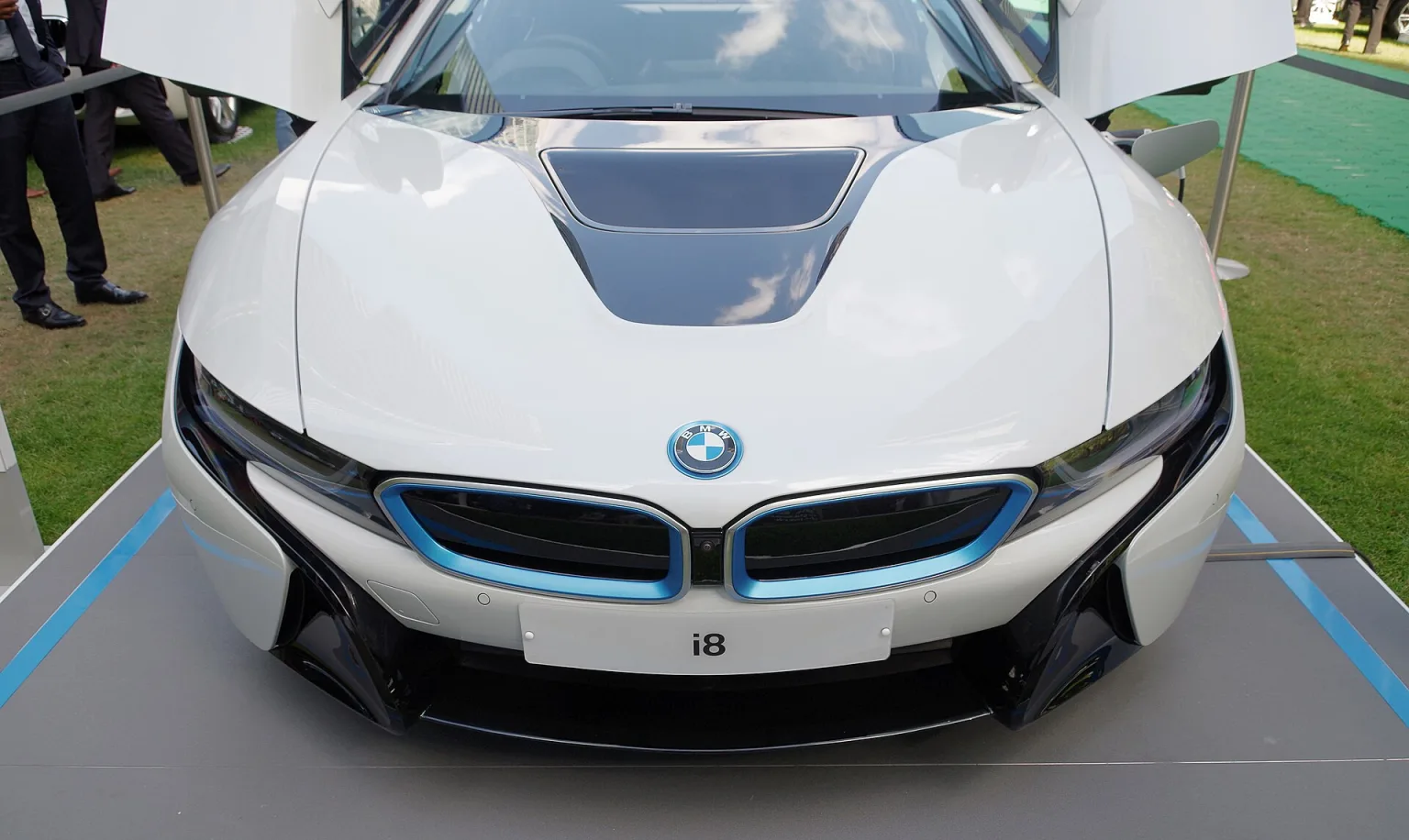
Chris Harris spent a full day with the BMW i8 in Los Angeles, subjecting the plug-in hybrid coupe to a mix of city and highway driving to see how BMW’s flagship eco sports car performs away from the show stand. The i8, which entered production in Leipzig in 2014, was BMW’s boldest attempt yet to blend performance with efficiency in a package aimed squarely at early adopters and enthusiasts alike.
Hybrid powertrain and performance
The i8’s powertrain pairs a 1.5-litre three-cylinder turbocharged petrol engine, mounted behind the cabin, with a front-mounted electric motor. The combined output is 357hp and 570Nm of torque, delivered to all four wheels through a six-speed automatic for the petrol engine and a two-speed transmission for the electric drive. In practice, this allows the i8 to accelerate from rest to 62mph in 4.4 seconds, putting it in the same league as many conventional sports cars.
The car’s 7.1kWh lithium-ion battery (with 5.2kWh usable) provides an official electric-only range of 23 miles, though real-world figures may vary depending on driving style and conditions. Harris’s drive in Los Angeles, which included both urban and open-road stretches, offered an opportunity to test the i8’s ability to switch between pure electric and hybrid operation, highlighting the car’s flexibility for short commutes and longer journeys alike.
Efficiency and usability
BMW claims a combined fuel consumption figure of 2.1L/100km (134.5mpg UK) and CO2 emissions of just 49g/km for the i8. These figures are based on official test cycles and depend heavily on regular charging and a driving pattern that makes use of the electric motor. In practice, the i8’s ability to run silently in city traffic and then switch to petrol power for higher speeds sets it apart from traditional sports coupes.
For buyers, the i8’s appeal lies in its combination of dramatic looks, advanced technology and the promise of guilt-free performance. The car’s carbon-fibre-reinforced plastic structure keeps weight down to 1,485kg, aiding agility and efficiency. Early reviews, including Harris’s, focused on how the i8’s handling and acceleration hold up in real-world use, particularly when compared with more conventional rivals.
Production and market rollout
BMW began i8 production at its Leipzig plant in 2014, with first deliveries to European customers in June and to the US in July. The car’s arrival marked a major step for BMW’s i sub-brand, following the earlier i3 city car. The i8’s price and positioning placed it above the i3, targeting buyers looking for a high-tech sports car with genuine green credentials.
- 1.5-litre turbocharged petrol engine (rear)
- Front-mounted electric motor
- 6-speed automatic (petrol), 2-speed (electric)
- Total output: 357hp, 570Nm
- 0-62mph in 4.4 seconds
- Carbon-fibre-reinforced plastic structure
How the i8 compares to rivals
At launch, the i8 faced little direct competition, with its closest rivals either fully electric or conventional sports cars. Its blend of plug-in hybrid technology and sports car performance set it apart from cars like the Porsche 911, while offering a different proposition to all-electric models such as the Tesla Model S. For more on how BMW’s M cars stack up, see Chris Harris Publishes Full BMW M3 Review Video.