VWvortex Unveils Beetle RS Project-Stage I with GT3 RS Influence
VWvortex transformed a pre-production 2012 Volkswagen Beetle into the Beetle RS Project-Stage I, drawing inspiration from the Porsche GT3 RS and focusing on visual upgrades.
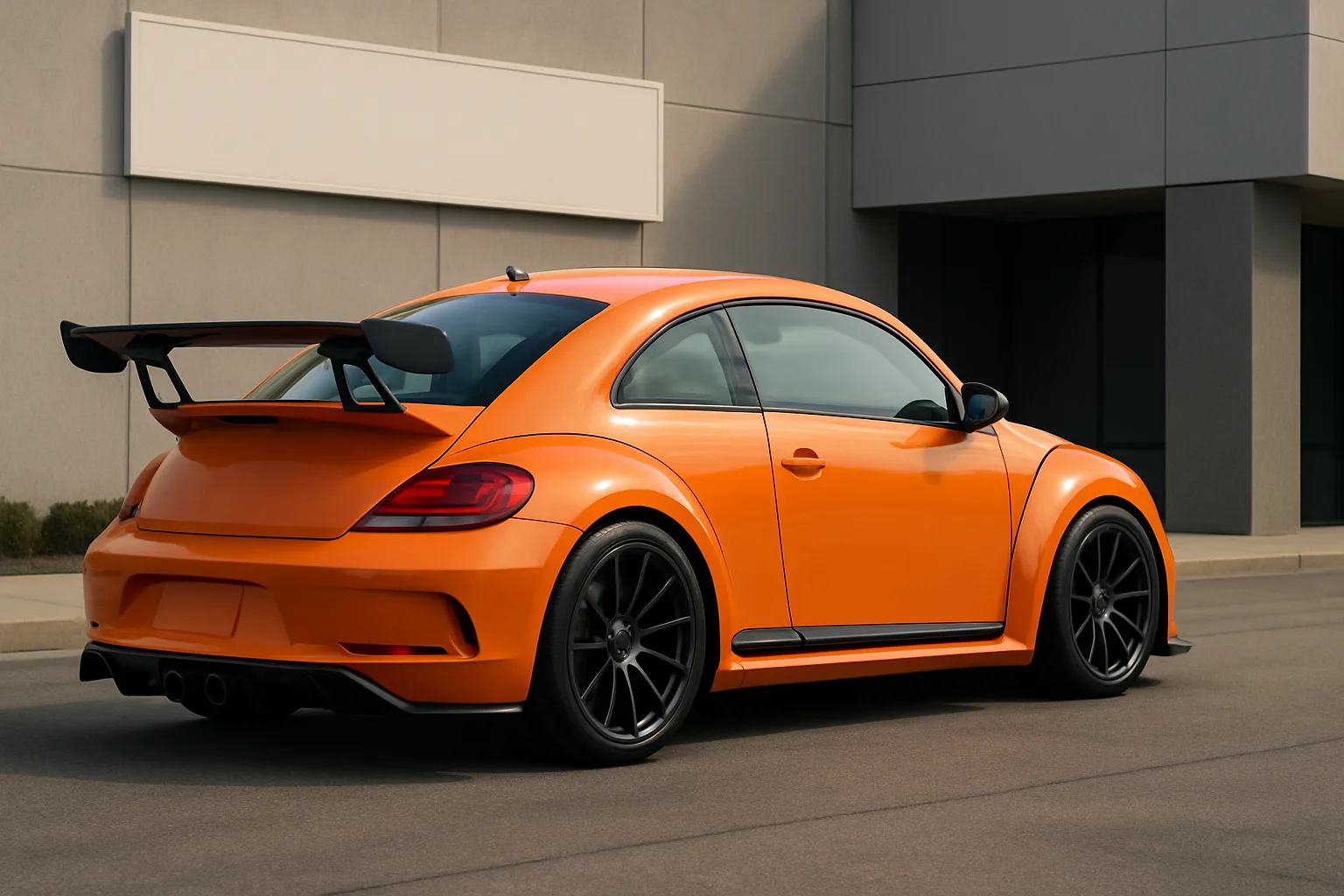
VWvortex took on the 2012 Volkswagen Beetle shortly after its global launch, unveiling the Beetle RS Project-Stage I as a rapid styling exercise. The team had just two and a half weeks to finish the build before Volkswagen began shipping the new Beetle to dealers, working against the clock with a pre-production show car as their canvas. This tight timeframe and the use of a non-production vehicle set the tone for a project focused on visual impact rather than comprehensive performance upgrades.
Introduction and Background
Inspiration: Porsche GT3 RS Influence
The project drew clear inspiration from the Porsche GT3 RS, most obviously in its bold visual cues. VWvortex selected 20-inch VMR710 wheels with a 35 offset, finished in a bright orange reminiscent of the GT3 RS’s signature accents. The wheels were wrapped in Continental ExtremeContact DW tyres sized 245/35ZR20, giving the Beetle a more aggressive stance than the standard factory model. The visual transformation was immediate, marking the Beetle RS out as a showpiece intended to catch the eye of enthusiasts and passers-by alike.
Suspension and Mechanical Adjustments
To lower the car and improve its posture, the team installed H&R suspension originally intended for the Golf and GTI Mk6. This off-the-shelf solution allowed for a drop in ride height without custom fabrication, fitting the tight project timeline. At the rear, a Borla exhaust was added, requiring only a minor extension to accommodate the Beetle’s longer tail compared to the Golf. The exhaust system was one of the few mechanical changes possible given the constraints of working with an incomplete, non-homologated show car.
Challenges of a Pre-production Show Car
VWvortex’s Beetle RS was never intended for the road. The car lacked registration, airbags and plates, and was built purely for display. The team’s access to a pre-production vehicle meant that many upgrades were cosmetic rather than performance-focused. While the turbocharged engine’s kit was mentioned as being upgraded, the lack of a complete, roadworthy chassis limited any substantial powertrain development at this stage. The limitations of the show car dictated the direction of the project, making it a showcase of potential rather than a demonstration of real-world capability.
- Visual transformation to echo Porsche GT3 RS style
- Limited mechanical upgrades due to pre-production status
- Project completed under tight deadline before Beetle’s dealer rollout
Project Timeline and Rush Factors
One of the defining aspects of the Beetle RS Project-Stage I was the extremely short window in which it was completed. VWvortex had only two and a half weeks to transform the Beetle before Volkswagen began distributing the new model to dealerships. This rush was not just a matter of convenience but a necessity, as the car used was a pre-production autoshow example. The limited time meant the team had to prioritise modifications that could be completed quickly and reliably, favouring bolt-on visual upgrades and readily available parts over custom fabrication or extensive mechanical work.
A Showcase for Beetle Tuning Potential
With the Beetle RS Project-Stage I, VWvortex aimed to demonstrate the tuning possibilities for the new-generation Beetle, even if only in visual terms. The project’s rush and reliance on a non-road-legal base car meant performance upgrades were minimal, but the result showed how far the Beetle’s image could be pushed with aftermarket parts and a bold concept. As the production Beetle reached showrooms, the RS Project-Stage I served as an early signal to the aftermarket community of what could be achieved stylistically with Volkswagen’s latest icon.
Aftermath and Influence
Although the Beetle RS Project-Stage I was not destined for road use, its presence at shows and in media coverage highlighted the enthusiasm within the tuning community for the new Beetle platform. The project encouraged other tuners and aftermarket companies to consider the Beetle as a canvas for creative expression, even if the first high-profile example was a show car rather than a street-ready machine. The use of GT3 RS-inspired styling, large wheels, and a lowered stance set a template for others to follow, and the rapid build demonstrated what could be accomplished under pressure with the right parts and vision.
Summary of Modifications
| Component | Details |
|---|---|
| Wheels | 20-inch VMR710, 35 offset, orange finish |
| Tyres | Continental ExtremeContact DW, 245/35ZR20 |
| Suspension | H&R Golf/GTI Mk6 |
| Exhaust | Borla, with extension for Beetle length |
| Visual Theme | Inspired by Porsche GT3 RS |
| Road Legality | Not road legal, show car only |
Conclusion
The 2012 Beetle RS Project-Stage I by VWvortex stands as an example of what can be achieved with limited time and a focus on visual impact. While it was never intended as a performance benchmark, it succeeded in drawing attention to the new Beetle and sparking interest in its tuning potential. The project remains a notable early effort to reinterpret the Beetle for a new generation of enthusiasts, blending classic inspiration with modern aftermarket flair.