Continental Develops V2X Safety Tech for Pedestrian Protection
Continental is trialling a vehicle-to-everything (V2X) system that enables cars to communicate with smartphones and transponders carried by vulnerable road users, aiming to reduce collisions.
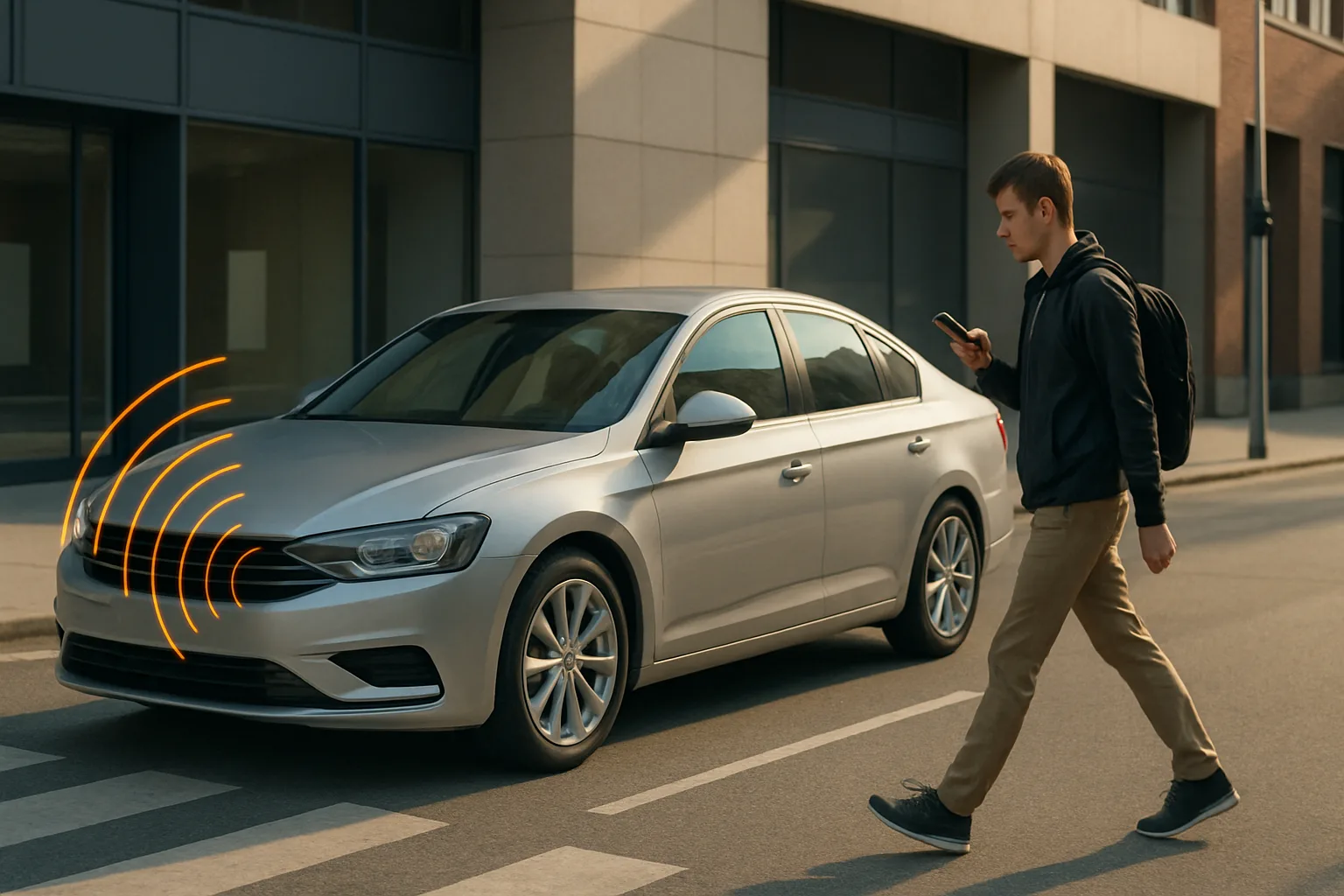
Continental is developing a vehicle-to-everything (V2X) communication technology designed to reduce accidents involving vulnerable road users such as pedestrians and cyclists. The system, which exchanges position and movement data between vehicles and people carrying smartphones or transponders, is intended to address the persistent risk to those outside vehicles.
According to Germany’s Federal Statistics Office, about half of traffic fatalities are vulnerable road users. While fatalities among car occupants have fallen sharply since 2000, the reduction for pedestrians and cyclists has been less pronounced. This has led suppliers and manufacturers to prioritise new safety systems that go beyond traditional vehicle occupant protection.
Continental’s approach uses short-range wireless networks to allow vehicles and vulnerable road users to share real-time data. This includes location, direction and speed, which enables the vehicle to predict possible collision courses and warn the driver or intervene automatically. The system is designed to work with existing vehicle-to-vehicle and vehicle-to-infrastructure standards, but crucially, it can also incorporate smartphones into the communication network. This means pedestrians and cyclists do not need specialist equipment beyond a compatible phone or transponder.
How V2X pedestrian detection works
When a vehicle equipped with Continental’s V2X system approaches a pedestrian or cyclist carrying a compatible smartphone, both parties anonymously exchange movement and position data. The vehicle’s onboard systems process this information in less than a tenth of a second, using it to predict the path of the pedestrian or cyclist. If a collision risk is detected, the system can alert the driver or trigger active safety responses such as emergency braking.
Short-range communication with a range of 300 to 500 metres allows for early detection, even when line-of-sight is blocked by buildings or other vehicles. This is particularly important in urban environments, where most pedestrian and cyclist accidents occur.
Integration and future potential
Continental’s V2X solution is compatible with direct ad-hoc communication standards such as WLAN, and is designed to be integrated into future vehicle architectures. By enabling communication with smartphones, the system aims for broad adoption without requiring every pedestrian or cyclist to carry dedicated hardware. The company sees this as a step towards its goal of zero road fatalities.
Other manufacturers and suppliers are also developing advanced detection and communication systems to protect vulnerable road users, as covered inCar tech shifts focus to cyclist and pedestrian safety. As V2X technology matures, regulatory bodies and industry groups are likely to consider how best to standardise and deploy these systems across fleets and infrastructure.