Volkswagen XL1 Production Model Unveiled at Geneva Motor Show
Volkswagen has revealed the production-ready XL1 at the 2013 Geneva Motor Show, delivering a plug-in hybrid two-seater with fuel consumption of just 0.9 l/100 km.
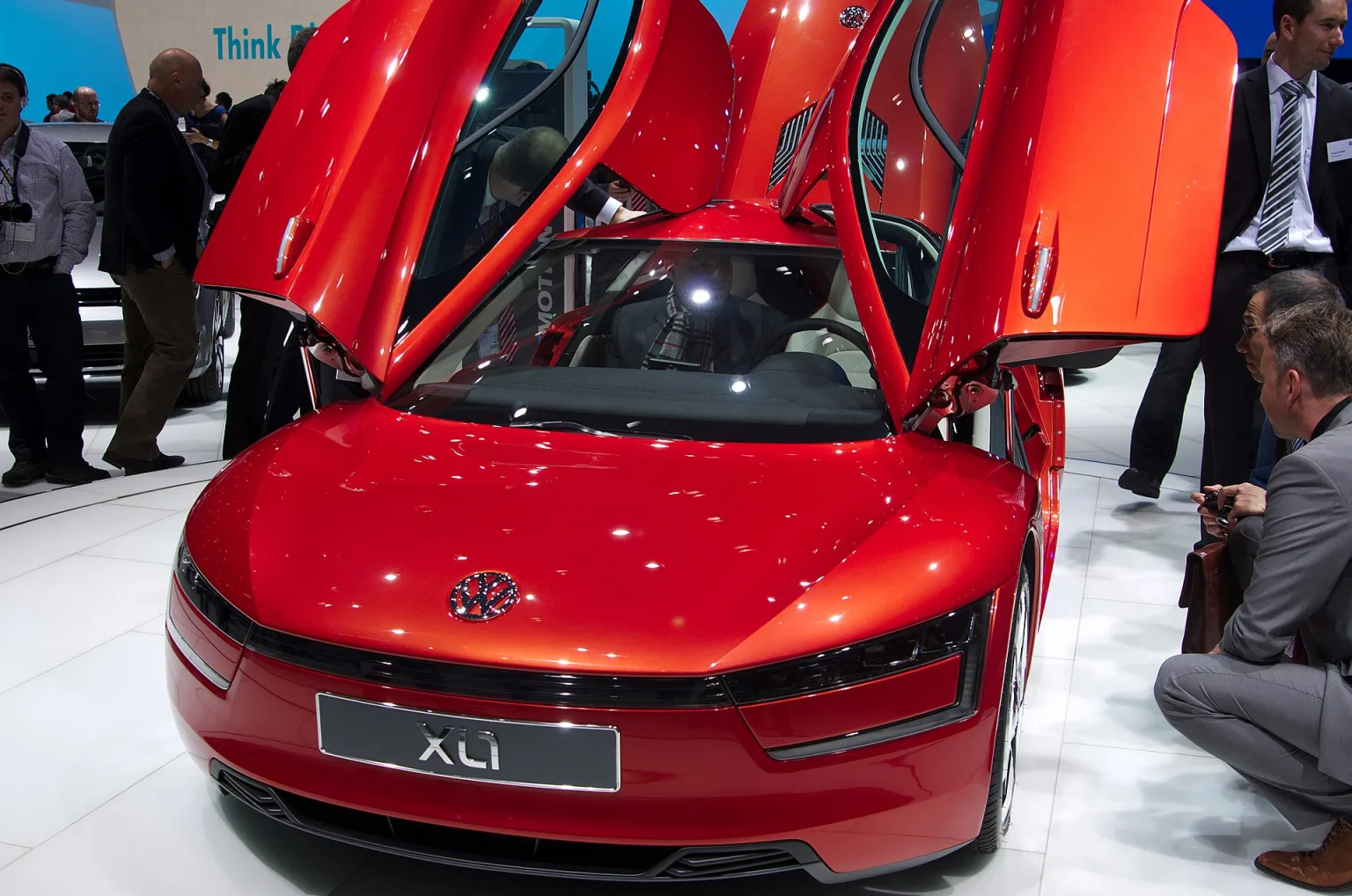
Volkswagen unveiled the production version of its ultra-efficient XL1 at the 2013 Geneva Motor Show, marking the culmination of over a decade of research and development. The XL1 is the German manufacturer’s answer to the challenge of building a car capable of consuming just 1 litre of fuel per 100 km. Now entering limited production, the two-seater plug-in hybrid claims a combined fuel consumption of 0.9 l/100 km and CO2 emissions of only 21 g/km, making it the most efficient production car of its time.
Volkswagen XL1 Debuts: Bringing the 1-Litre Car to Production
Powertrain and Hybrid Technology
At the heart of the XL1 is a powertrain that combines a 35 kW (48 PS) two-cylinder TDI diesel engine with a 20 kW electric motor. This system draws energy from a 5.5 kWh lithium-ion battery, enabling the XL1 to operate as a plug-in hybrid. Power is delivered to the rear wheels through a 7-speed dual-clutch DSG gearbox. The hybrid system allows the XL1 to travel up to 50 km on electric power alone, making it particularly suitable for short, urban journeys without any tailpipe emissions.
When running in hybrid mode, the XL1 achieves its impressive fuel economy figures by seamlessly switching between the diesel engine and electric drive, or using both in tandem when needed. The plug-in capability means drivers can recharge the battery from an external power source, further reducing fuel consumption on shorter trips.
Lightweight Construction and Aerodynamics
The XL1’s efficiency is not solely a result of its advanced hybrid system. Volkswagen placed a strong emphasis on lightweight construction and aerodynamic optimisation. The car’s monocoque and body panels are made from carbon-fibre reinforced polymer (CFRP), contributing to a kerb weight of just 795 kg. This lightweight approach is complemented by a low-slung profile, standing only 1,153 mm high, and a drag coefficient of 0.189. These figures make the XL1 one of the most aerodynamic production cars ever built.
At a constant speed of 100 km/h, Volkswagen claims the XL1 requires just 6.2 kW of power to maintain its pace. The combination of low weight and exceptional aerodynamics is central to the car’s ability to deliver such low fuel consumption and emissions.
Performance and Driving Experience
While the XL1’s primary focus is efficiency, its performance figures are notable for a car in this category. The car accelerates from 0 to 100 km/h in 12.7 seconds, and its top speed is electronically limited to 160 km/h. The driving experience is shaped by the car’s low centre of gravity, lightweight chassis, and aerodynamic design, all of which contribute to stability and responsiveness. However, the XL1 is not intended as a performance vehicle in the traditional sense; its engineering serves the goal of maximum economy rather than outright speed.
Development History and Market Position
Volkswagen’s journey toward the production XL1 began in 2002 with the presentation of the first 1-litre car prototype. Over the following decade, the company refined the concept through successive prototypes, each iteration moving closer to production viability. The final XL1 represents the realisation of Volkswagen’s ambition to create an ultra-efficient car that could be built and sold, albeit in limited numbers.
The XL1 is positioned as a technological showcase rather than a mainstream model. Its limited production run targets buyers interested in advanced engineering and extreme efficiency. Volkswagen’s decision to focus on weight savings and aerodynamics sets the XL1 apart from other plug-in hybrids, which often prioritise power or practicality. Demand for the XL1 quickly exceeded the planned supply, with Volkswagen receiving more interest than it could accommodate. This demonstrates the appeal of the car’s unique approach to efficiency and innovation.
Technical Specifications
| Engine | 2-cylinder 0.8-litre TDI diesel |
|---|---|
| Electric motor | 20 kW |
| Battery | 5.5 kWh lithium-ion |
| Transmission | 7-speed dual-clutch DSG |
| Kerb weight | 795 kg |
| Drag coefficient (Cd) | 0.189 |
| Fuel consumption | 0.9 l/100 km |
| CO2 emissions | 21 g/km |
| Electric range | Up to 50 km |
| Top speed | 160 km/h (limited) |
Conclusion
The Volkswagen XL1 stands as a significant achievement in automotive engineering, bringing the 1-litre car concept to reality. Its blend of cutting-edge hybrid technology, lightweight construction, and aerodynamic excellence demonstrates what is possible when efficiency is prioritised above all else. While the XL1 will remain a rare sight due to its limited production, its influence on future vehicle design and efficiency standards is likely to endure.
For those interested in further details about the market reaction and allocation of the XL1, Volkswagen reported that interest from potential buyers outstripped the number of cars available, highlighting the model’s impact even before deliveries began.